


Art Deco Drinks Credenza
An art deco drinks credenza is a striking storage piece designed for entertaining, bringing period glamour and clever bar organisation to any room.
Art Deco Drinks Credenza
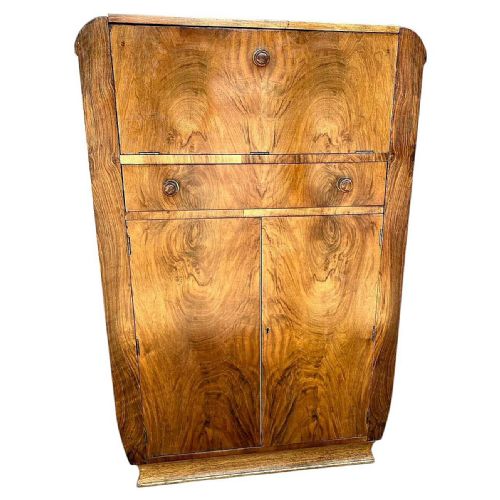
When you search for an art deco drinks credenza, you are looking at substantial entertaining furniture built primarily during the nineteen twenties and nineteen thirties. These pieces serve as dedicated storage for bottles, glassware, and mixing accessories, often combining the footprint of a sideboard with specialised internal fittings for drinks.
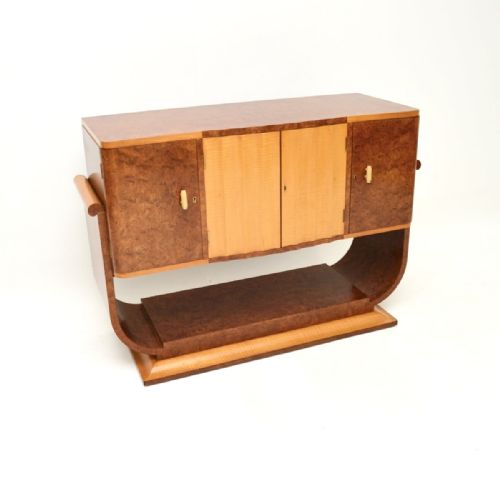
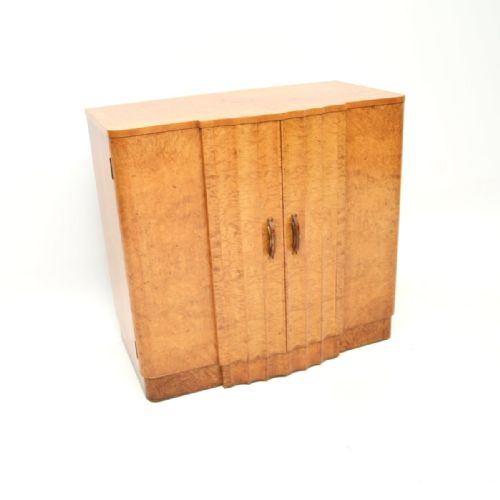
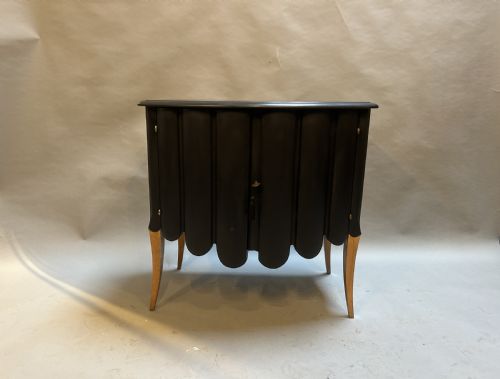
The versions you are most likely to meet on this page take the form of cocktail cabinets, side cabinets, and sideboards originating from England and France. They span walnut, burr walnut, and occasionally oak, reflecting the dominant cabinet-making materials of the interwar period.
Alongside mainstream Art Deco designs, you will occasionally encounter pieces showing stylistic crossover, such as Queen Anne Revival influences applied to walnut carcasses. The core function remains centered on hospitality, housing drop-down flaps or fitted interior compartments designed for serving.
How they were made
Makers constructed the carcasses using solid woods as a structural base, applying figured walnut and burr walnut veneers to display rich, swirling grain patterns across the primary surfaces. Sycamore occasionally appears as a contrasting timber for interior details, while metal components such as brass provide structural and decorative accents.
Glass and mirror materials feature prominently in the construction, often utilised for internal shelving, mirrored back panels, or serving surfaces designed to reflect light within the cabinet compartments. French polishing and specialised varnishes completed the exterior, protecting the wood veneers while producing a deep, reflective sheen.
Every proper cocktail cabinet secretly harbours a mirror ready to witness your evening mixing triumphs.
What varies in quality
The distinction between standard production and the top of the range lies in the selection of the wood veneers and the complexity of the internal fittings. Exceptional pieces utilise highly figured burr walnut matched symmetrically across doors and drawers, creating coherent visual patterns that demand considerable skill from the cabinet maker.
Maker attribution also dictates standing, with documented pieces by notable workshops commanding greater recognition for their superior joinery and hardware. Furthermore, the integration of specialised internal compartments for glassware and bottles separates basic storage units from purpose-built cocktail furniture.
Harry and Lou Epstein
The Art Deco Drinks Credenza Glossary
- Art Deco
- A design style characterised by streamlined forms, geometric symmetry, and luxurious materials that dominated the interwar period. It emerged in France before spreading internationally across architecture and furniture design.
- Burr Walnut
- A specialised wood cut from walnut tree growths, prized for its swirling, organic grain patterns. Cabinet makers prized this timber for veneering high-visibility surfaces.
- Veneer
- A thin layer of superior wood applied over a secondary timber base to provide decorative surface patterns without the weight and cost of solid exotic wood. It requires precise cutting and application.
- Cocktail Cabinet
- A specialised piece of furniture designed specifically for mixing and serving drinks, usually featuring a drop-down serving flap and internal bottle storage. These cabinets became popular during the nineteen twenties and nineteen thirties.
- Sideboard
- A long dining room or living room cabinet used for storing tableware and serving food. In the interwar period, makers often adapted this form to include dedicated drinks storage.
Art Deco Drinks Credenza: Frequently Asked Questions
What is an art deco drinks credenza?
An art deco drinks credenza is a specialised interwar storage cabinet designed for hosting and serving beverages. These pieces combine decorative wood veneers with practical internal compartments for bottles and glassware.
They function as both focal furniture items and functional home bars, originating predominantly from the nineteen twenties and nineteen thirties.
How do I date these cabinets?
Dating relies on stylistic markers, construction methods, and materials typical of the interwar decades. The heavy reliance on walnut veneers and geometric ornamentation points directly to this era.
Cabinet hardware and internal mirror work further help anchor pieces to the nineteen twenties or nineteen thirties.
Where were these pieces made?
The listings show origins spanning both English and French workshops. French pieces often display distinct continental proportions and decorative flair.
English examples frequently utilise figured walnut and showcase the output of notable London-based makers from the period.
How do I maintain the wood surface?
Maintaining walnut and burr walnut surfaces requires gentle cleaning with a soft, dry cloth to remove dust. Avoid harsh chemical cleaners that can degrade the traditional polished finish.
Keep the furniture away from direct sunlight and extreme humidity fluctuations to protect the underlying wood veneers.