


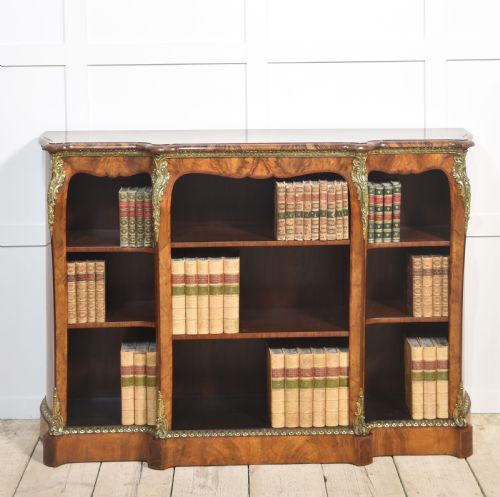


French Walnut Low Cabinet
These french walnut low cabinet pieces bring architectural timber and glass into smaller rooms with unmistakable nineteenth-century proportion.
French Walnut Low Cabinet
A french walnut low cabinet brings together timber frameworks and glazed or open shelving designed for domestic display and storage. The pieces meeting this description span the Victorian era, the nineteenth century, and the early decades of the twentieth century.
The forms found in these listings range from glazed pier cabinets and breakfront bookcases to side cabinets and open library shelving. Walnut remains the defining timber across these variations, often enriched by burr figures and marquetry.
Makers and workshops of the period utilised timber grain alongside brass, ormolu, and glass to create functional furniture with distinct decorative presence. Buyers encounter variants finished with ebonised wood or satinwood stringing.
Materials and construction methods
Makers constructed these cabinets using solid walnut and walnut veneers over supportive secondary timbers, frequently applying burr walnut to primary display surfaces. Marquetry inlay and satinwood details provide contrast across panelled doors and friezes.
Mounts cast in ormolu or gilt metal adorn corners and frames, while glass panels enclose display sections designed for books or collected objects. Ebonised wood detailing occasionally outlines structural mouldings to heighten visual definition.
Some nineteenth-century pier cabinets feature velvet-lined interiors designed to make displayed porcelain pop against a plush dark background.
Gradations in execution and material selection
The ambition of the timber selection dictates much of the visual hierarchy, separating standard grain from dense burr walnut and intricate marquetry. Finer examples display meticulous alignment of veneer patterns across matching doors and panels.
The integration of cast metal mounts and the precision of inlaid stringing distinguish workshop output. Cabinets attributed to documented makers such as Gillows demonstrate superior cabinetmaking execution in their internal framing and joinery.
Gillows
The French Walnut Low Cabinet Glossary
- Burr walnut
- A figured timber harvested from walnut tree growths, valued for its swirling grain patterns. It provides highly decorative surfaces on cabinet doors and tabletops.
- Marquetry
- The art of applying small pieces of veneer to a structure to form decorative patterns or pictures. Craftsmen use contrasting timbers like satinwood for tonal variation.
- Ormolu
- Gilded bronze used for decorative mounts, handles, and feet on nineteenth-century furniture. It adds metallic contrast to dark walnut surfaces.
- Pier cabinet
- A low cabinet designed specifically to fit against the wall space between windows. These pieces often feature glass doors and velvet linings.
- Breakfront
- A cabinet design where the central section projects forward from the flanking wings. This architectural arrangement creates depth and shadow across the facade.
French Walnut Low Cabinet: Frequently Asked Questions
What rooms suit a low cabinet?
These cabinets work well in studies, drawing rooms, or hallways where height restrictions prevent taller bookcases from fitting comfortably. Their proportions allow surface display without dominating the surrounding wall space.
The glazed or open shelving accommodates books and smaller decorative objects while keeping floor areas visually open.
How do I identify burr walnut?
Burr walnut is recognisable by its turbulent, swirling grain patterns filled with small knot clusters. It forms naturally on the tree and creates a striking visual texture distinct from straight-grained timber.
Cabinetmakers typically reserve this prized veneer for prominent focal points like door panels.
What is a pier cabinet used for?
Pier cabinets were originally built to occupy the narrow wall sections between large nineteenth-century windows. They provided enclosed display space for porcelain and small collections.
Today, they function effectively as standalone accent pieces in modern interiors.
Are these pieces French or English?
The pieces draw upon both French stylistic influences, such as Napoleon III and Rococo Revival forms, and English cabinetmaking traditions. Workshops across Europe shared design motifs during the nineteenth century.
Specific construction details and attributed makers help clarify individual workshop origins.