




Vintage French Walnut Buffet
A vintage french walnut buffet brings rich timber grain, marble surfaces, and distinct continental character straight into a dining room.
Vintage French Walnut Buffet
A vintage french walnut buffet represents a substantial storage piece built across several distinct eras, spanning 19th Century revivals through to the 1930s. Buyers searching for this phrase encounter sideboards, credenzas, serving tables, and cabinets designed for dining and entertaining spaces.
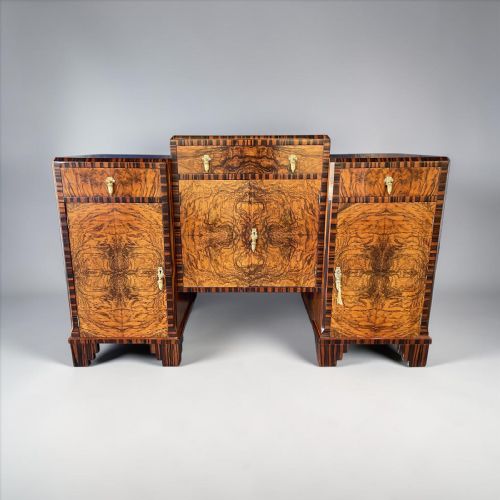
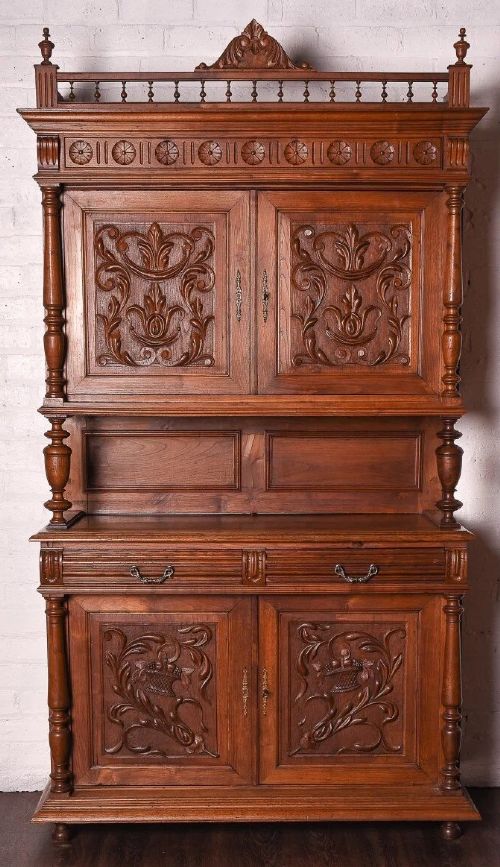
The most frequent examples on this page date from the Art Deco period of the 1920s and 1930s, alongside nineteenth-century iterations rooted in French Renaissance, Chateau, and Louis XV Revival styles.
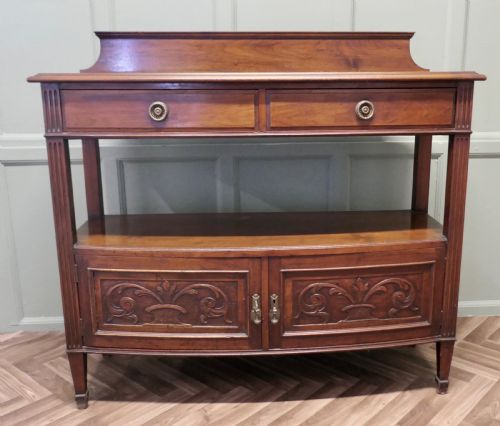
These heavy timber storage units often feature carved details, serpentine fronts, or contrasting inlays of marquetry that elevate them beyond simple domestic cupboards.
How they were made
Walnut and burr walnut form the primary structural and decorative timbers, frequently paired with contrasting veneers such as mahogany, maple, and ebony to create striking geometric or floral marquetry patterns.
Many designs incorporate heavy marble tops, which provide a durable and cool working surface, alongside cast brass or ormolu mounts and glass elements that punctuate the dark timber framework.
One exceptional nineteenth-century cabinet was specifically built for the hunt game.
What varies in quality
The standard of a vintage french walnut buffet rests largely on the ambition of its timber selection, particularly the dramatic figuring found in burr walnut panels and the precision of inlaid marquetry work.
Construction complexity also dictates worth, separating simpler panelled sideboards from exhibition-quality serpentine shapes, bombe profiles, and heavily carved provincial or revival facades.
The Vintage French Walnut Buffet Glossary
- Burr walnut
- A prized timber harvested from walnut tree growths, producing swirling, highly decorative grain patterns used on cabinet doors and tabletops. It adds exceptional visual depth to formal dining furniture.
- Serpentine
- A front profile characterised by a gentle, undulating double curve that bows outward in the centre and curves inward at the sides. This shape demands high carpentry skill to execute cleanly in solid walnut.
- Ormolu
- Gilded bronze mounts and decorative accents applied to furniture corners, feet, and handles. It provides a bright metallic contrast against dark walnut timber.
- Marquetry
- The art of applying small pieces of veneer to a structure to form decorative patterns and pictures. Craftsmen utilise various coloured woods like maple and ebony to achieve these pictorial designs.
- Bombe
- A pronounced swelling, convex shape typical of grand case furniture. This voluminous profile creates a sweeping silhouette that requires expert shaping of the timber carcass.
Vintage French Walnut Buffet: Frequently Asked Questions
How do I clean a marble top?
Wipe the marble surface regularly with a soft damp cloth and mild neutral soap to prevent staining from spills. Avoid acidic cleaners, vinegar, or harsh abrasives that etch the polished stone.
Dry the surface thoroughly after washing to maintain the smooth finish of the marble inset.
Where should I place my buffet?
Position the piece against a principal dining room wall where it provides both a serving surface and substantial storage for crockery and linens. Ensure the room maintains stable humidity to protect the walnut timber and any veneered surfaces.
Keep the cabinet away from direct heat sources and strong sunlight to prevent the timber from drying out or fading over time.
How do I distinguish Art Deco from 19th Century styles?
Art Deco pieces, typically dating around 1930, favour streamlined geometric silhouettes, smooth curved edges, and striking burr walnut veneers without heavy carving. Nineteenth-century examples lean heavily on historical revivals, featuring elaborate hand-carvings, panelled doors, and ornate stylistic flourishes.
Reviewing the hardware, leg shape, and decorative motifs usually reveals whether a piece belongs to the interwar period or the Victorian era.
How were these buffets originally used?
Dining rooms utilised these heavy furniture pieces for storing heavy silver, glassware, and formal table linen. The flat top served as a practical sideboard for plating food and displaying serving dishes during large meals.
Serving tables and credenzas acted as auxiliary furniture to assist hosts in managing multi-course household dining.