





Art Deco Dresser
An art deco dresser brings geometric clarity and rich timber grains into a room, uniting functional storage with striking modernist design.
Art Deco Dresser
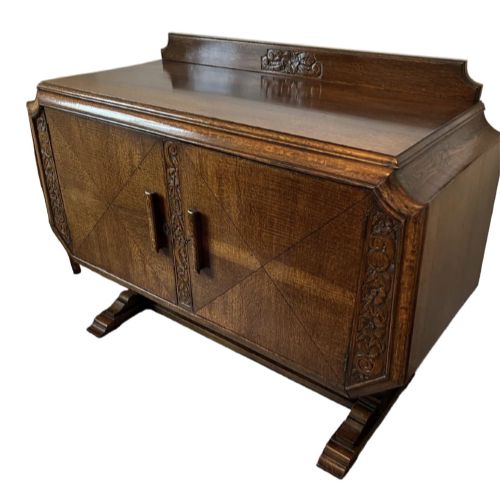
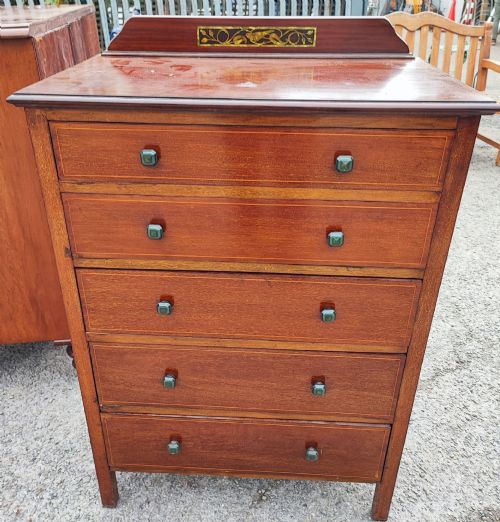
When searching for an art deco dresser, buyers encounter a diverse selection of furniture and tabletop items designed primarily during the interwar decades. The category encompasses everything from full-scale wooden chests of drawers and sideboards to smaller vanity items like powder boxes and perfume bottles.
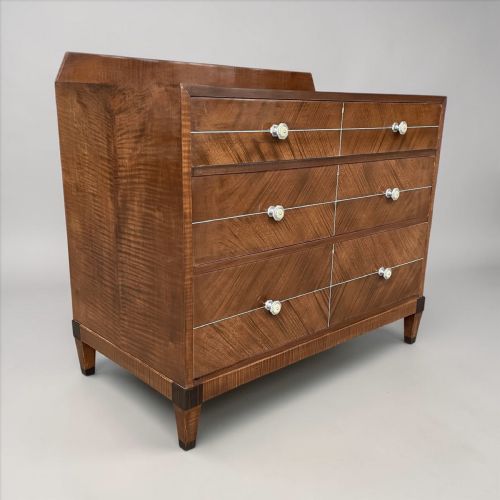
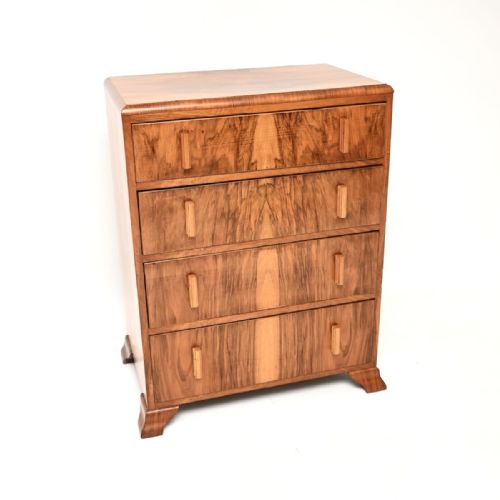
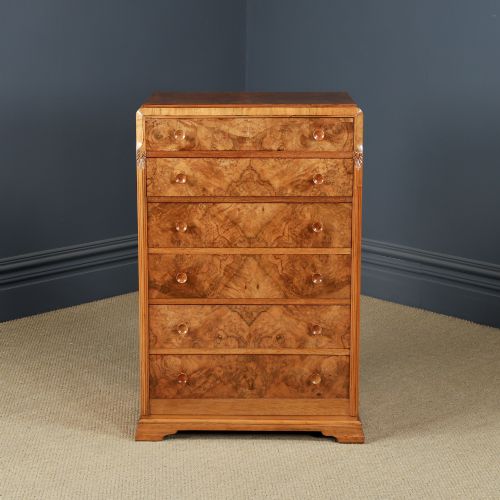
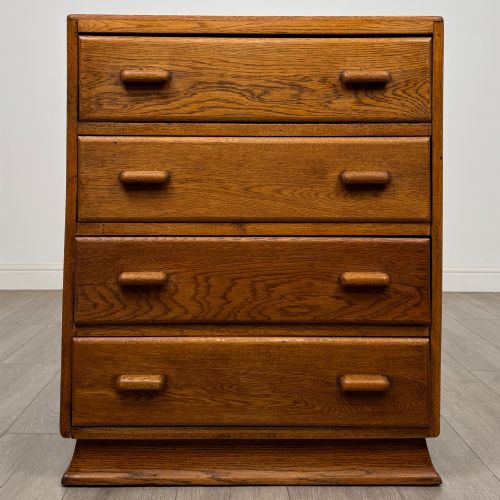
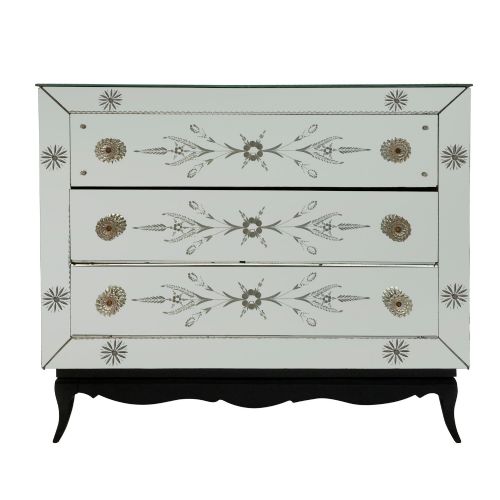
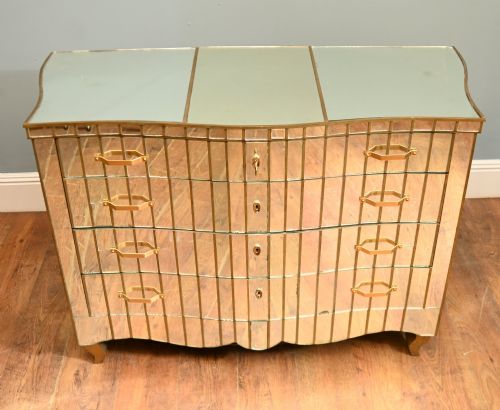
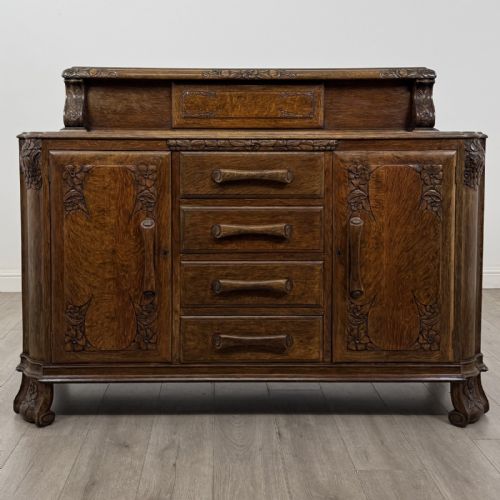
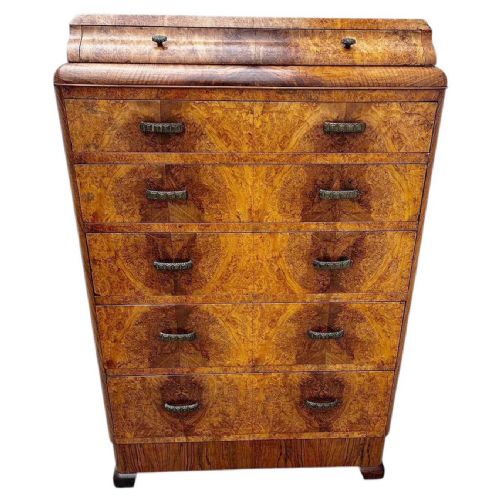
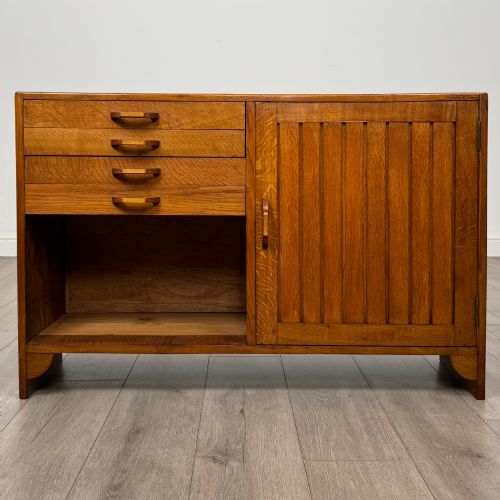
The version most commonly met on this page is the wooden chest of drawers or tallboy, constructed from figured walnut, burr walnut, or oak. These pieces range from streamlined English cabinets to mirrored French commodes and limed oak tall chests.
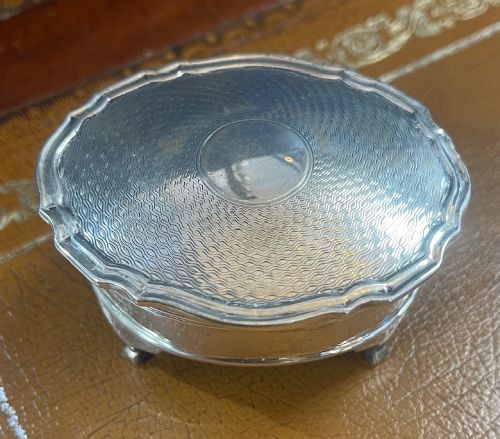
Alongside major furniture items, the selection includes smaller ceramic and porcelain powder jars, crystal boxes, and silver-plated trays that served personal dressing tables of the period.
Materials and construction
Makers of the period utilised rich timber veneers such as walnut, satinwood, and bleached blonde walnut applied over sturdy softwood or oak carcases to create dramatic grain patterns. Selected pieces also incorporate alternative materials including tubular metal, aluminium, and mirrored glass.
Smaller decorative objects demonstrate diverse manufacturing techniques, combining moulded crystal glass, glazed porcelain, and sterling silver mounts with enamel work. Surface finishes vary from high-gloss polished French polishes to limed oak treatments that emphasise the open grain of the wood.
Art Deco Dresser Retail Price Guide 2026
Typical asking prices for art deco dresser among the pieces listed under this phrase on Sellingantiques today, from the lower quarter to the upper quarter. They describe what is for sale here now, not the wider market.
The listings span from the Edwardian era through the 1950s, utilising materials such as porcelain, chrome, walnut, and oak.
Distinctions in craftsmanship
Quality in these items rests upon the selection of decorative veneers and the precision of the cabinetwork. Superior examples display symmetrical book-matched grain patterns across drawer fronts and doors, whereas simpler utility versions rely on plain solid timbers.
Hardware and secondary materials further differentiate the pieces, with top-tier furniture employing integrated wooden pulls or high-grade metal fittings, complemented by finely cast silver or crystal on smaller vanity boxes.
Rene Lalique·Heals of London·Bowman Brothers·Fasold and Stuach
The Art Deco Dresser Glossary
- Tallboy
- A tall upright chest of drawers providing substantial vertical storage while occupying a compact floor footprint.
- Commode
- A low chest of drawers or cabinet, frequently associated with continental European craftsmanship from the period.
- Half doll
- A ceramic porcelain figure torso without legs, manufactured to sit atop the lid of a powder or trinket jar.
- Limed oak
- Timber treated with a specialised finish that leaves a white pigment in the open pores of the grain for a pale appearance.
Art Deco Dresser: Frequently Asked Questions
What defines an art deco chest of drawers?
These chests are characterised by clean geometric lines, stepped forms, and symmetrical veneer patterns on the drawer fronts. They emphasise vertical or horizontal proportions rather than traditional carving.
Most examples utilise walnut, oak, or satinwood, often complemented by original handles in wood, chrome, or contrasting metals.
How do I use a powder box today?
Powder boxes and trinket jars make excellent display pieces on dressing tables or mantelpieces. They provide small storage spaces for rings, cufflinks, or modern cosmetics.
Their decorative porcelain lids and crystal bodies add a touch of period elegance to contemporary bedrooms or bathrooms.
How do I care for walnut veneer?
Walnut veneer requires protection from direct sunlight and excessive moisture to prevent fading and lifting. Regular dusting with a soft, dry cloth maintains the polished surface without chemical buildup.
Maintaining stable room humidity preserves the integrity of the underlying wood carcase and the delicate veneer layers.