


Art Deco Double Wardrobe
An art deco double wardrobe delivers striking grain patterns and generous storage, making it the practical centrepiece for a period bedroom.
Art Deco Double Wardrobe
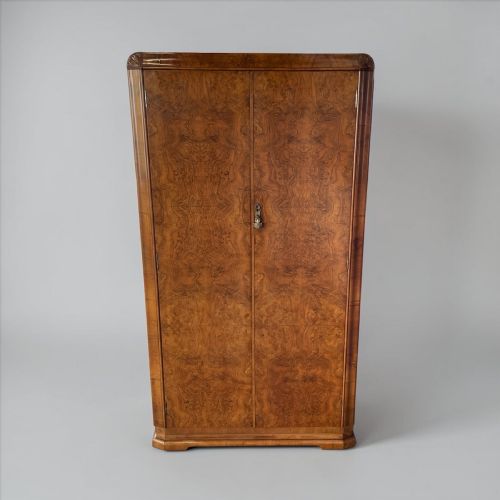
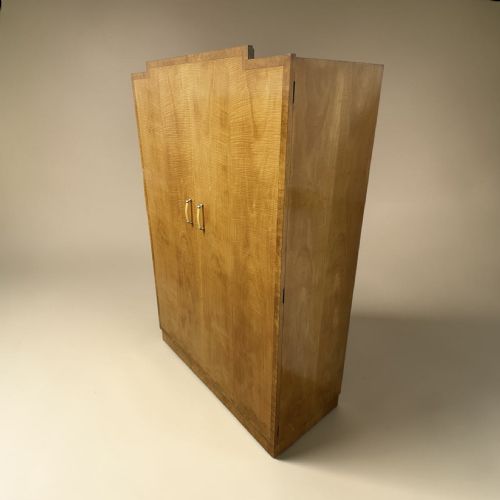
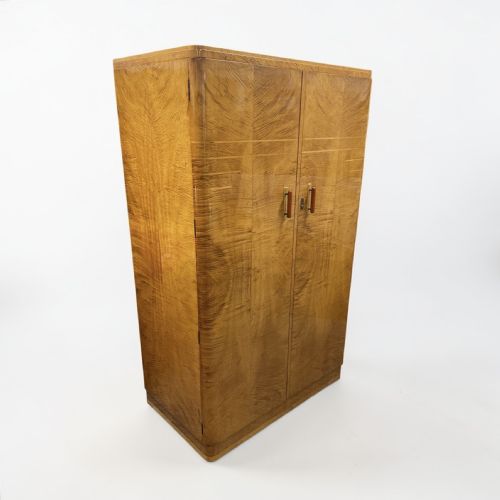
When you search for an art deco double wardrobe, you encounter substantial clothes storage units designed primarily during the interwar decades. These pieces usually feature two full-length doors enclosing hanging space and sometimes fitted interior shelving or drawers.
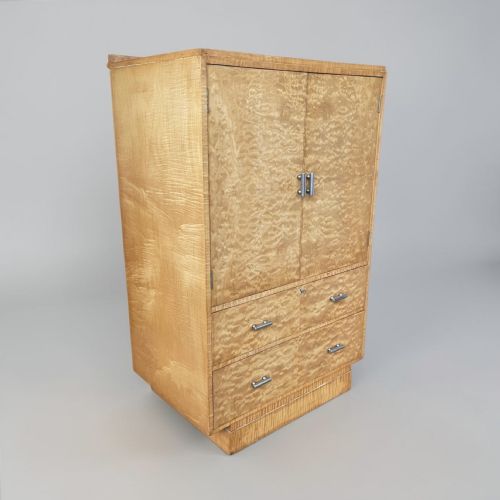
The versions most commonly met on this page date from the nineteen thirties, though examples stretch from nineteen ten through to nineteen forty. Alongside standard double wardrobes, the selection includes related forms such as compactums, tallboys, and breakfront designs.
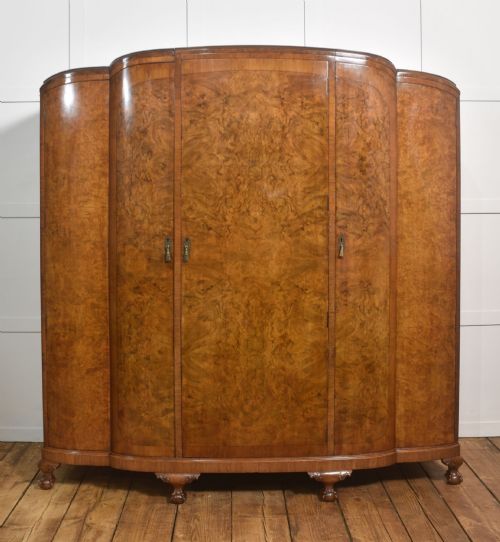
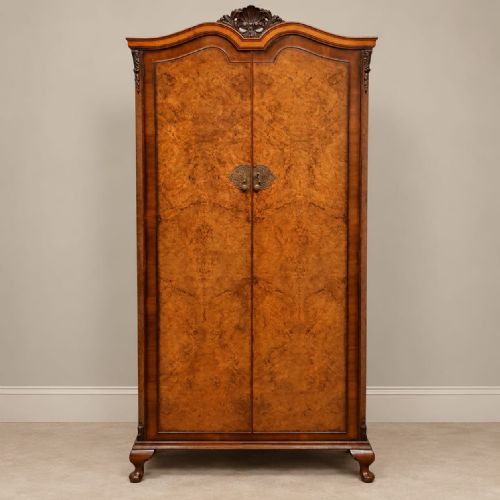
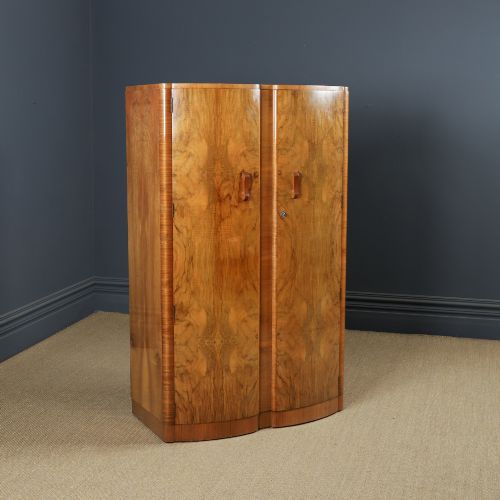
Stylistic influences span from classic art deco to occasional revivals like Queen Anne, while alternative configurations accommodate triple doors or bow front and cloud front silhouettes. These cabinets establish a strong architectural presence within a room through bold geometry and matched veneers.
Materials and construction methods
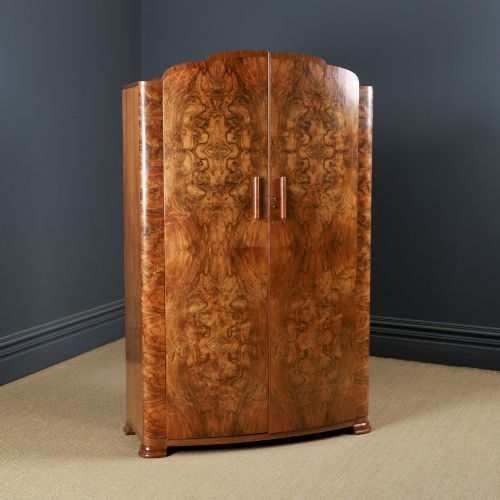
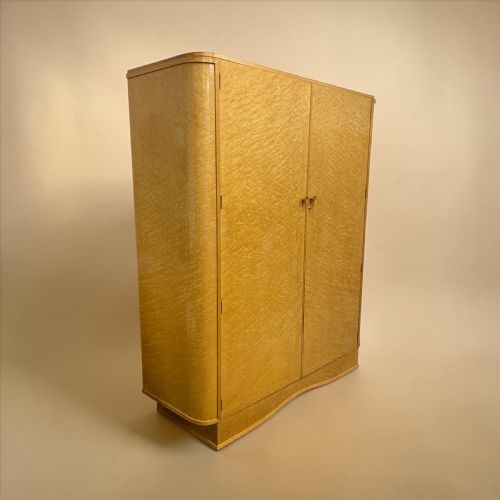
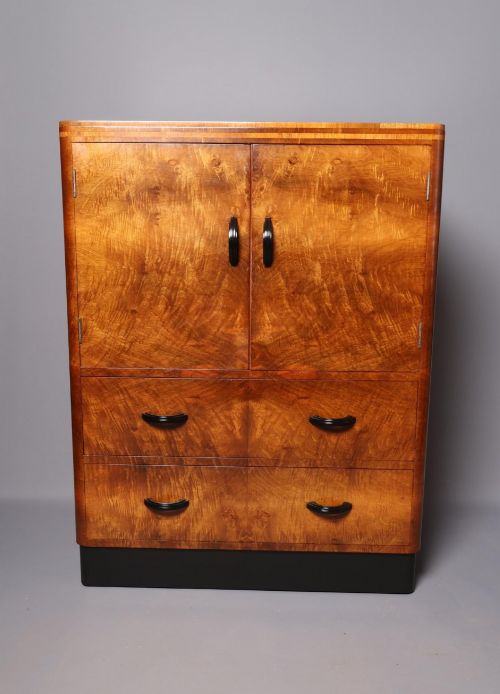
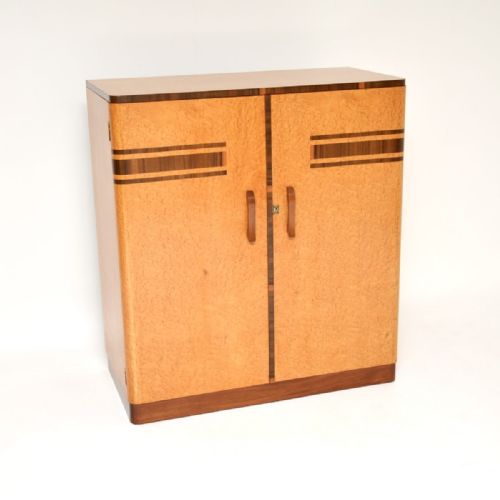
Cabinet makers utilised solid timbers for structural frames while applying decorative veneers to the primary exterior surfaces. Walnut dominates the record, frequently selected in figured, burr, or bird's-eye varieties to create dramatic grain patterns across the double doors.
Complementary woods such as birch, maple, sycamore, satinwood, ash, and pine appear alongside metal elements and moulded bakelite handles. Construction often incorporates curved or bow front profiles, requiring skilled manipulation of wood veneers over shaped cores to achieve smooth geometric contours.
Listings span four distinct decades from nineteen ten to nineteen forty, with walnut serving as the dominant primary material alongside alternative woods like maple, birch, and pine.
Distinguishing quality in period wardrobes
Quality rests upon the selection and matching of the wood veneer across the front panels, where mirrored grain arrangements like starburst patterns elevate a piece. The depth and visual complexity of burr walnut or figured walnut signal superior material selection by the maker.
Internal fitting and joinery sophistication separate standard storage from exceptional pieces. Fitted interiors with specialised compartments, solid brass hardware, and well-executed curved silhouettes demonstrate a higher standard of cabinet work.
Waring and Gillow·Epstein
The Art Deco Double Wardrobe Glossary
- Burr walnut
- A prized timber harvested from growth excrescences on walnut trees, yielding turbulent and highly decorative grain patterns. It is frequently applied as a veneer on statement furniture.
- Compactum
- A multi-functional wardrobe combining hanging space with internal drawers, shelves, and sometimes compartmentalised sections. This form maximises storage efficiency within a single footprint.
- Bow front
- A convex curved cabinet front that projects outward in a smooth arc. This shape softens the linear geometry typical of many interwar bedroom pieces.
- Tallboy
- A vertical storage cabinet combining wardrobe space or shelves above a chest of drawers. Its elevated proportions suit rooms with limited floor space.
Art Deco Double Wardrobe: Frequently Asked Questions
What is an art deco double wardrobe?
An art deco double wardrobe is a two-door clothes storage cabinet built predominantly during the interwar period, combining geometric styling with decorative wood veneers.
These pieces provide substantial internal hanging space, often supplemented by built-in shelving or compactum drawers, while serving as a prominent decorative focal point in a bedroom.
How do I fit one in a modern bedroom?
Measure your ceiling height and floor clearance carefully before placement, as these wardrobes possess heavy timber frames and deep footprints.
Position the cabinet away from direct heat sources to protect the delicate wood veneers from drying out, and utilise the internal hanging and shelf space to reduce the need for auxiliary storage.
How do I tell nineteen thirties pieces apart from earlier ones?
Nineteen thirties pieces typically embrace streamlined symmetry, bold curved profiles like bow fronts, and dramatic burr walnut or bird's-eye maple veneers. Earlier pieces from nineteen ten often lean towards traditional revival styles with simpler timber selections and less exuberant ornamentation.
What woods were used for these wardrobes?
Walnut is the predominant timber found in these listings, appearing frequently as burr walnut, figured walnut, or standard walnut veneer. Other utilised woods include birch, maple, satinwood, ash, sycamore, and pine.