

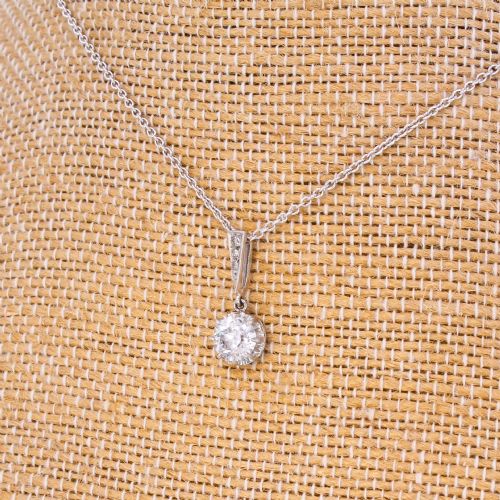


Art Deco Diamond Necklace
An art deco diamond necklace combines geometric precision with the quiet brilliance of old cut stones, offering a wearable piece of 1920s and 1930s design.
Art Deco Diamond Necklace
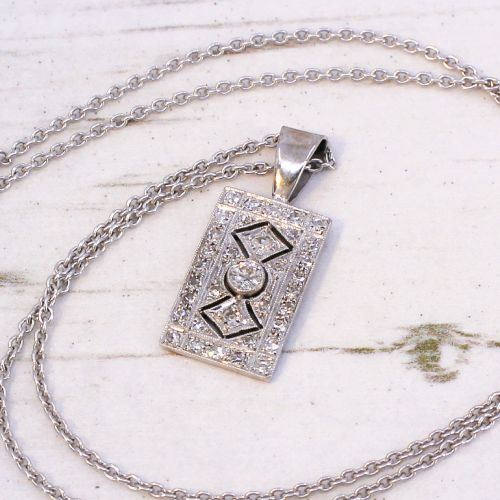
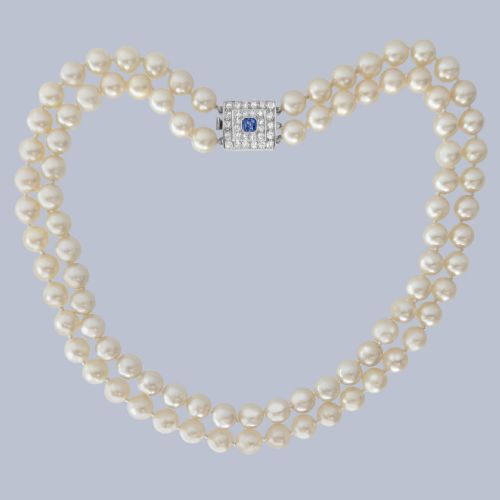
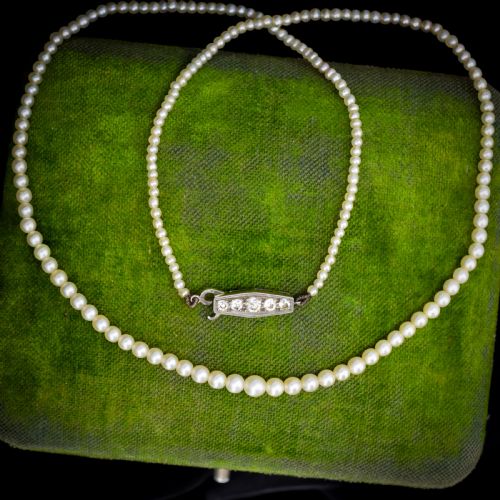
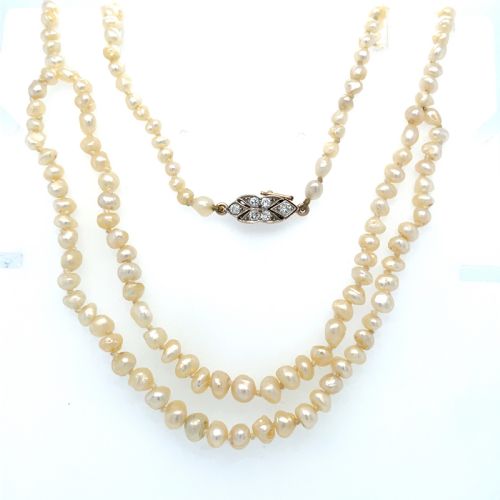
An art deco diamond necklace spans delicate pendants on fine chains, multi-strand pearl configurations with diamond-set clasps, and dramatic fringe necklaces. These items originate predominantly from the 1920s and 1930s, though examples stretch from Edwardian predecessors into the mid-century.
The most common formats found here pair platinum or 18ct white gold with graduated diamonds, frequently accompanied by pearls, sapphires, or aquamarines. Pendant necklaces and single or multi-strand pearl iterations dominate the selection.
Makers and designers from the period favoured clean geometric lines, symmetrical arrangements, and integrated clasps that functioned as decorative focal points when worn at the back or side of the neck.
Materials and construction
Platinum served as the metal of choice for mounting stones securely with minimal visible framing, allowing intricate pierced work and knife-edge settings. White gold and yellow gold also appear, particularly in clasps and gallery work.
Diamonds are predominantly old cut, European cut, or single cut, imparting a softer, deeper scatter of light compared to modern brilliant cuts. Coloured gemstones such as sapphires, aquamarines, and opals provide structural contrast through calibre cutting or cabochon shaping.
Art Deco Diamond Necklace Retail Price Guide 2026
Typical asking prices for art deco diamond necklace among the pieces listed under this phrase on Sellingantiques today, from the lower quarter to the upper quarter. They describe what is for sale here now, not the wider market.
Listings feature platinum, 18ct white gold, and yellow gold paired with diamonds, pearls, sapphires, aquamarines, and opals across the 1920 and 1930 periods.
Quality distinctions
The sophistication of the metalwork defines the upper tier, seen in fine millegrain edges, articulated links, and balanced geometric symmetry. Superior pieces integrate the clasp seamlessly into the overall design of the necklace rather than treating it as a functional afterthought.
Gemstone selection and matching elevate certain examples, particularly where pearls show consistent lustre and certification, or where sapphires and aquamarines exhibit uniform depth of colour alongside well-matched diamond weights.
The Art Deco Diamond Necklace Glossary
- Old cut
- A diamond facet style popular before modern brilliant cutting standards, characterised by a smaller table, higher crown, and open culet. This cut produces broader flashes of light under candlelight.
- Millegrain
- A decorative technique featuring a row of tiny raised metal beads along the edges of a setting. It softens harsh metal lines with a delicate texture.
- Calibre cut
- Gemstones specifically shaped and cut to fit tight geometric patterns in jewellery mounts. This technique requires exceptional lapidary precision.
- Fringe necklace
- A necklace design featuring suspended drops or pendants hanging along the lower front edge. Movement is inherent to the structure.
- Platinum
- A dense, white precious metal utilised extensively in the period for its strength in fine wirework and claw settings. It holds small pavé-set stones securely without heavy metal bulk.
Art Deco Diamond Necklace: Frequently Asked Questions
How do I wear a pearl necklace with an art deco clasp?
Many multi-strand pearl necklaces from this period feature decorative clasps set with diamonds and sapphires. You can position the clasp at the nape of the neck for traditional wear or rotate it to the side or front as a visible pendant feature.
Ensure the safety catch or tongue is secure before wearing it in this manner to prevent loss.
What is the difference between an art deco pendant and a necklace?
A pendant hangs as a single focal element suspended from a chain, focusing attention on a central stone or cluster. A necklace incorporates continuous design elements, such as beads, a fringe, or integrated links spanning the collarbone.
Many pieces listed span both categories as pendant necklaces, combining a fixed drop on a structured chain.
How can I tell if the diamonds are original to the piece?
Examine the consistency of the wear, the matching of the stone cuts, and the integration of the setting techniques. Old cut diamonds in these pieces typically exhibit hand-cut proportions consistent with the 1920s and 1930s.
Gemmological certificates often accompany higher-value pieces to verify the age and treatment of pearls and central stones.
How should I store my art deco diamond necklace?
Store platinum and diamond items separately from softer gemstones and pearls to prevent scratching. A lined jewellery box with individual compartments keeps chains from tangling and protects delicate millegrain work.
Pearls require breathable storage away from direct contact with synthetic materials and cosmetics.