

Art Deco Crystal
Art deco crystal brings geometric clarity and luminous weight to domestic spaces through vessels, lighting and jewellery designed across the interwar decades.
Art Deco Crystal
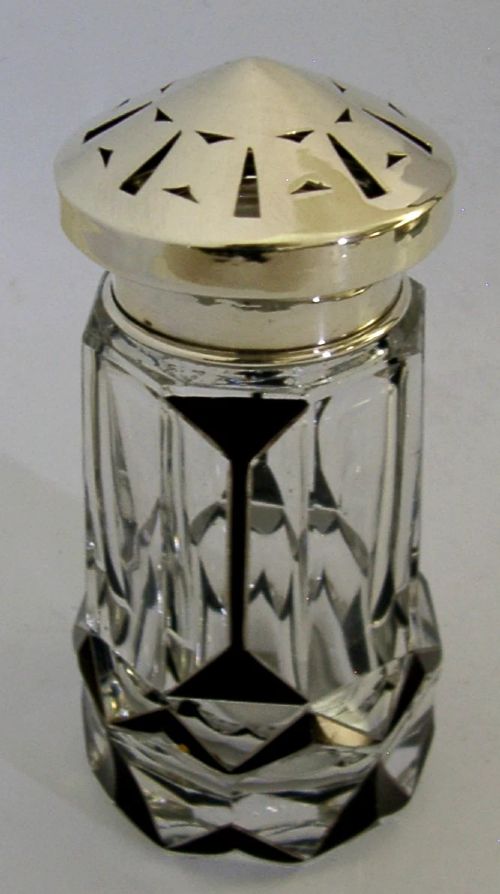
Art deco crystal encompasses a diverse array of functional and decorative objects created during the early twentieth century, spanning glassware, lighting, perfume bottles, and personal jewellery. Buyers seeking these pieces encounter everything from large multi-tiered chandeliers and heavy decanter sets to delicate opalescent vases and silver-mounted scent bottles. The selection heavily reflects European production centres, particularly French, Belgian, and Czech glassworks operating through the nineteen-twenties and nineteen-thirties.
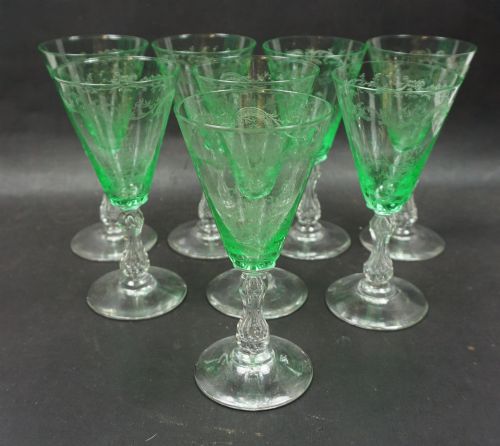
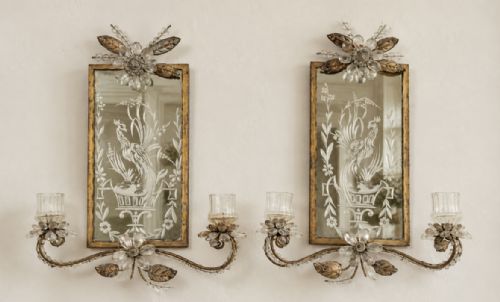
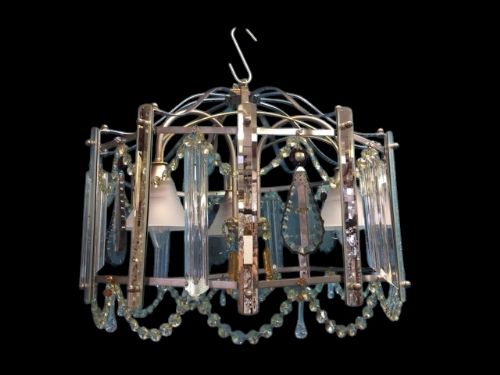
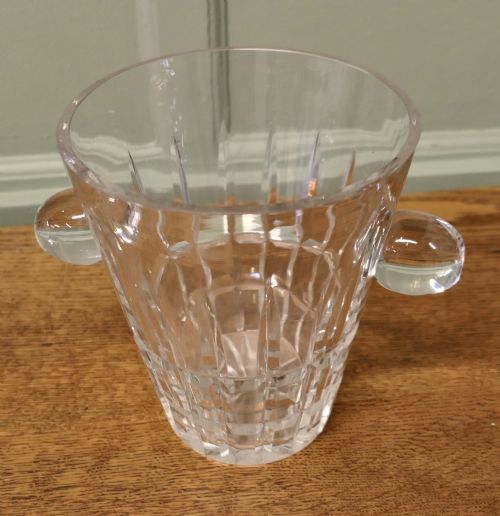
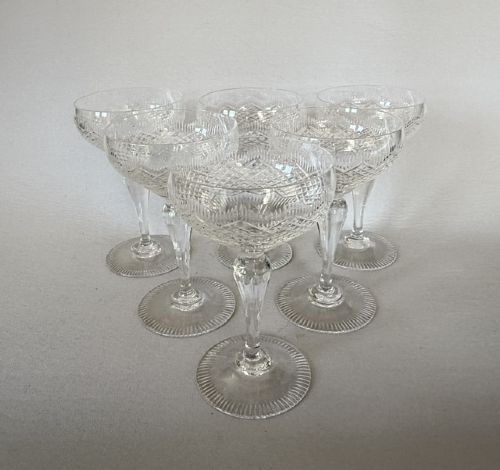
Tableware and drinking vessels form a prominent category, featuring suites of wine glasses, champagne bowls, and ice buckets often finished with precise geometric cuts or hand-enamelled decoration. Lighting fixtures such as mushroom lamps and large chandeliers utilise layered glass to diffuse illumination across residential interiors. Smaller decorative items, including powder boxes, paperweights, and perfume atomisers, demonstrate the era's dedication to refined personal accessories.
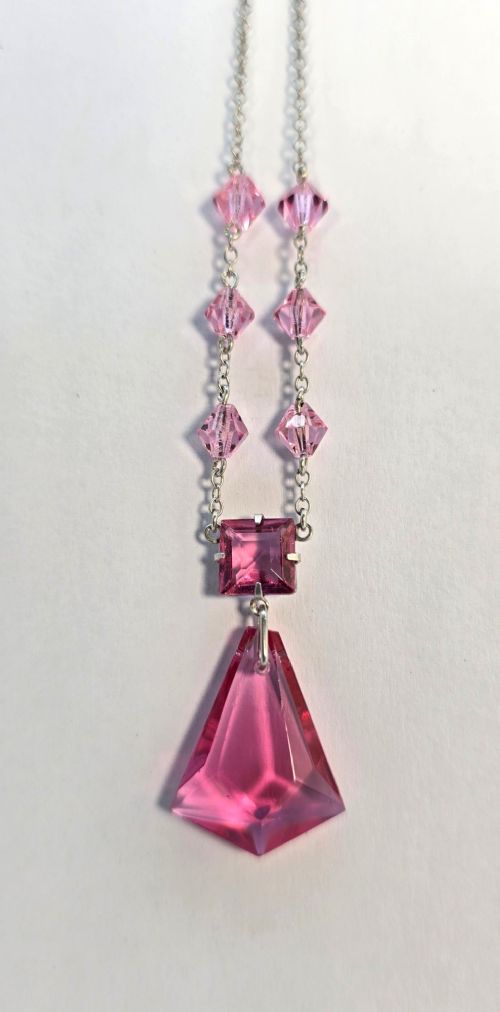
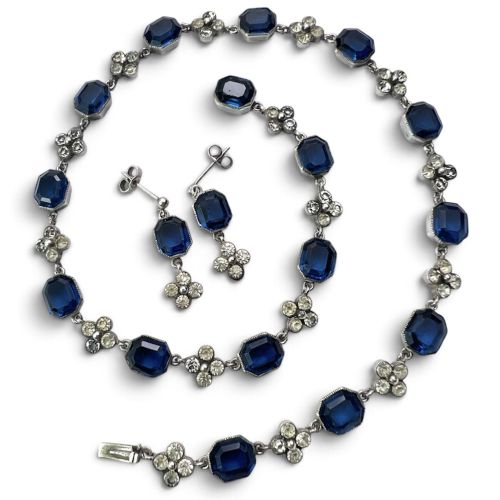
Jewellery pieces integrated into this category incorporate rock crystal, paste stones, and silver settings to achieve the characteristic angular aesthetic of the period. Necklaces, earrings, and drops frequently pair clear or coloured crystal with precious metals and enamel work. Together, these varied forms represent a unified design movement that prioritized structural symmetry and light refraction.
Materials and production techniques
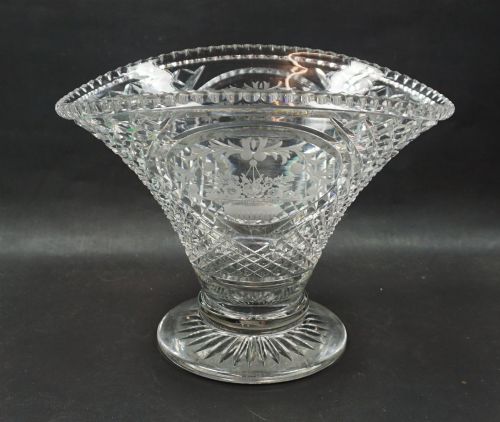
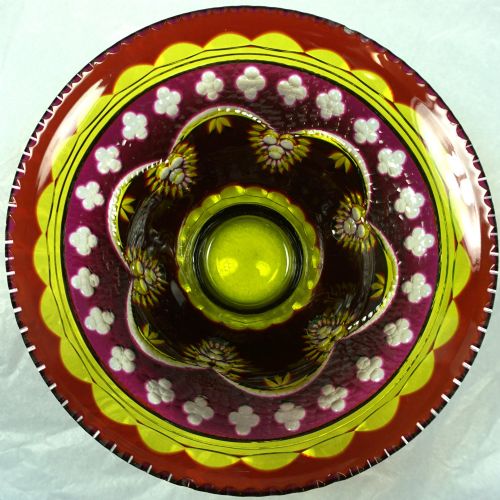
Makers utilised lead crystal, clear glass, and coloured over-crystal, often applying acid-etching, deep cutting, and wheel engraving to create complex geometric patterns. Over-crystal pieces involved fusing layers of coloured glass over a clear base before cutting through the exterior layer to expose contrasting tones underneath.
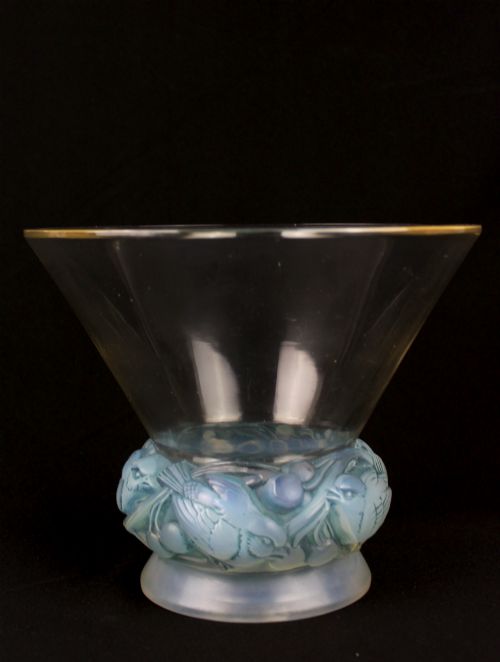
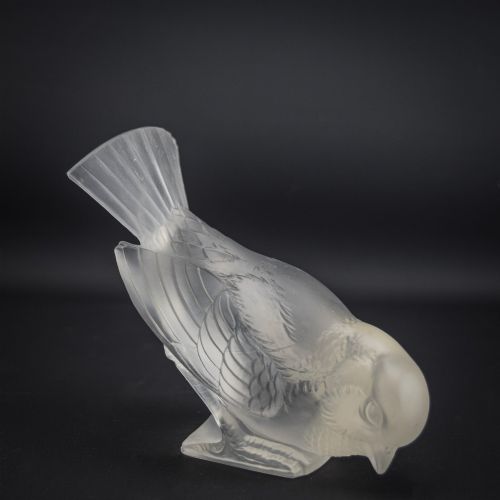
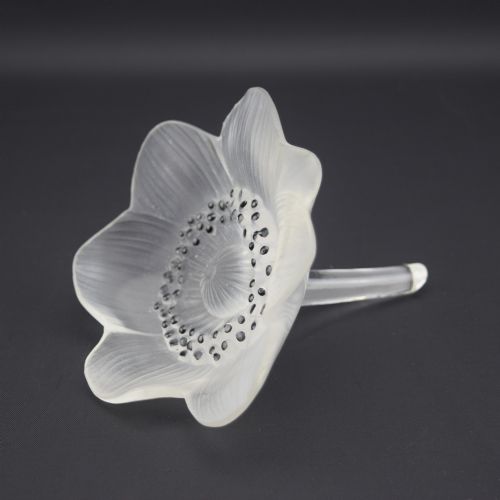
Surface ornamentation frequently incorporated vitreous enamel work, silver mounts, and gilt brass fittings integrated directly into the glass body. Mould-pressed techniques, championed by major French ateliers, allowed for high-relief sculptural motifs on vases, mascots, and opalescent chargers.
Art Deco Crystal Retail Price Guide 2026
Typical asking prices for art deco crystal among the pieces listed under this phrase on Sellingantiques today, from the lower quarter to the upper quarter. They describe what is for sale here now, not the wider market.
Distinguishing quality in the medium
Quality rests upon the precision of the glass cutting, the depth of the chemical etching, and the clarity of the raw crystal material. Superior examples display crisp, sharp facet edges without microscopic chipping, alongside an absence of internal bubbles or cloudiness in the glass matrix.
The integration of secondary materials, such as solid silver mounts, hand-applied enamel, and signed signatures or registry numbers from established glasshouses, elevates the execution. Weight, balance, and the resonant ring of the lead crystal further distinguish standard production ware from master-level studio output.
Rene Lalique·Karl Palda·Val St Lambert·Stuart Crystal·Jean Luce·Baccarat·Daum
The Art Deco Crystal Glossary
- Over-crystal
- A technique where a layer of coloured glass is cased over clear crystal and subsequently cut away to reveal contrasting colour bands beneath.
- Opalescent glass
- A milky, translucent glass type that diffuses light and exhibits subtle blue or amber shifts depending on the angle of illumination.
- Paste
- Hand-cut glass or lead crystal used to imitate precious gemstones in period jewellery and decorative mounts.
- Enamel
- Opaque vitreous composition fused to the surface of glass or metal through firing, frequently deployed in geometric or floral motifs.
- Lead crystal
- Glass containing substantial lead oxide content, providing increased weight, higher refractive index, and enhanced acoustic resonance.
Art Deco Crystal: Frequently Asked Questions
Were these glass items used daily or displayed?
Interwar households utilised these objects for both formal dining and everyday domestic display, particularly drinking sets, decanters, and smoking accessories. Perfume bottles and powder boxes sat regularly on dressing tables as functional personal items.
Larger chandeliers and table lamps served as permanent primary lighting sources in sitting rooms and hallways. Decorative vases and chargers functioned primarily as ornamental centrepieces rather than utilitarian vessels.
How can I identify Czech production pieces?
Bohemian and Czech pieces from the interwar period frequently feature bold geometric acid-etching and vibrant hand-applied enamel decoration. Workshops in this region often produced striking vanity sets, decanter combinations, and cocktail accessories.
Many export items left the factories with paper labels rather than permanent acid stamps, requiring stylistic comparison with documented designer archives. The combination of colourful glass bodies with modernist metallic closures remains a strong indicator of this origin.
What is opalescent glass?
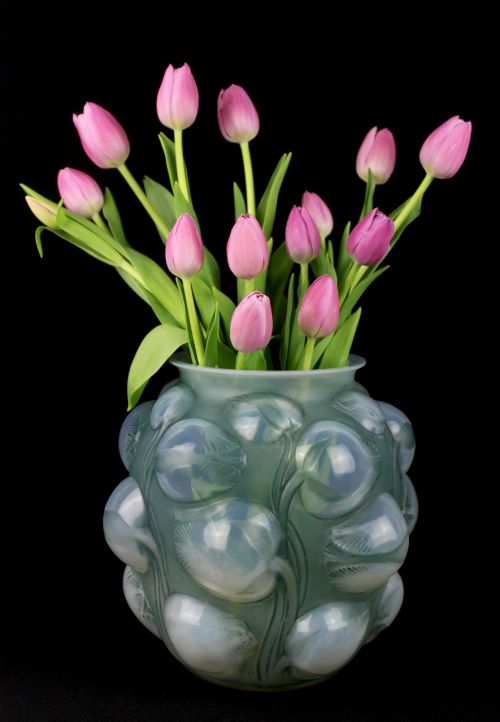
Opalescent glass is a specialised formulation that diffuses light through microscopic particles suspended within the clear or tinted matrix. This optical property creates a characteristic milky appearance with iridescent surface highlights.
Master glassmakers utilised this effect to accentuate high-relief sculptural moulding on decorative vases, bowls, and desk objects. The resulting play of transmitted and reflected light changes dynamically depending on the surrounding environment.