





Vintage Crystal Centrepieces
Vintage crystal centrepieces are heavy glass bowls and serving dishes designed to anchor a dining table, combining sparkle with structural presence.
Vintage Crystal Centrepieces
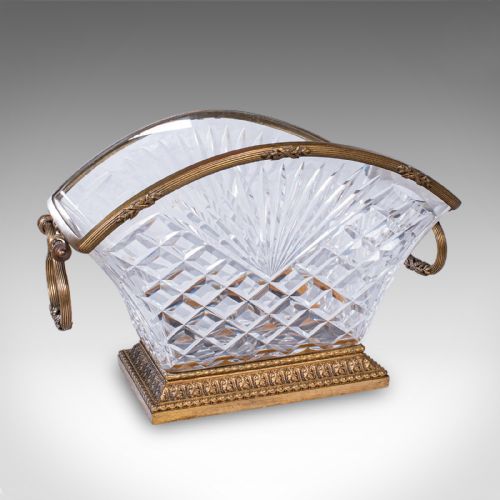
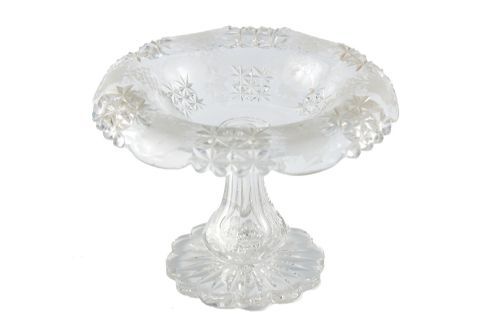
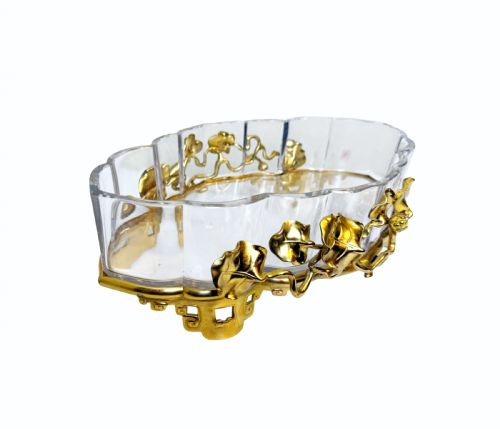
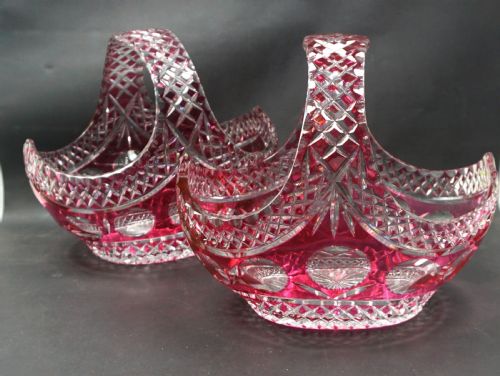
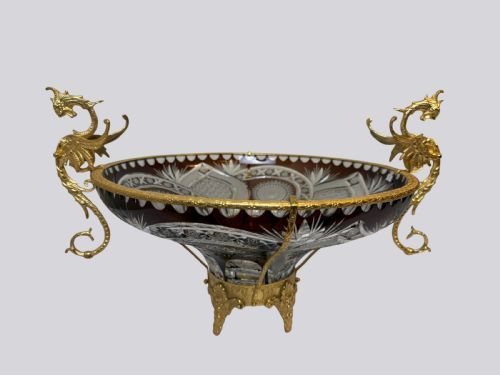
When you search for vintage crystal centrepieces, you encounter heavy glass bowls, pedestals, and baskets spanning the Victorian era through the Art Deco period. These items include deep cut glass bowls, heavy pedestal comports, and coloured glass vessels mounted in gilt bronze or silver plate.
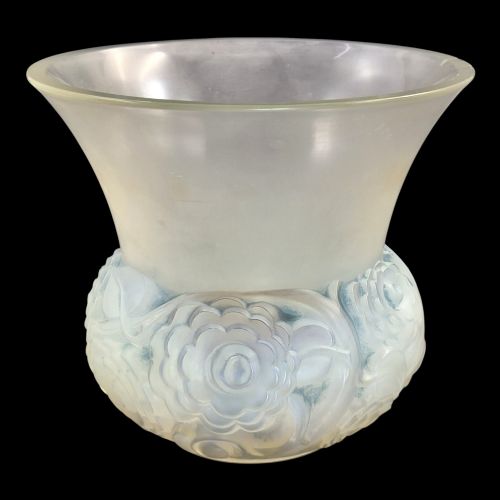
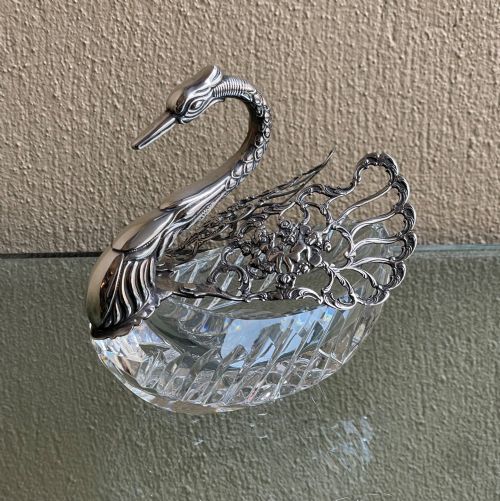
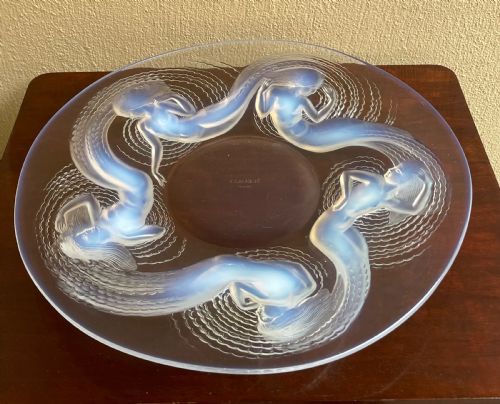
The selections on this page range from early nineteenth century Georgian cruet sets and hobnail pattern bowls to 1930s opalescent charger plates and French art glass. You will also find Edwardian fruit bowls, cobalt blue vessels, and pieces combining hand blown crystal with silver metal frames.
Materials and production methods
The pieces rely on lead crystal, heavy cut glass, and opalescent or coloured glass, often shaped through hand blowing and deep wheel cutting. Makers achieved rich tones by layering coloured glass over clear crystal before cutting back the surface to reveal contrasting depths.
Many heavy glass bowls and dishes integrate structural mounts made from gilt bronze, ormolu, and silver plate. Surface decoration also involves gold enamel work and acid etching applied directly to the glass body.
The listings span the Victorian era, Art Nouveau, and Art Deco periods, uniting lead crystal, opalescent glass, and silver plate.
Assessing quality in crystal centrepieces
Quality rests on the crispness of the cutting and the weight of the metal mounts. Deep, sharp wheel cutting creates pronounced refraction, whereas softer facets indicate a rushed finish or later mass production.
The integration between the glass and any bronze or silver plated frame dictates the standard of the piece. Well made items show precise fitting where the heavy glass sits securely within its metal architecture.
Val St Lambert·Lalique·Daum France·St Louis glassworks·Waterford
The Vintage Crystal Centrepieces Glossary
- Lead Crystal
- Glass containing metallic lead oxide to increase brilliance, weight, and the ability to hold deep facets. This material gives vintage centrepieces their distinct heaviness and sharp light refraction.
- Comport
- A shallow decorative bowl elevated on a pedestal base. These pieces traditionally held fruit or sweetmeats at the centre of a formal dining table.
- Hobnail Pattern
- A raised, faceted surface design resembling the hobnails on sturdy boots. The pattern creates a bumpy texture that catches light across multiple angles.
- Ormolu
- Finely ground high-carat gold applied to a bronze base through a mercury amalgamation process. It provides a warm metallic contrast to clear and coloured crystal.
- Pâte de Verre
- A glass-casting method where crushed glass is packed into a mould and fused in a kiln. This technique produces dense, opaque vessels with subtle colour shading.
Vintage Crystal Centrepieces: Frequently Asked Questions
How do I clean an antique crystal centrepiece?
Wash the glass by hand in lukewarm water using a mild detergent, placing a towel at the bottom of the sink to cushion the heavy material. Avoid sudden temperature changes to prevent cracking the lead crystal.
Dry the piece immediately with a lint-free cloth to maintain the clarity of the cut facets. Keep metal mounts dry and away from prolonged immersion in water.
Were these centrepieces used for flowers or fruit?
Both uses were common depending on the depth and form of the vessel. Shallow pedestal bowls and comports typically held fruit or sweetmeats, while deeper bowls accommodated floral arrangements.
Many examples include fitted metal frames or baskets specifically designed to support cut flowers alongside dining table spreads.
How do I distinguish Victorian from Art Deco pieces?
Victorian centrepieces tend to feature heavy cut glass, hobnail patterns, and elaborate silver plate or etched floral motifs. They emphasise traditional symmetry and deep brilliance.
Art Deco items from the 1920s and 1930s lean towards geometric clarity, opalescent finishes, and stylised moulded designs by makers such as Lalique and Val St Lambert.
What is the difference between cut glass and lead crystal?
Lead crystal contains added lead oxide, which increases the soft density of the material and allows for deeper, sharper facets when cut. Standard cut glass lacks this specific lead content and is generally lighter.
Both materials appear frequently across nineteenth and twentieth century dining tables, though lead crystal yields a sharper ring when tapped gently.