






Antique Cut Glass Urn
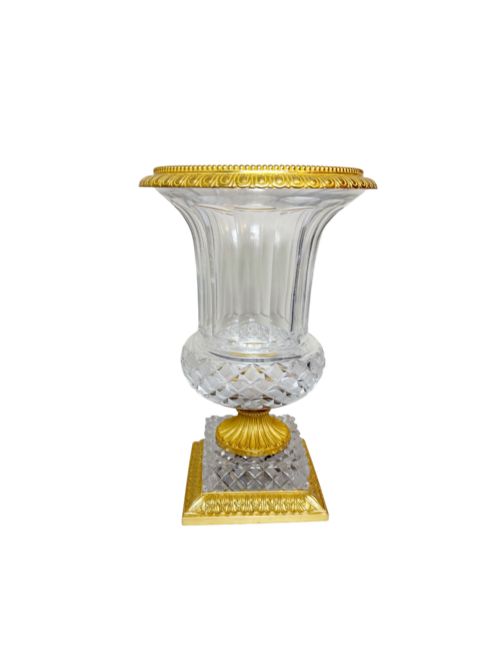
An antique cut glass urn brings heavy refractive sparkle and classical presence to a room, drawing the eye with deep wheel-carved facets and crisp prismatic geometry.
Antique Cut Glass Urn
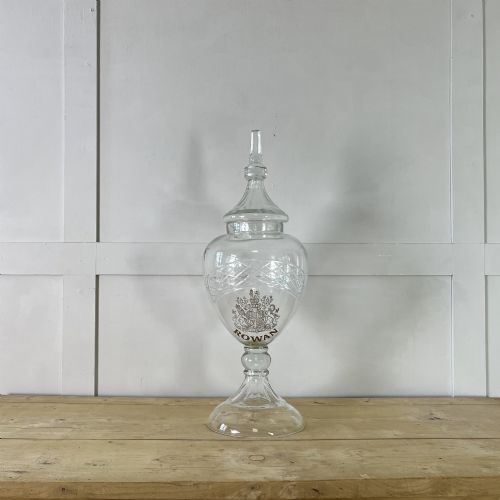
An antique cut glass urn encompasses substantial decorative vessels, lidded jars, and wine coolers produced across the nineteenth and twentieth centuries. These pieces manifest in varied forms, from Victorian lidded vases and apothecary jars to Edwardian table lamps and French Art Deco champagne buckets.
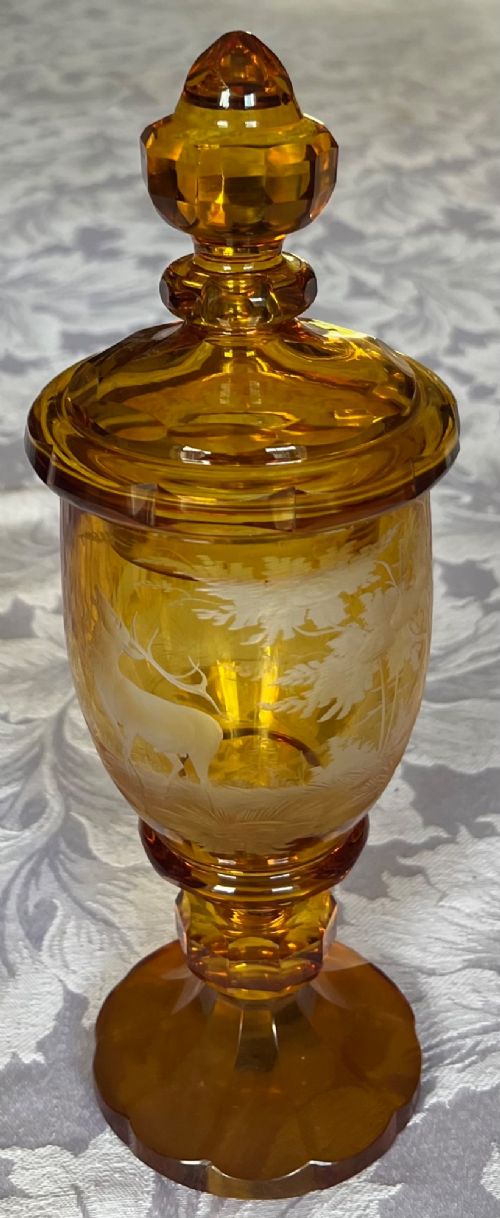
The objects derive from diverse origins, including English Regency workshops, Victorian English factories, Bohemian glasshouses, and French ateliers. Collectors encounter clear lead crystal alongside coloured variants such as cobalt blue, ruby glass, and sapphire blue.
Victorian and Edwardian examples dominate the selection, often featuring deep diamond cuts, panels, and flutes. Alongside traditional Classical and Regency shapes, buyers find pieces incorporating silver mounts, Dutch silver covers, and paste gilt decoration.
Materials and manufacture
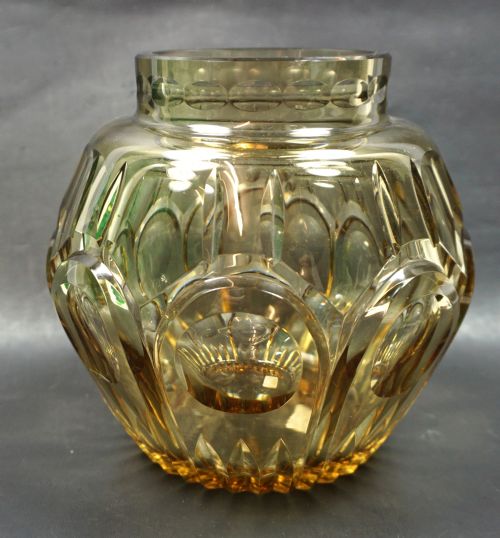
Makers utilised heavy lead crystal and clear glass, shaped by hand blowing or moulding before cooling for subsequent decoration. Overlay techniques combined clear glass with coloured layers of ruby or cobalt, allowing artisans to cut through the outer stratum to reveal contrasting tones beneath.
Cutting was achieved using iron and stone wheels fed with abrasive grit and water to grind deep facets, flutes, and cross-hatching into the surface. Final polishing imparted brilliance, sometimes complemented by wheel-etching, gold leaf application, or mounting in silver and chrome.
Antique Cut Glass Urn Retail Price Guide 2026
Typical asking prices for cut glass urn among the pieces listed under this phrase on Sellingantiques today, from the lower quarter to the upper quarter. They describe what is for sale here now, not the wider market.
Materials documented across the pieces include lead crystal, clear glass, cobalt blue, ruby glass, chrome, and gold leaf.
Assessing quality
Depth and crispness of the cutting define the standard of the piece, where sharp, clean edges on facets indicate superior craftsmanship. Soarse or rounded hobnails and sluggish lines denote hurried production.
Weight and clarity of the glass reveal the purity of the material, with high lead content producing a resonant ring and heavy heft. The integration of mounts, whether Dutch silver or gilt metal, further distinguishes exceptional examples from standard utilitarian vessels.
Hukin and Heath
The Antique Cut Glass Urn Glossary
- Cut crystal
- High-clarity glass containing lead oxide, which increases weight and refractive index. This material allows artisans to cut sharper facets that disperse light effectively.
- Overlay
- A technique where a layer of coloured glass is fused over a clear body. Artisans grind away portions of the outer skin to create contrasting patterns.
- Prunt
- An applied blob of molten glass shaped into a decorative disc or boss. These elements appear on traditional vessels for grip or ornamentation.
- Sweetmeat jar
- A covered vessel historically used for preserves, confectionery, or dry sweetmeats. Such jars frequently feature heavy pedestal bases and panel cutting.
- Pontil mark
- A rough scar left on the base where the glassblowing rod was detached. Its presence confirms hand-finished production methods.
Antique Cut Glass Urn: Frequently Asked Questions
How do I date an antique cut glass urn?
Dating relies on stylistic markers, cutting styles, and mounting details associated with periods like Regency, Victorian, or Art Deco. Heavy lead weight and deep hand-cutting typically indicate nineteenth-century production.
Form also guides attribution, as apothecary jars, sweetmeat containers, and wine coolers reflect the changing domestic requirements of their respective eras.
What is the difference between glass and crystal?
Crystal contains a proportion of lead oxide, which softens the material for deeper cutting and increases its refractive brilliance. Standard glass lacks this metallic oxide component.
Lead crystal feels perceptibly heavier in the hand and produces a sustained, resonant tone when struck gently on the rim.
Can I use these urns for fresh flowers?
Many lidded urns, jars, and vases function practically for floral arrangements once the covers are removed. Ensure the vessel interior is free from old residue before filling with water.
Antique lead crystal can be sensitive to prolonged moisture, so drying the interior thoroughly after use preserves the clarity of the glass.
Why do some urns feature coloured overlay?
Coloured overlay developed in nineteenth-century Bohemian and French glasshouses to display intense hues like ruby and cobalt alongside clear facets. Artisans cased clear glass in a thin coloured layer before carving through it.
This method created striking visual contrast, making panelled ovoid vases and coolers highly decorative even without contents.