

Art Deco Credenza Cabinet
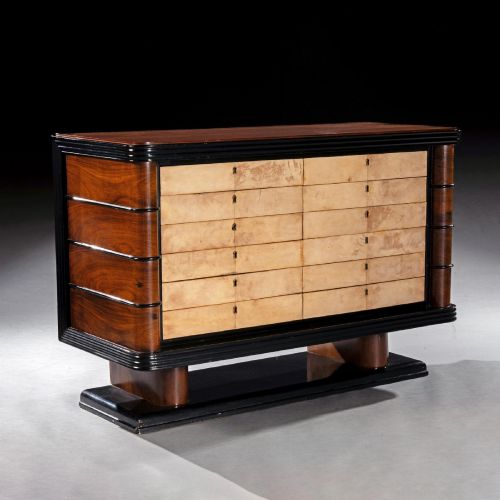
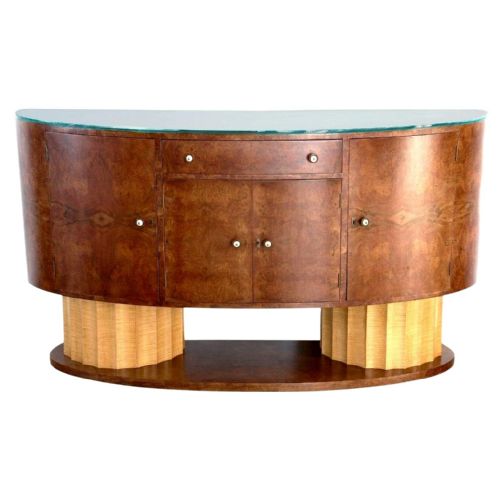
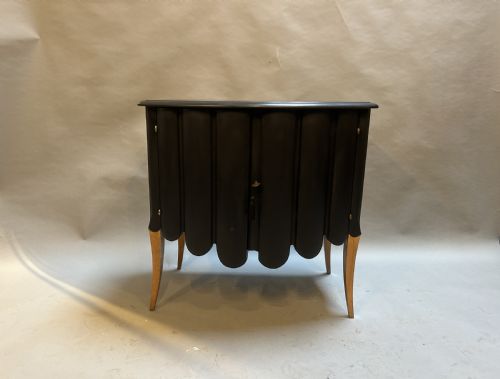
An art deco credenza cabinet brings sculptural symmetry and rich timbers to a room, offering generous storage with distinctive period style.
Art Deco Credenza Cabinet
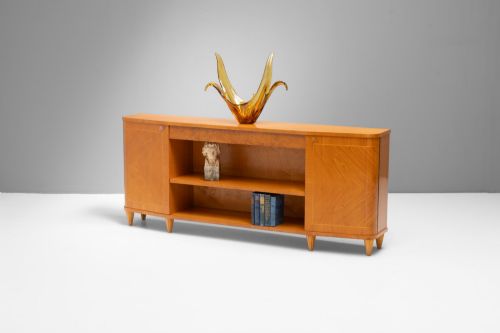
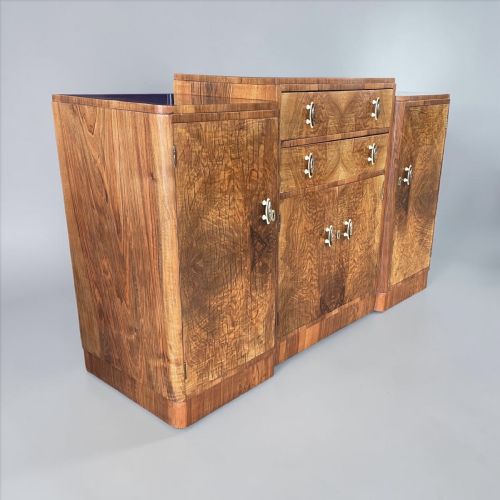
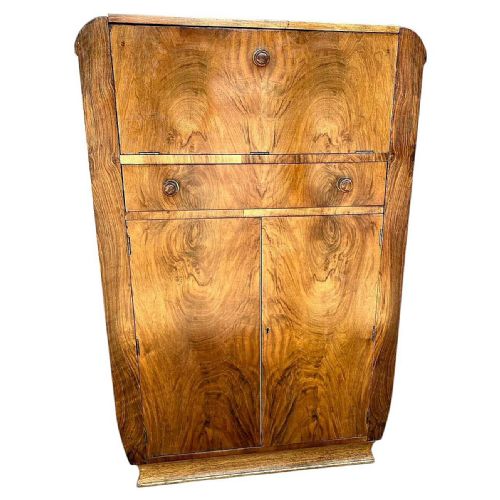
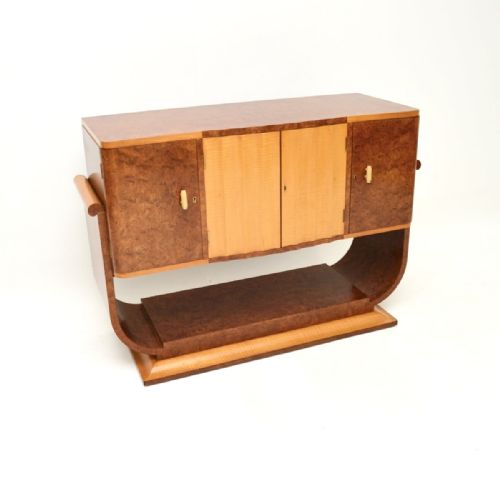
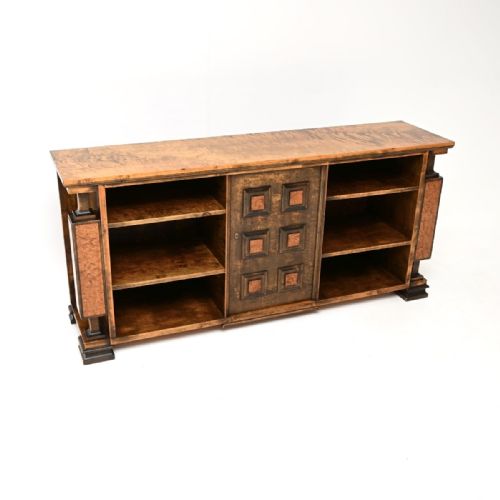
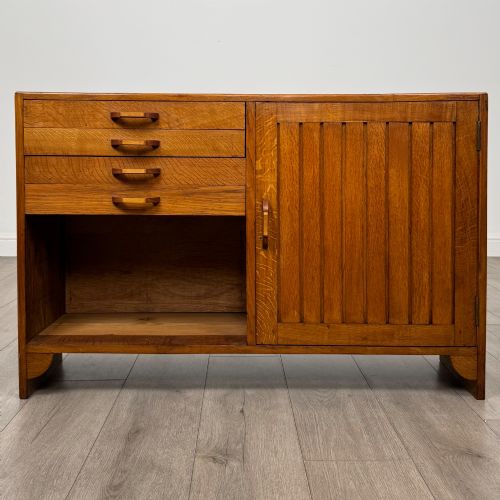
When you search for an art deco credenza cabinet, you encounter substantial storage furniture designed primarily during the 1920s, 1930s, and 1940s. These pieces span various forms, including sideboards, cocktail cabinets, drinks cabinets, and low bookcases.
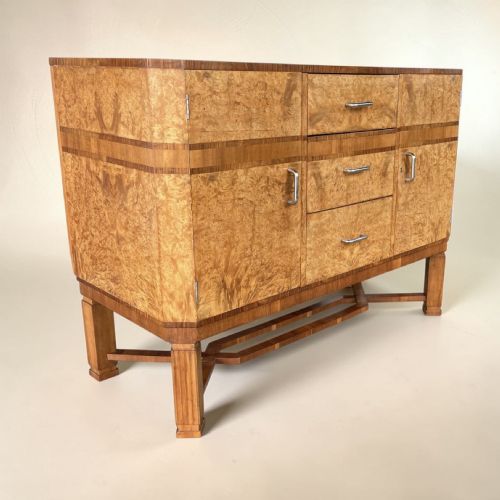
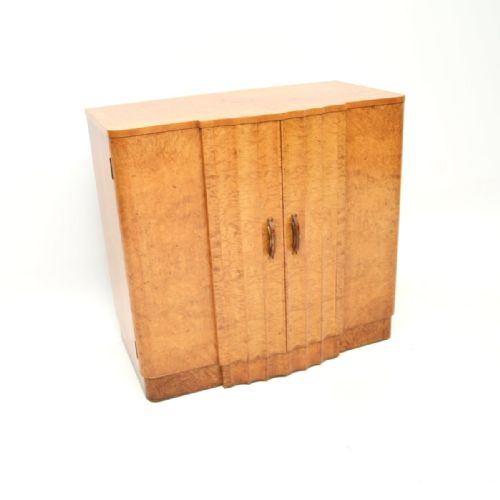
The version you are most likely to meet on this page is a sideboard or cocktail cabinet originating from the nineteen-thirties. British, French, Swedish, and Italian origins appear frequently, showing distinct regional interpretations of the style.
Some examples combine traditional cabinetry with specialised compartments for bottles and glassware. Others serve as general storage units with multiple doors and drawers arranged in geometric harmony.
Materials and construction methods
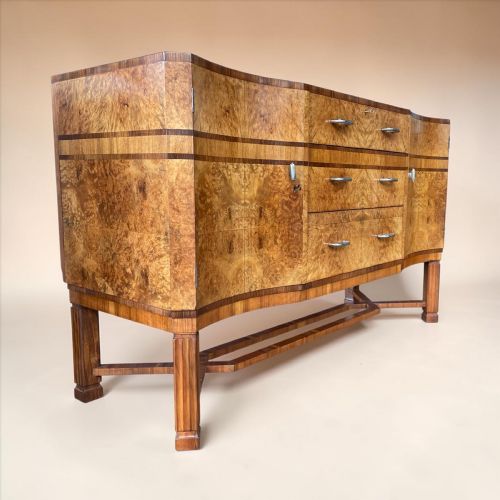
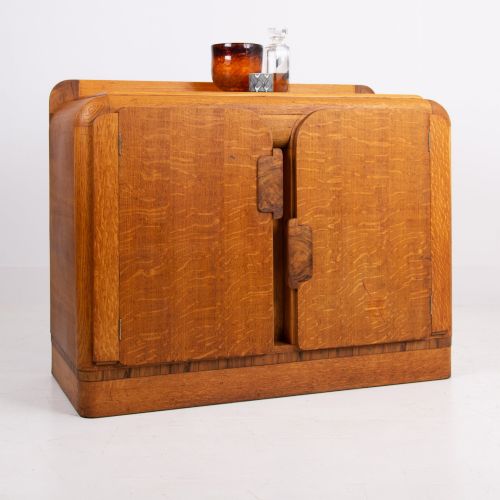
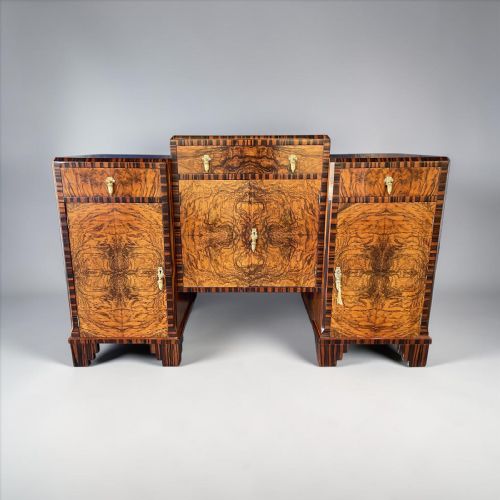
Cabinet makers relied heavily on timber veneers, choosing figured walnut, burr walnut, mahogany, oak, and satin birch to create striking grain patterns across large surfaces. These veneers were laid over solid timber carcases, often contrasted with lighter secondary woods like sycamore or maple.
Metal accents played a crucial role in defining the aesthetic, utilising brass, aluminium, and bakelite for handles, hinges, and decorative trim. Specialist touches such as parchment-covered drawers and inset glass panels appear in select French and British workshops.
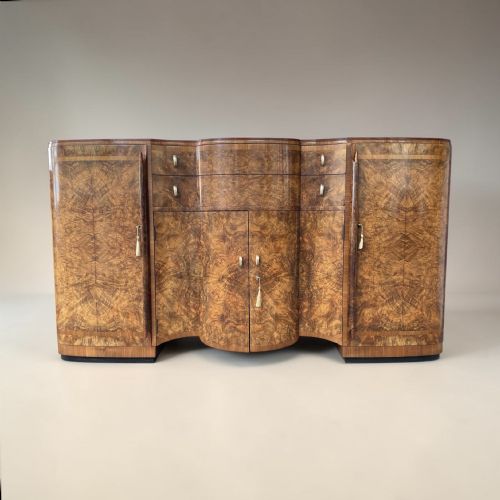
Several cabinets conceal elaborate mirrored cocktail compartments behind unassuming geometric doors, ready to transform an ordinary evening into a roaring twenties party.
Distinctions in craftsmanship and design
The calibre of an art deco credenza cabinet depends significantly on the selection and matching of timber veneers. Master workshops aligned grain patterns across multiple doors and drawers to create continuous, balanced visual motifs.
Structural integrity and internal fittings also separate standard production from superior examples. Fitted cocktail interiors with mirrored backs, pull-out slides, and specialised shelving reflect higher standards of original manufacture.
Maurice Adams·Harry and Lou Epstein·Gomme·Hille·Heals of London·Hamptons of Pall Mall London·Bowman Brothers
The Art Deco Credenza Cabinet Glossary
- Veneer
- A thin slice of figured wood applied to a stable underlying timber base. This technique allowed cabinet makers to display dramatic grain patterns without using solid luxury woods for the entire structure.
- Burr walnut
- A prized timber harvested from walnut tree growths, producing swirling, intricate grain patterns. It forms the primary decorative surface on many high-end cabinets from the interwar period.
- Sideboard
- A long storage unit traditionally used for dining rooms to hold tableware and serving dishes. Many pieces fulfilling this function double as credenzas within modern living spaces.
- Cocktail cabinet
- A specialised storage piece designed for home entertaining, featuring internal compartments for bottles, glassware, and mixing surfaces. These often include drop-down doors that serve as serving ledges.
Art Deco Credenza Cabinet: Frequently Asked Questions
What is an art deco credenza cabinet used for?
These cabinets provide versatile storage for dining rooms, living spaces, and hallways. Many feature dedicated shelving, drawers, and compartments designed specifically for tableware, linens, or glassware.
Cocktail and drinks variants include specialised spaces for bottles and bar accessories. Their flat upper surfaces also serve as display areas for lighting, art, or decorative objects.
How do I identify the period of a cabinet?
Dating relies on examining the combination of materials, construction methods, and stylistic cues present in the piece. Cabinets from the interwar period often feature geometric silhouettes, contrasting veneers, and metal hardware.
Pieces from the Edwardian era lean towards golden oak and traditional revival styles, while nineteen-forties items may show mid-century modern influences or simpler wartime construction.
Are these cabinets difficult to place in a modern home?
Their strong geometric lines and warm timber tones allow them to anchor contemporary or traditional interior schemes. A low sideboard or cabinet functions well as a media console or a statement storage piece in a living room.
Their substantial presence makes them natural focal points, pairing effectively with minimalist furniture or eclectic vintage decor.
What woods were commonly used?
Walnut is the predominant timber found across these designs, frequently utilised in figured or burr variations to create visual movement. Oak, mahogany, satin birch, and palisander also appear with regularity.
Secondary woods like sycamore and maple provide contrast for interior linings or stringing details, while metals such as brass and aluminium finish the exterior.