


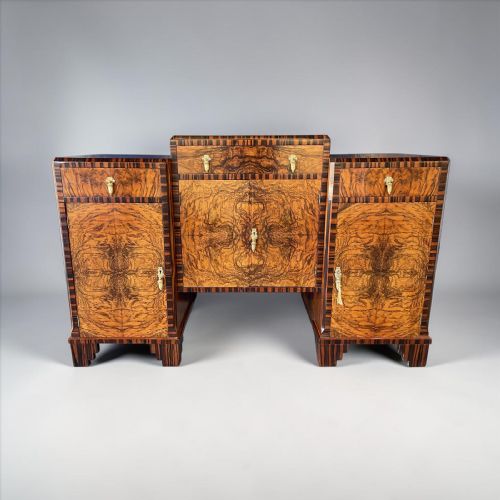


Art Deco Buffet Server
An art deco buffet server brings the bold geometry and rich grain of the 1920s and 1930s directly into a modern dining room.
Art Deco Buffet Server
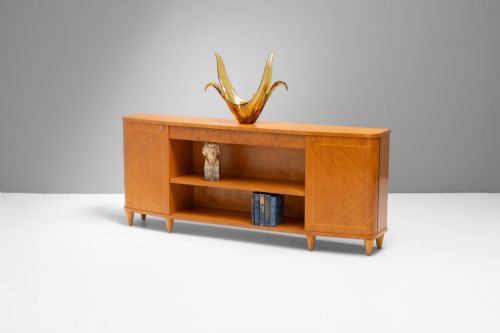
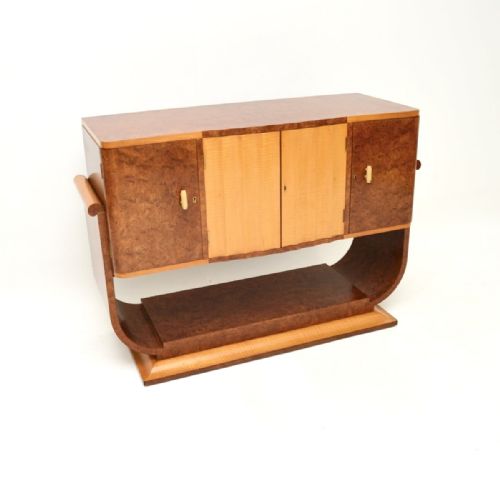
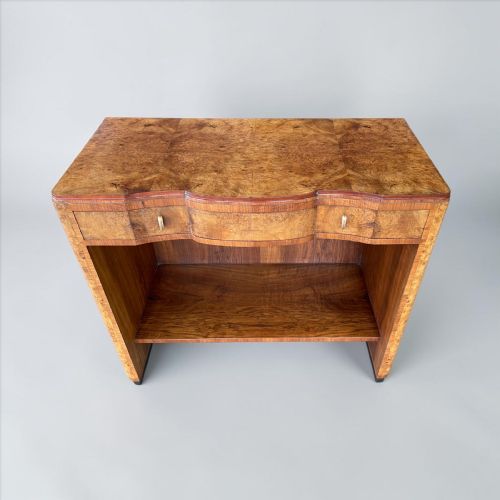
When searching for an art deco buffet server, buyers encounter substantial dining furniture catalogued variously as sideboards, credenzas, serving tables, and side cabinets. These pieces date principally from the 1920s and 1930s, originating from English workshops, Parisian studios, and Italian makers.
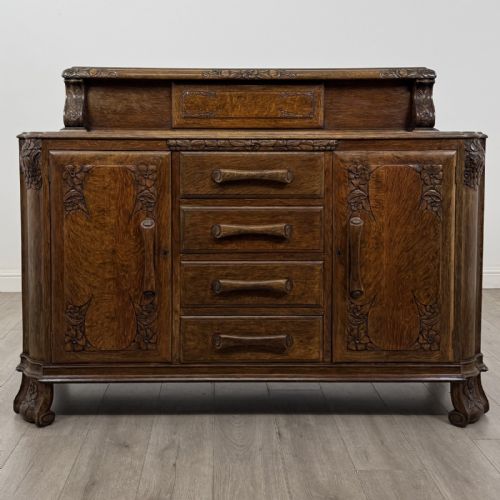
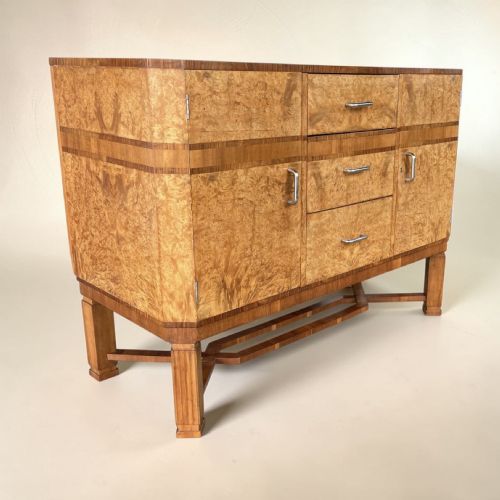
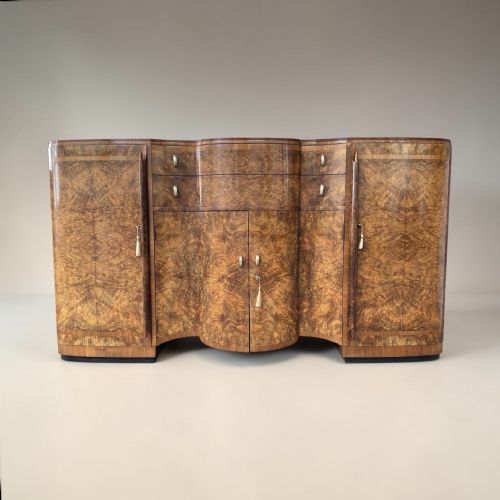
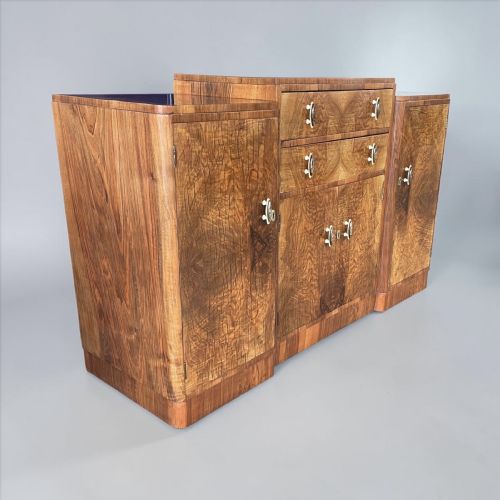
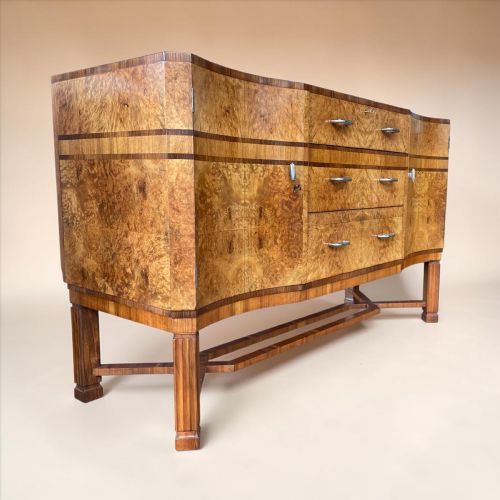
The version most commonly met on this page is a walnut or burr walnut sideboard standing low and wide, often fitted with cupboards and drawers designed for dining room service. Pieces span from compact small sideboards to large serving tables built to anchor a formal interior.
Materials and Construction
These items rely heavily on walnut, burr walnut, and oak timbers, frequently enhanced by decorative walnut veneer, sycamore, and macassar ebony. Cabinetmakers applied these figured veneers to create striking geometric patterns across large flat surfaces.
Metal, brass, glass, and bakelite appear as contrasting accents on handles, trims, and internal fittings. Hardwood carcasses provide the structural weight beneath the polished wood exteriors.
Art Deco Buffet Server Retail Price Guide 2026
Typical asking prices for art deco buffet server among the pieces listed under this phrase on Sellingantiques today, from the lower quarter to the upper quarter. They describe what is for sale here now, not the wider market.
Listings feature items dated across the 1920 and 1930 periods, incorporating walnut, burr walnut, oak, and macassar veneers.
Judging Quality
The distinction between standard production and top tier work rests primarily on the selection of timber veneers and the precision of their layout. Highly figured burr walnut and exotic macassar veneers aligned across drawer fronts signal a superior maker.
Execution of hardware also divides the range, where cast brass and original bakelite fittings indicate higher grade cabinetmaking compared to simple replacement handles. The integration of complementary secondary woods like sycamore reveals greater attention to detail.
Maurice Adams·Gomme·Heals of London·Harry and Lou Epstein·Hamptons of Pall Mall London
The Art Deco Buffet Server Glossary
- Burr walnut
- A wood grain featuring swirling patterns formed from tree growths, highly prized for decorative furniture panels. It provides the signature textured look of many 1930s cabinets.
- Veneer
- A thin layer of superior wood applied over a stable hardwood base to create patterned surfaces without heavy timber costs. Walnut veneer defines the majority of these serving pieces.
- Macassar ebony
- A dense, dark wood with distinctive brown and black stripes originating from Southeast Asia. It appears on sophisticated Parisian examples.
- Sideboard
- A long dining room cabinet used for storing cutlery, linen, and serving dishes. The terms sideboard and buffet server are often used interchangeably in these listings.
- Limed oak
- Timber treated with a white finish to highlight the open grain, popular in English furniture from the interwar period. It offers a lighter aesthetic than dark walnut.
Art Deco Buffet Server: Frequently Asked Questions
How do I use an art deco buffet server today?
These cabinets function well as sideboards in modern dining spaces to store tableware, glassware, and serving platters. Their flat tops also provide a practical surface for serving drinks or displaying decorative objects during dinner parties.
The substantial internal cupboard space accommodates modern dining accessories while maintaining the clean geometric lines characteristic of the period. Placing one against a dining room wall anchors the room with period character.
How can I tell a 1920s piece from a 1930s piece?
Pieces from the 1920s often lean towards French Parisian styling, utilising exotic woods like macassar ebony and dramatic curved silhouettes. They reflect the early luxury of the decorative arts movement.
Items from the 1930s frequently adopt more streamlined English forms in burr walnut or oak, reflecting mass production improvements by makers like Gomme and Epstein. However, stylistic overlap remains common across the interwar period.
Are these serving tables suitable for small dining rooms?
Listings include several compact variations specifically designated as small sideboards, designed to fit narrower proportions. These smaller formats retain the dual cupboards and serving surface without dominating restricted floor space.
Checking specific measurements ensures the cabinet clears doorways and leaves adequate room for dining chairs to pull out comfortably. English workshops produced various scaled options to suit different room sizes.
What maintenance do burr walnut surfaces require?
Polished walnut and burr walnut veneers respond best to regular dusting with a soft, dry cloth and occasional treatment with appropriate furniture wax. Direct sunlight can fade the rich tones of the wood over time, so positioning the cabinet away from intense windows preserves the finish.
Avoiding excessive moisture and placing protective pads under hot serving dishes protects the polished veneer from heat marks and rings. Simple care keeps the polished grain stable for daily use.