
Art Deco Armchair
When you search for an art deco armchair, you seek a seat that balances bold geometric form with tactile comfort.
What an art deco armchair is
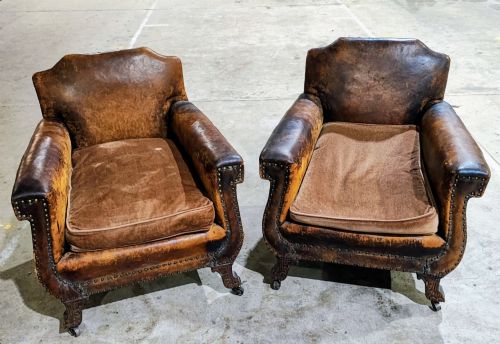
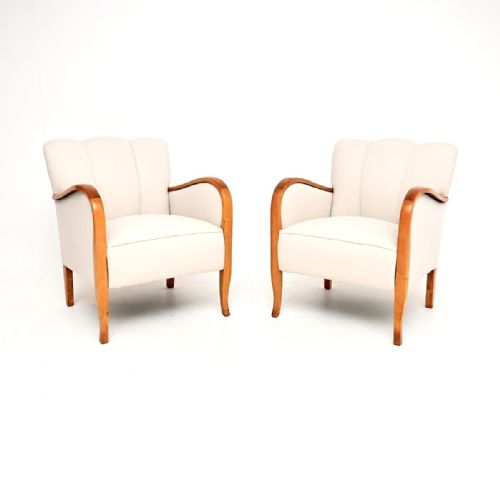
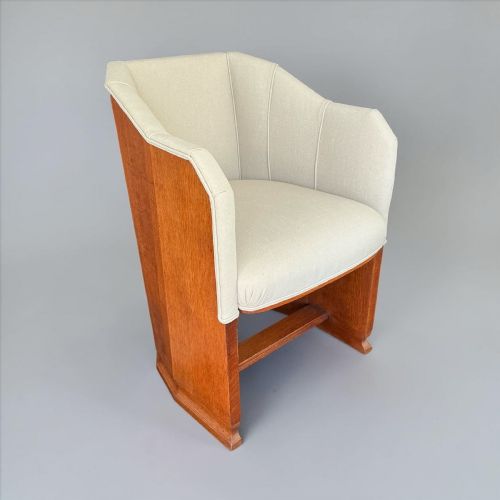
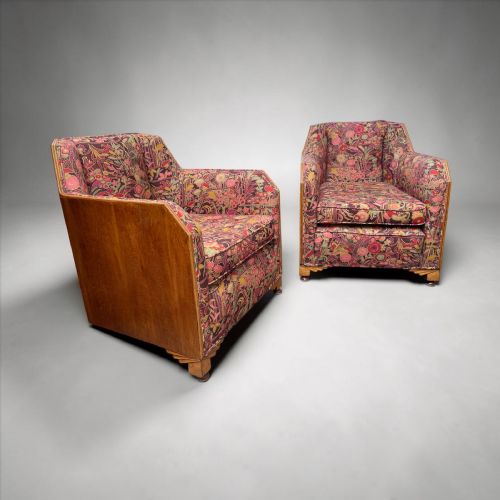
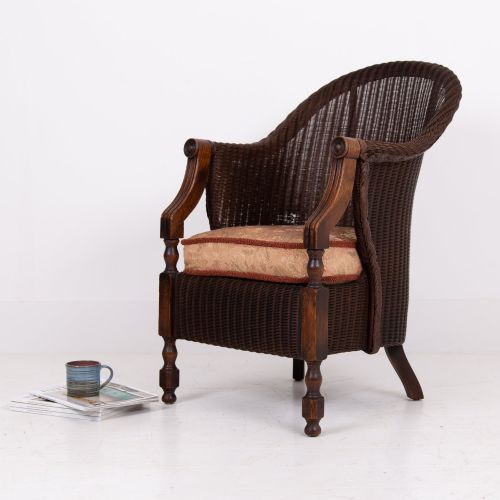
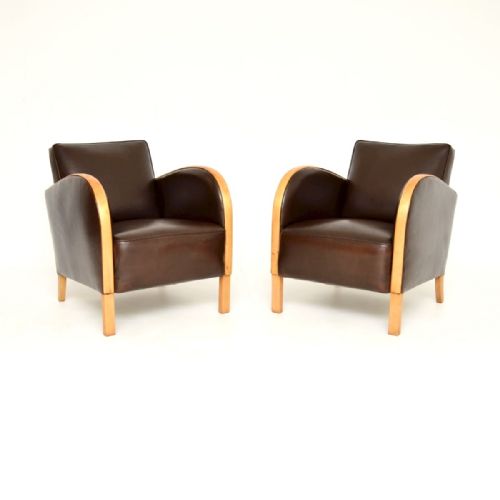
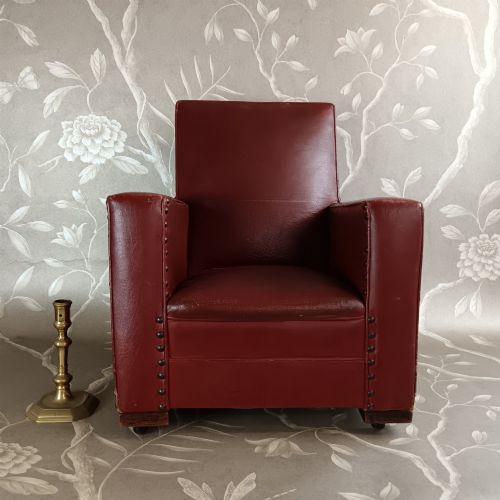
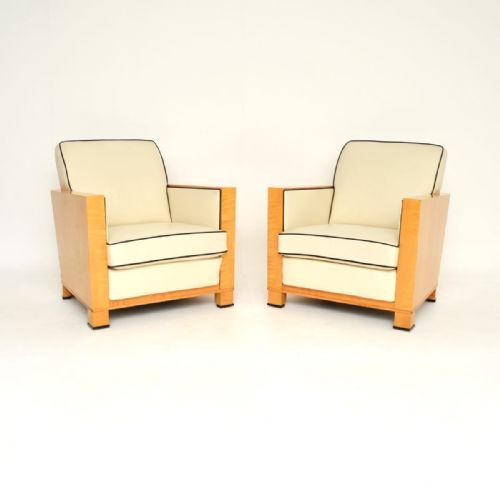
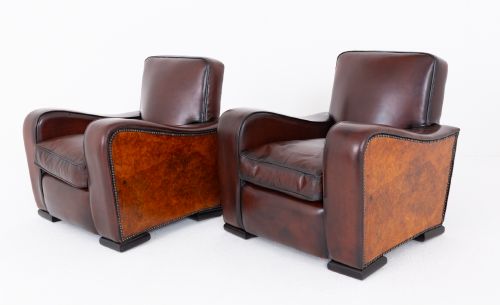
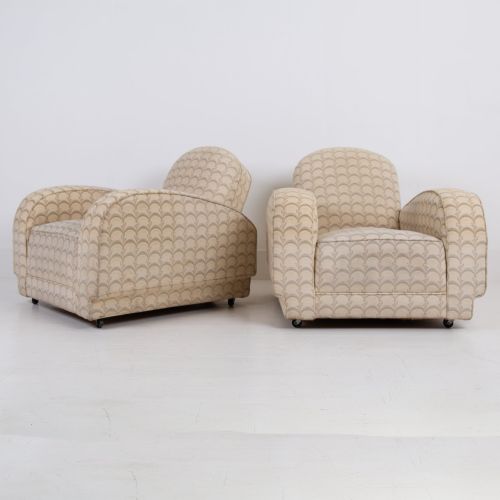
An art deco armchair provides a supportive seat shaped by the distinct design movements of the early twentieth century. These chairs often appear in forms such as club chairs, barrel backs, and cloud backs.
The selections available here stem primarily from the nineteen-thirties, alongside examples from the nineteen-hundreds and nineteen-twenties. They serve as functional seating and focal points within a room.
Makers and origins span various regions, including English, French, Danish, and Swedish workshops. Buyers encounter both single chairs and matched pairs upholstered in leather, velvet, and fabric.
What varies in quality
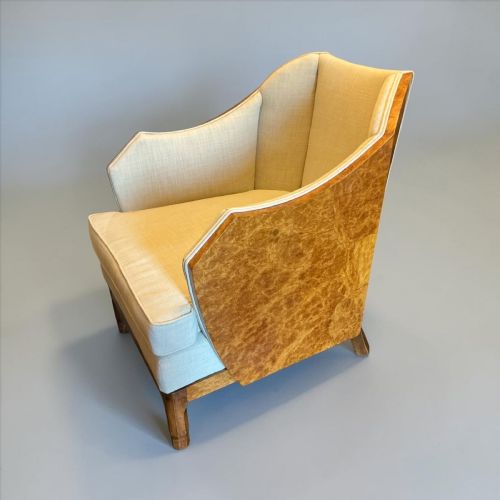
The selection of timber dictates the visual depth of the frame, with figured veneers like satin birch and satinwood marking high-grade construction. Solid hardwood frames offer enduring structural integrity.
The execution of the upholstery defines the finish, particularly when utilising Italian leather, wool, or fine velvet with precise stitching and brass detailing. Expertly fitted cane work requires consistent tension and alignment.
Retail Price Guide 2026
Typical UK retail prices for art deco armchair, calculated from the Sellingantiques database of over a million retail prices indexed since 2003. This retail price guide relies exclusively on Sellingantiques data; no external sources or auction records are used, so the figures do not describe the wider market.
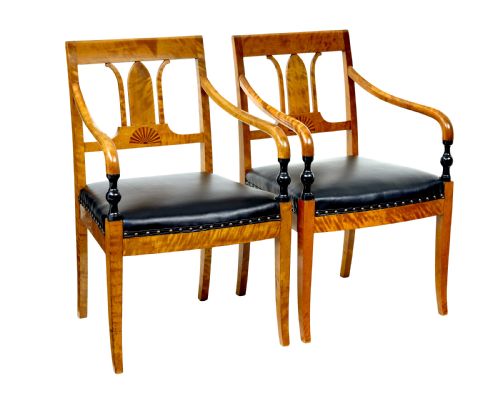
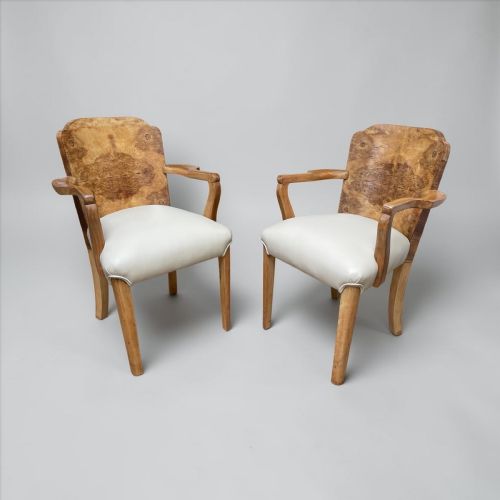
The site listings include armchairs and desk chairs from the nineteen-hundreds, nineteen-twenties, and nineteen-thirties.
Epstein
The Art Deco Armchair Glossary
- Bergere
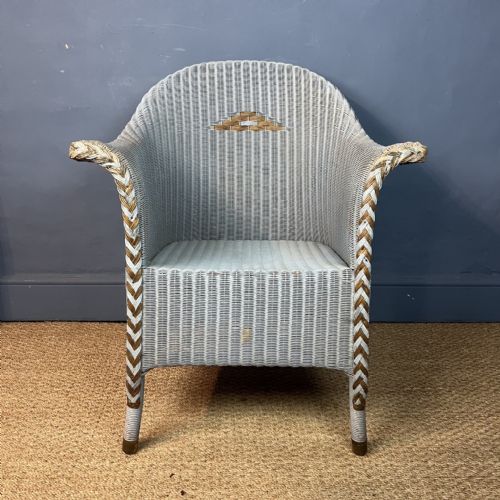
- A chair with a wooden frame and cane panels on the back and sides. This style introduces lighter textures to heavy timber frames.
- Cloud back
- An upholstered chair back shaped in smooth, rounded curves resembling clouds. This form defines specific nineteen-thirties lounge seating.
- Club armchair
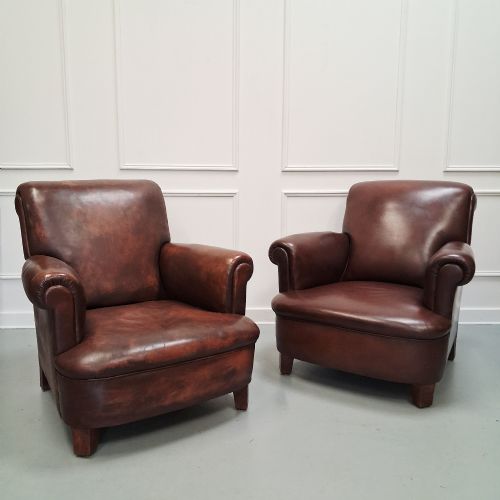
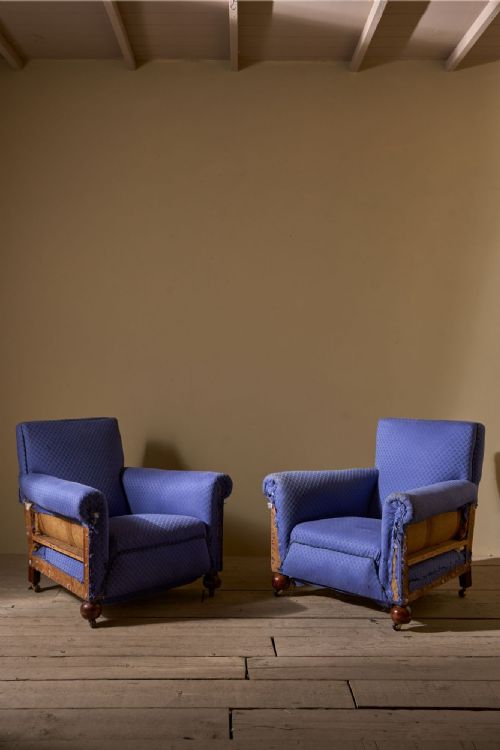
- A deep, low-slung upholstered seat traditionally covered in leather. These chairs prioritize substantial padding for maximum lounging comfort.
- Satin birch
- A pale timber with a natural sheen frequently utilised in Scandinavian furniture production. It provides a distinct contrast to darker woods like walnut.
Frequently Asked Questions
How do I identify an art deco armchair?
Look for symmetrical geometric shapes, rounded barrel or cloud backs, and smooth polished timber frames. These characteristics separate the style from heavier Victorian or simpler Edwardian seating.
Examine the materials used in the construction, such as satin birch, walnut, or leather upholstery, which frequently date from the nineteen-thirties.
Were these chairs made in pairs?
Many examples survive as matched pairs intended for opposing placement in a drawing room or salon. Club chairs and lounge seats were frequently produced in sets alongside matching sofas.
Single chairs also appear regularly, often functioning as desk chairs or standalone accent pieces in smaller spaces.
How should I care for leather upholstery?
Maintain leather surfaces by dusting regularly with a soft cloth and applying appropriate leather balms to prevent drying. Keep the chair away from direct sunlight and heat sources to preserve the original hide.
Fabric and velvet upholstery benefit from gentle vacuuming with a soft brush attachment to remove surface debris without damaging the textile.
What woods were commonly used?
Craftsmen utilised a wide variety of timbers including oak, walnut, mahogany, and exotic veneers like satin birch and satinwood. The choice of wood often reflects the geographic origin of the workshop.
Lighter woods like birch frequently indicate Scandinavian manufacture, while walnut and mahogany appear more commonly in British and French pieces.