



Armorial Carved Chair
An armorial carved chair bears heraldic crests and carved coats of arms, offering a direct link to historic lineage and distinguished interiors.
Armorial Carved Chair
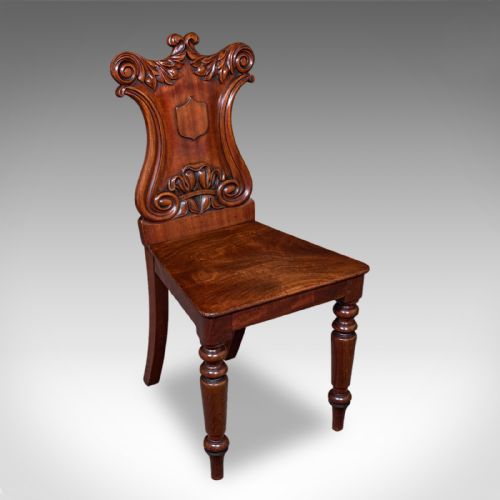
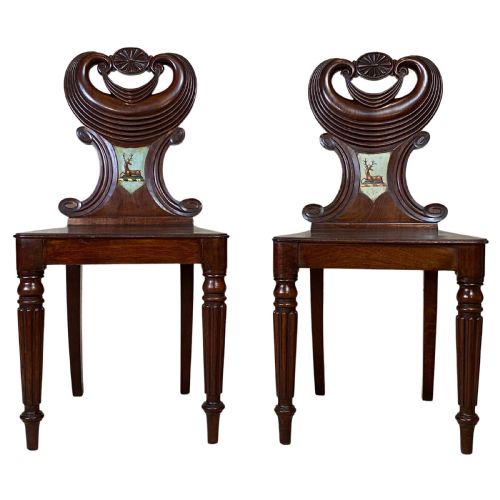
When you search for an armorial carved chair, you encounter seating distinguished by carved heraldic crests, coats of arms, and family insignia. These pieces originate from periods spanning the seventeenth century through to the Victorian era, encompassing styles such as Regency, George IV, Gothic Revival, and Carolean Revival.
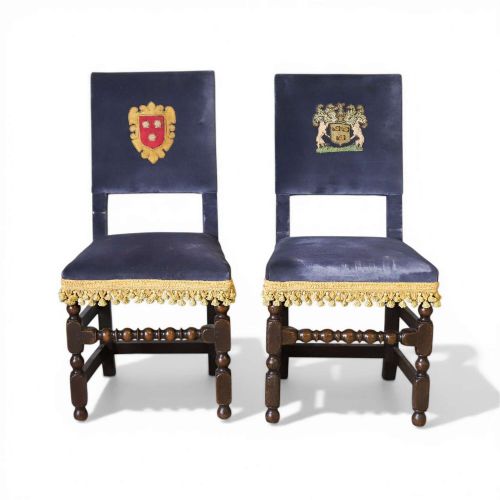
On this page, you are most likely to meet mahogany or oak hall chairs and armchairs. Forms range from single occasional seats to matched pairs and sets of five, often featuring carved wooden seats or velvet upholstery with metallic fringe.
Originating largely from English and Scottish workshops, these chairs served grand country houses and reception rooms. They combine functional seating with prominent displays of heraldry and family identity.
How they were made
Cabinet makers utilised dense hardwoods such as mahogany and oak to construct these chairs, allowing for crisp, deep carving of heraldic crests and shell motifs. The timber choice determined both the structural longevity and the sharpness of the carved armorial details.
Upholstered variants incorporate textiles like velvet and tapestry, often finished with metallic fringe. Woodwork techniques combined sturdy joinery with hand-carved relief work on back panels and wooden seats.
Listings feature periods ranging from the 17th century through Regency and Victorian eras, executed in mahogany and oak.
What varies in quality
The distinction between ordinary and exceptional examples lies in the depth and precision of the armorial carving. Crisp, spirited rendering of heraldic beasts, such as a hippocampus or lion, separates finer workshop output from simpler execution.
Attribution to esteemed makers like Gillows elevates the standing of a piece. Cohesion within matched sets and pairs, alongside the preservation of original timber surfaces and upholstery materials, dictates desirability.
Gillows
The Armorial Carved Chair Glossary
- Armorial
- Bearing a coat of arms or heraldic insignia. These symbols identify specific families or lineages.
- Hall chair
- A rigid wooden seat traditionally placed in entrance halls. They frequently display carved crests rather than prioritizing upholstered comfort.
- Hippocampus
- A mythical creature with the upper body of a horse and the lower body of a fish. It appears frequently in classical and marine heraldry.
- Carolean revival
- A nineteenth-century stylistic movement that emulates seventeenth-century restoration design. It is characterised by ornate carving and scrollwork.
Armorial Carved Chair: Frequently Asked Questions
Where were armorial carved chairs placed?
These chairs were traditionally positioned in the entrance halls and reception rooms of country houses. They served to impress visitors with the lineage and status of the household.
Over time, they migrated to studies and occasional seating areas where their heraldic panels could be admired up close.
How do I identify the period of a chair?
Dating relies on stylistic markers such as the Regency curved back, Victorian Gothic tracery, or seventeenth-century Carolean scrollwork. Timber choice, including the transition from early oak to later mahogany, also guides dating.
Examining construction methods on the underside reveals joinery techniques specific to each century.
Are these chairs comfortable for daily use?
Most hall chairs feature solid carved wooden seats designed for upright posture rather than lounging. They function best as accent pieces or occasional seating in hallways and reception rooms.
Upholstered variants provide a softer sit, though historic textiles require considerate daily handling.
What do heraldic crests signify on furniture?
Carved crests and coats of arms represent the specific family identity, ancestry, or alliances of the original owner. Makers carved these insignia directly into the wood or embroidered them onto upholstery fabrics.
Researching the specific heraldry can sometimes connect a chair to a documented historic estate.