




Arita Imari Bowl
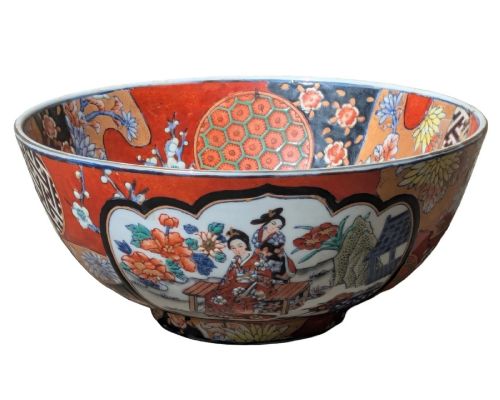
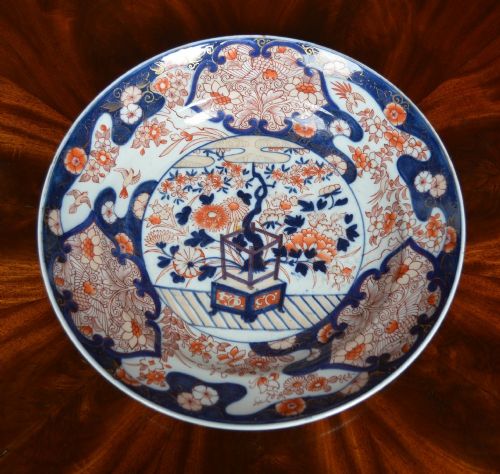
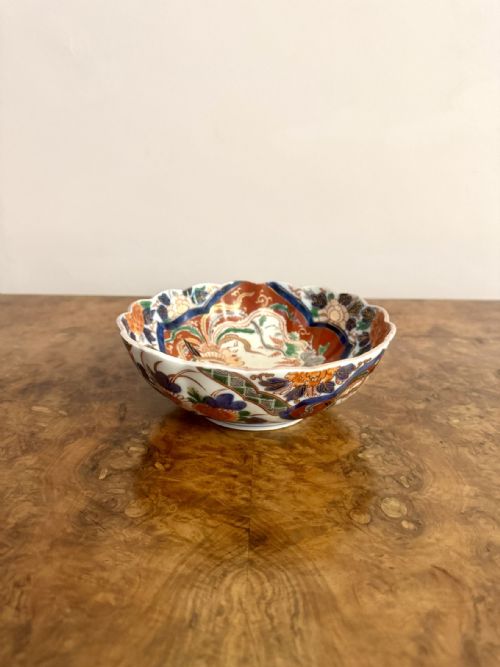
An arita imari bowl brings painted cobalt blue and enamel porcelain from Japanese kilns directly to a table or display surface.
Arita Imari Bowl
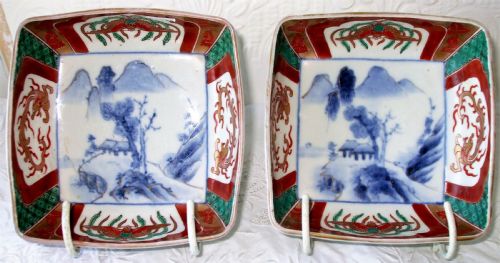
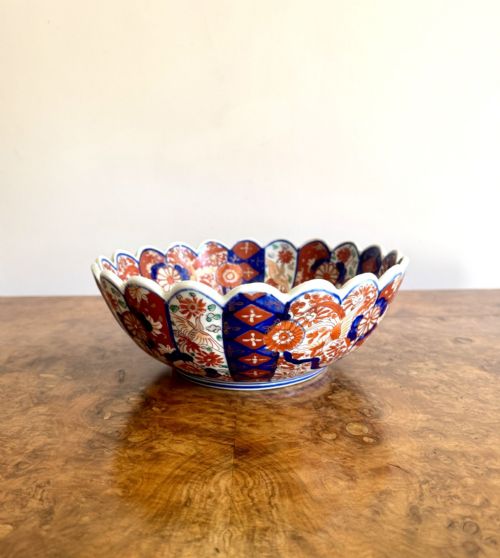
An arita imari bowl is a porcelain vessel originating from Japanese kilns, appearing here in forms such as decorative bowls, shallow dishes, chargers, and large jardinieres. These pieces emerge from periods spanning the seventeenth century through to the early twentieth century, including the Edo, Genroku, and Meiji eras.
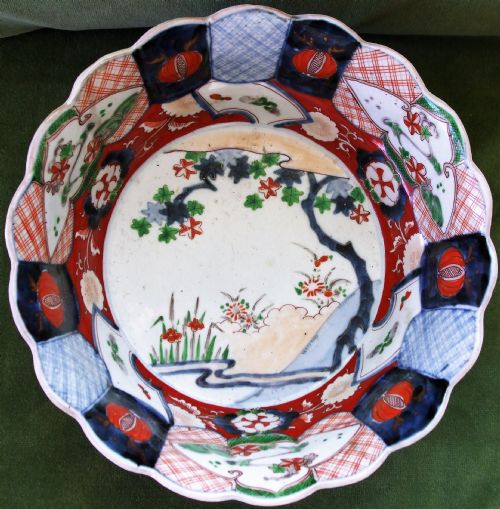
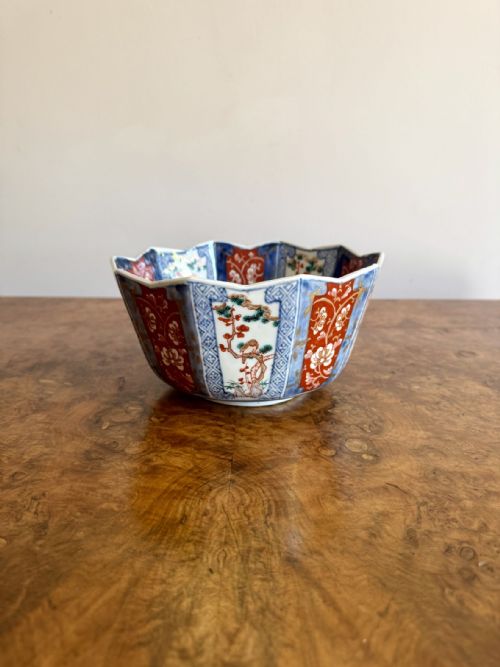
The selection includes scallop-edged bowls, hexagonal vessels, tripod forms, and large centrepieces alongside plates and covered pieces. Buyers will find both eighteenth-century Arita wares and later nineteenth-century interpretations sharing the characteristic palette.
How they were made
Potters shaped ceramic and porcelain bodies before applying cobalt underglaze, enamel, and gold leaf to create the decorated surfaces. Kiln workers fired these pieces to fuse the glaze and colours to the ceramic body.
Many items show hand-painted details incorporating cobalt blue and contrasting enamel colours, occasionally enhanced with gilt highlights.
Some vessels decided to hop on three little legs as tripod bowls.
What varies in quality
The definition and precision of the hand-painted brushwork separate standard vessels from finer examples, particularly in the rendering of complex patterns. The depth of the cobalt underglaze and the application of enamel and gold leaf contribute to the visual weight of each piece.
Forming techniques also differ, seen in the crispness of scalloped edges, hexagonal shaping, and the balance of tripod feet on the porcelain body.
The Arita Imari Bowl Glossary
- Arita
- The Japanese town and surrounding region in Hizen province where porcelain production established itself. Kilns here produced wares for domestic use and export.
- Imari
- The port from which porcelain fired in Arita was shipped to European and domestic markets. The term designates wares decorated in cobalt blue, iron red, and gold.
- Meiji Period
- The era spanning from eighteen sixty-eight to nineteen twelve in Japanese history. Wares from this period often display detailed hand-painted decoration.
- Edo Period
- The historical Japanese period lasting from sixteen hundred and three to eighteen sixty-eight. Early porcelain production developed during these centuries.
- Cobalt Underglaze
- A blue pigment applied to the ceramic body prior to glazing and firing. This technique produces durable blue decoration beneath the clear glaze.
Arita Imari Bowl: Frequently Asked Questions
How do I date an arita imari bowl?
Dating relies on stylistic clues, potting techniques, and historical periods such as the Edo or Meiji eras recorded in the evidence.
Earlier seventeenth-century examples often exhibit different baseline potting characteristics compared to nineteenth-century production.
Were these bowls used for food?
While many served decorative functions as centrepieces, dishes, and chargers, similar vessels held food or liquids depending on their specific form.
Barbers bowls and covered bowls point to specialised historical uses within domestic settings.
What is the difference between Arita and Imari?
Arita refers to the production site where the porcelain was manufactured in Hizen province. Imari denotes the shipping port through which these finished ceramics travelled outward.
Over time, the two names merged to describe this specific tradition of Japanese export porcelain.
How do I display a large jardiniere?
Large jardinieres and deep bowls suit placement on substantial tables, pedestals, or floor stands as central decorative elements.
Their substantial size allows them to hold arrangements or stand alone to showcase the painted surface.