

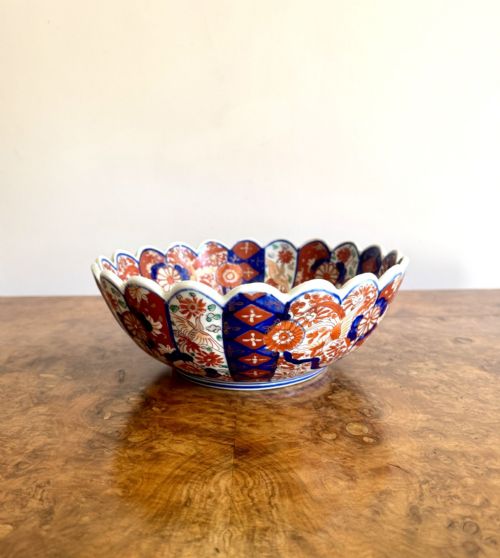


Antique Imari Punch Bowl
These antique imari punch bowl pieces bring vibrant panels of cobalt blue and iron red into a room.
Antique Imari Punch Bowl
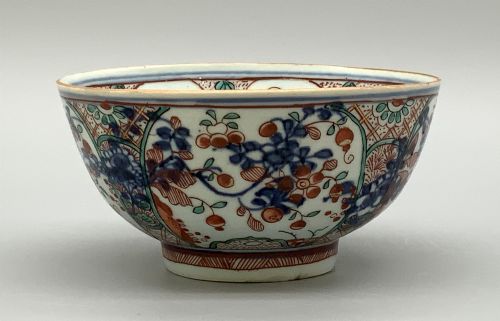
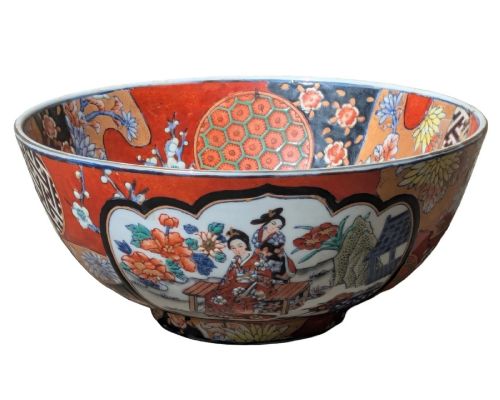
An antique imari punch bowl brings together forms produced across Japanese, Chinese, and British kilns. The selection here leans heavily towards Japanese examples from the nineteenth century and the Meiji period, alongside eighteenth century pieces from the Chinese Kangxi period.
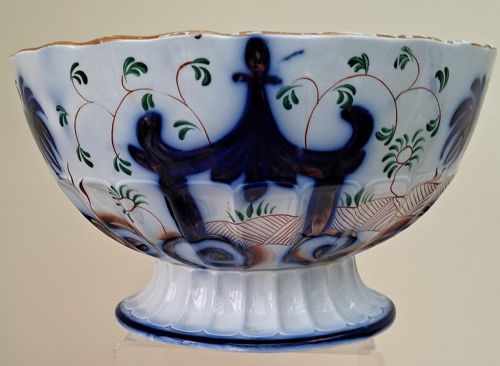
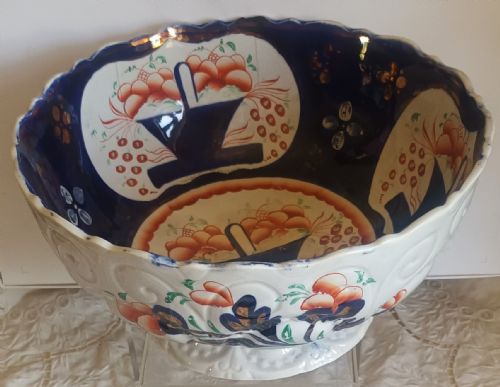
Buyers will encounter various decorative vessels, from large scallop edged centrepieces to footed bowls and smaller dishes. Alongside classic Japanese Imari styles, the range includes British interpretations like Gaudy Welsh and Chamberlain Worcester.
How they were made
These items rely on ceramic glaze and porcelain bodies painted with enamel and sometimes finished with gold leaf. Cobalt glaze provides the deep blue tones characteristic of the palette.
Production methods span different centuries and potteries, combining traditional Oriental potting techniques with later European ironstone and earthenware adaptations.
Several bowls come with mahogany stands, proving that nineteenth century tables took their interior design accessories very seriously.
What varies in quality
The crispness of the enamel painting and the depth of the cobalt blue set the finer pieces apart from standard examples. Hand-painted precision on scallop-edged forms reflects the skill of the original workshop.
Condition of the glaze and the preservation of any gold leaf detailing determine the visual strength of each bowl when displayed.
The Antique Imari Punch Bowl Glossary
- Imari
- A style of ceramic decoration originating in Japan, known for a palette of cobalt blue, iron red, and gold. It was widely emulated by European potteries in later centuries.
- Kangxi Period
- A phase of Chinese history spanning the late seventeenth and early eighteenth centuries, associated with fine porcelain production. Pieces from this era often show exceptional detail.
- Meiji Period
- An era of Japanese history lasting from the late nineteenth to the early twentieth century. Items from this time frequently demonstrate intricate hand-painted designs.
- Ironstone
- A type of durable earthenware developed in Britain as a tougher alternative to porcelain. It readily accepted colourful enamel patterns.
- Cobalt Glaze
- A mineral pigment applied beneath or over the glaze to produce deep blue coloration on ceramics. It remains stable at high kiln temperatures.
Antique Imari Punch Bowl: Frequently Asked Questions
How were punch bowls used originally?
These vessels held large quantities of mixed drinks for social gatherings and banquets in grand dining rooms. Guests would ladle the contents directly into individual cups or glasses.
Over time, many of these bowls transitioned into decorative centrepieces for sideboards and tables rather than serving vessels.
How do I identify a Japanese Imari bowl?
Look for the distinct palette combining underglaze cobalt blue with overglaze iron red, often highlighted with gold leaf. The motifs typically feature floral panels, landscapes, or brocade patterns.
Forms frequently include scalloped or lobed edges rather than simple smooth circles.
Can I use these bowls for serving food?
Most collectors treat these pieces as decorative objects due to their age and delicate enamel surfaces. Using them for dry display or floral arrangements protects the historic glaze.
Frequent washing and acidic foods can gradually wear down the hand-painted overglaze details.
How do I tell Chinese export Imari from Japanese Imari?
Chinese Kangxi period pieces usually feature a brighter, thinner porcelain body with a slightly different blue hue. Japanese examples often show denser potting and heavier enamelling.
Stylistic nuances in the floral and architectural motifs also help separate the regional origins.