

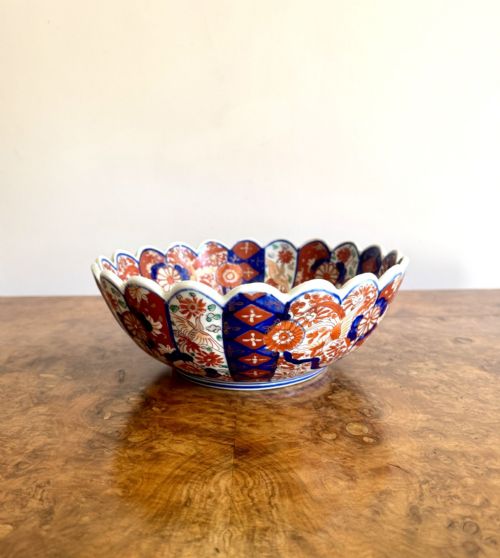


Arita Blue White Bowl
An arita blue white bowl brings Japanese ceramic history straight to your table, prized for its crisp cobalt pigment and fine porcelain bodies.
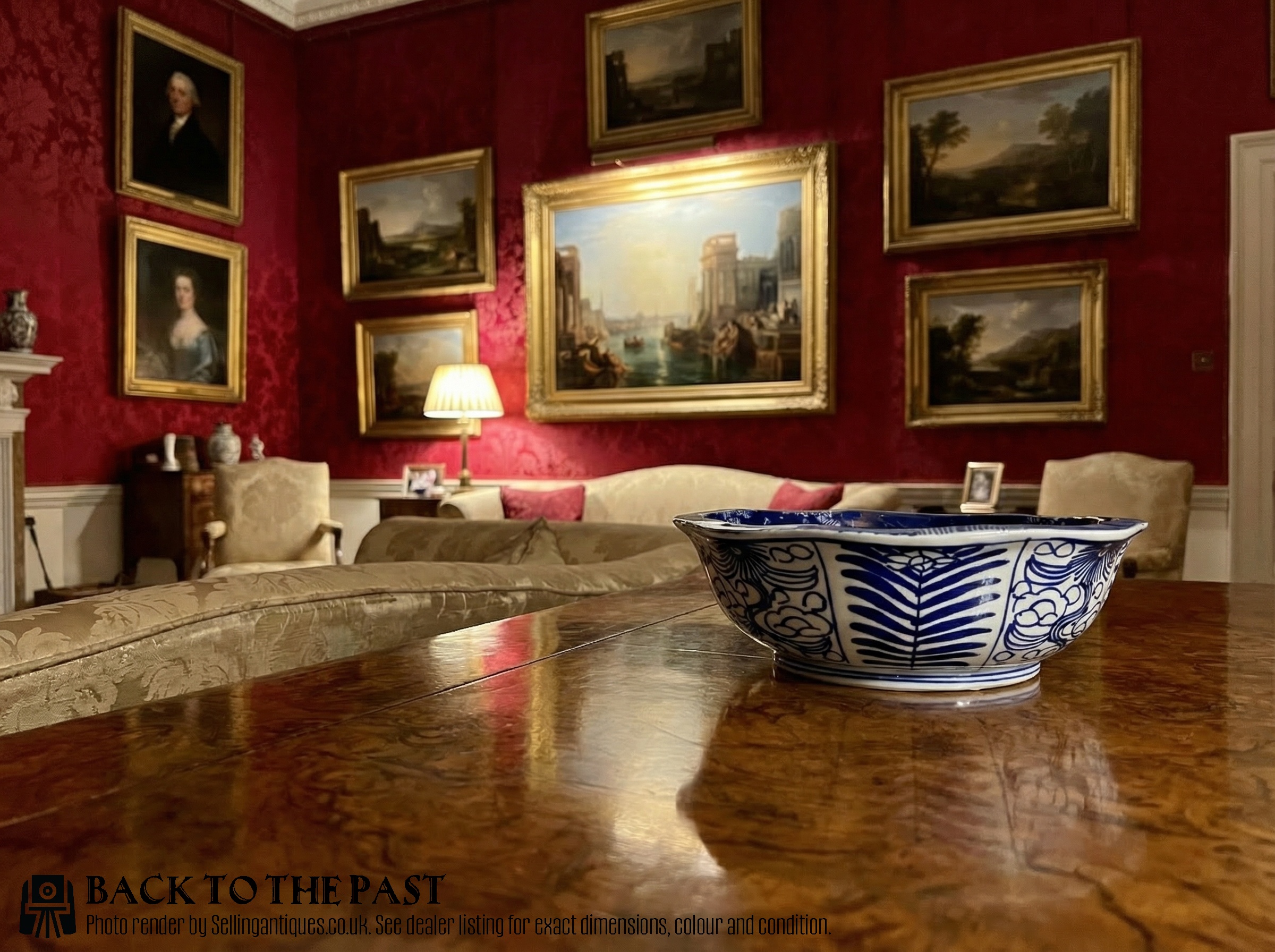
Arita Blue White Bowl
An arita blue white bowl represents centuries of Japanese kiln tradition originating from the town of Arita. These pieces span from the seventeenth century through to the early twentieth century, encompassing the Edo and Meiji periods.
The pieces on this page appear primarily in forms such as decorative bowls, dishes, and substantial jardinieres. Buyers encounter both classic cobalt blue and white decoration alongside the colourful palettes of Japanese Imari style.
How they were made
Potters shaped fine porcelain clay before applying cobalt pigment beneath a clear glaze. Firing at high temperatures fused the cobalt underglaze into the body, creating deep blue tones.
Makers occasionally added details like enamel or gold leaf over the glaze, while some vessels received celadon glaze or rested on tripod supports.
Listings feature porcelain pieces spanning from the seventeenth century through to the early twentieth century, including Edo and Meiji periods.
What varies in quality
The strength and clarity of the cobalt underglaze set the visual standard for each vessel. Crisp painting on the porcelain surface distinguishes finer work from simpler execution.
The weight and refinement of the porcelain body, along with the precision of scalloped or lobbed rims, define the upper tier of these pieces.
The Arita Blue White Bowl Glossary
- Arita
- A Japanese town renowned for its porcelain production since the early seventeenth century. Kilns here produced wares for both domestic use and export.
- Cobalt Underglaze
- A blue pigment applied to the unglazed porcelain body before firing. This technique protects the blue decoration beneath a glassy protective layer.
- Edo Period
- A historical epoch in Japan running from sixteen hundred and three to eighteen hundred and sixty-eight. Many foundational pieces date from this era.
- Imari
- A style of Japanese export porcelain named after the port of shipment. It often combines cobalt blue with iron red and gold.
Arita Blue White Bowl: Frequently Asked Questions
How do I date an old arita bowl?
Dating relies on examining the painting style, the tone of the cobalt pigment, and the characteristics of the porcelain body. Seventeenth and eighteenth-century examples often show distinct potting traits compared to Meiji period pieces.
Consulting the specific historical period mentioned in the listing helps confirm the likely age of the vessel.
Are these bowls safe for daily use?
Most antique pieces function best as decorative items rather than for serving food. The historic porcelain and glazes require gentle care to preserve their appearance.
Displaying them on a table or cabinet keeps the glazed surfaces safe from everyday wear.
What is the difference between blue and white and imari?
Blue and white pieces utilise cobalt pigment alone under a transparent glaze to create monochromatic designs. Imari wares introduce additional colours like red and gold over the glaze.
Both styles originated from the same kiln traditions in Japan.
How should I clean an antique porcelain bowl?
Dusting with a soft, dry cloth is usually sufficient for routine maintenance. Avoid harsh chemical cleaners or abrasive scouring pads that might damage the glaze.
If washing is necessary, use lukewarm water and mild soap, then dry thoroughly by hand.