


Architectural Salvage Glass Window
An architectural salvage glass window brings historic light and colour into a room, using leaded, stained, or etched panels rescued from period buildings.
Architectural Salvage Glass Window
When you search for an architectural salvage glass window, you encounter panels rescued from domestic, commercial, and ecclesiastical settings spanning the nineteenth and early twentieth centuries. These pieces appear as domestic transoms, pub screens, shop advertisements, and church lancets, shaped by Victorian, Edwardian, and Arts and Crafts tastes.
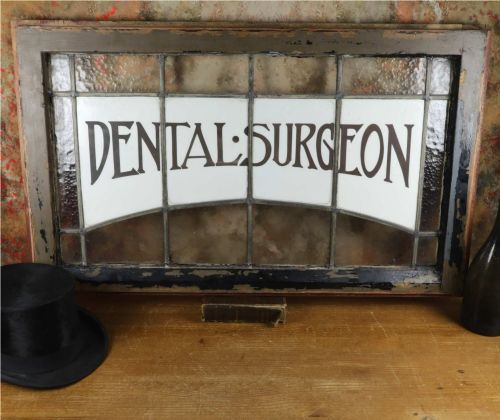
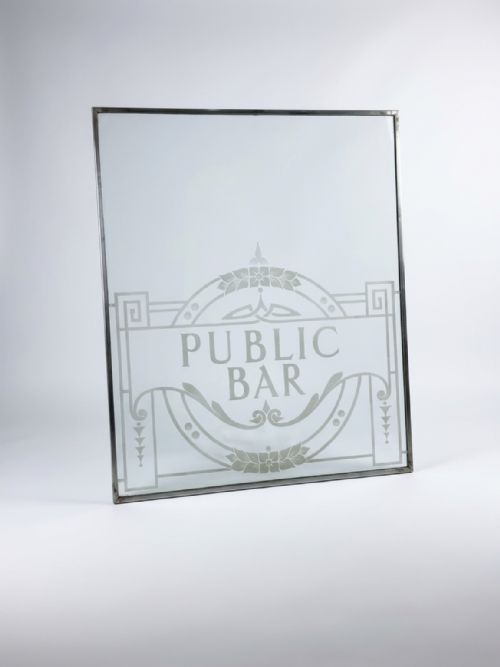
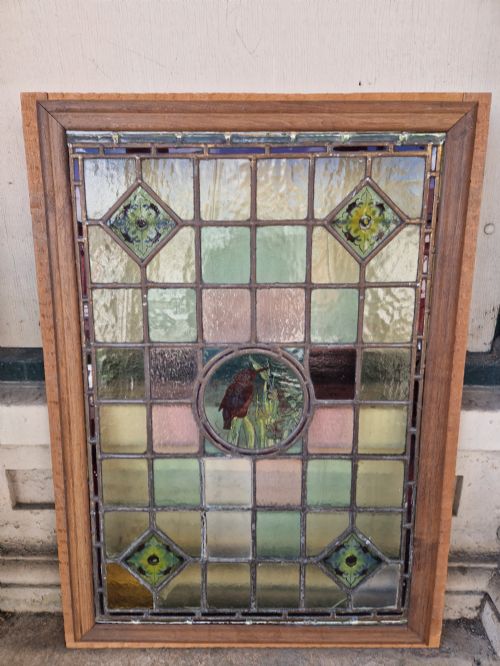
The domestic examples frequently display hand-painted countryside scenes, birds, flowers, and bullseyes framed in lead came. Commercial and public house survivals offer etched and cut designs advertising tobacco, confectionary, and dental practices, alongside large pub windows intended to divide interior spaces while admitting diffused light.
Ecclesiastical examples bring Gothic Revival arch tops with square or diamond panes into the selection. These architectural salvage glass window panels serve equally well mounted against interior walls or hung in modern window openings to capture natural daylight.
Materials and Construction
Glaziers built these windows by cutting coloured or clear glass and holding the individual pieces together within flexible lead came channels soldered at the joints. Artisans applied hand-painted details, firing the pigments onto the glass surface before leading, while others utilised acid-etching and wheel-cutting techniques on flashed glass to reveal contrasting underlying layers.
Supporting frames commonly utilise timber such as pine wood, providing structural rigidity for larger panels and church windows. Metal armatures and saddle bars were frequently incorporated across bigger spans to reinforce the leaded matrix against wind pressure and gravity.
The documented object types span stained glass windows, architectural salvage, stained glass panels, and architectural glass.
Distinctions in Quality
Superior quality in an architectural salvage glass window rests upon the artistic ambition of the painted or etched imagery and the precision of the lead work. Finely detailed hand-painted pictorial scenes, such as figurative countryside landscapes or ornithological studies, demonstrate greater mastery than repeating geometric patterns.
The depth and complexity of flashed glass manipulation set superior etched commercial and domestic panels apart from simpler leaded lights. Furthermore, the integrity of the original lead network and timber surrounds dictates how successfully a historic window survives structural transference.
Sir Edward Burne Jones
The Architectural Salvage Glass Window Glossary
- Lead came
- The H-shaped strip of lead used to join individual pieces of glass in a window. This malleable material allows makers to create intricate pictorial and geometric designs.
- Bullseye
- A round centrepiece of blown glass containing a characteristic swirl and pontil mark. Glaziers integrated these circular units into leaded panels to introduce varied texture and light refraction.
- Flashed glass
- Glass composed of a thin layer of coloured glass fused over a thicker base of clear or contrasting glass. Artisans etched through the top layer to create intricate two-tone patterns.
- Etched glass
- Glass treated with acid or abrasive grit to remove the surface layer and produce opaque decorative designs. This technique found wide favour in Victorian public houses and Edwardian shopfronts.
Architectural Salvage Glass Window: Frequently Asked Questions
Can these windows go outside?
Most antique salvaged glass windows suit interior display best because historic lead came is softer and more flexible than modern equivalents.
Placing them inside protects delicate hand-painted surfaces and fragile lead matrices from weathering and wind damage.
How do I date a panel?
Stylistic clues such as floral swags indicate Edwardian preferences, while gothic arch shapes point toward nineteenth-century ecclesiastical architecture.
Subject matter like trade advertisements or specific aesthetic movement motifs also helps narrow down the decade of manufacture.
Are church windows very heavy?
Church windows and large architectural panels carry substantial weight due to thick timber frames and dense iron saddle bars.
Professional installation is often necessary when incorporating these substantial ecclesiastical survivals into domestic interiors.