

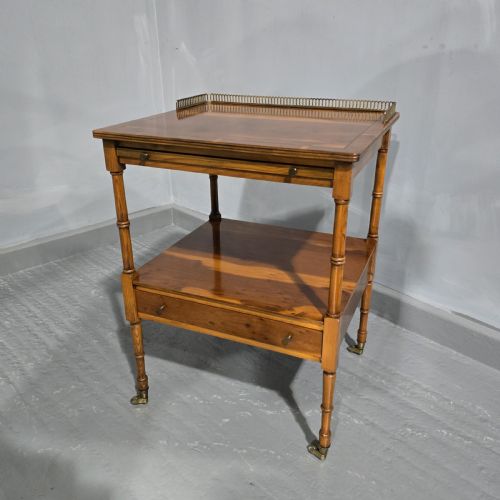
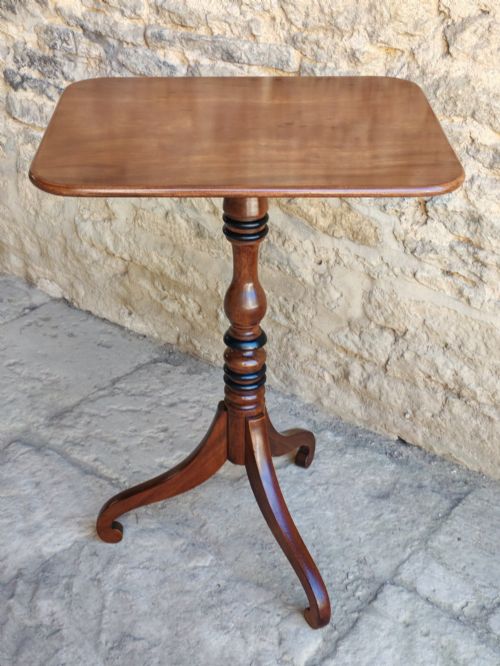
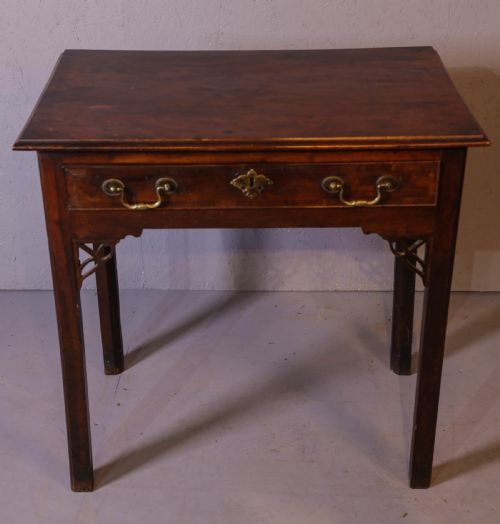


Antique Yew Side Table
An antique yew side table brings rich timber figure and quiet country elegance into a room.
Antique Yew Side Table
When you search for an antique yew side table, you encounter practical small furniture produced across the eighteenth and nineteenth centuries. These pieces serve as functional stands for lamps or drinks, constructed with timber chosen for its striking grain.
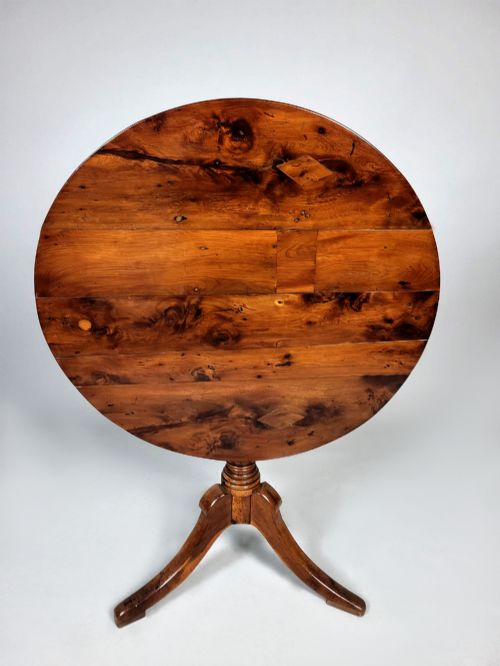
The version you are most likely to meet on this page is an occasional or tripod table dating from the Georgian or Regency periods, often built with a circular top resting on a central pillar.
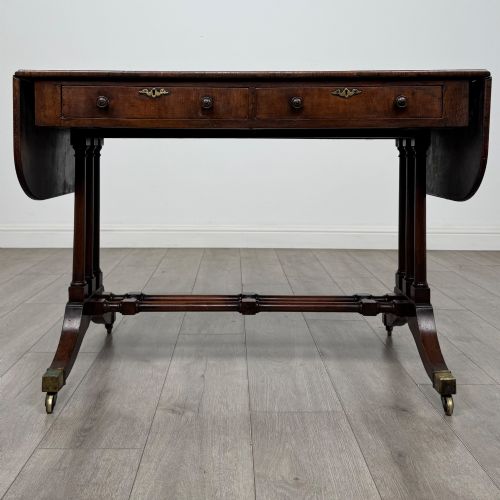
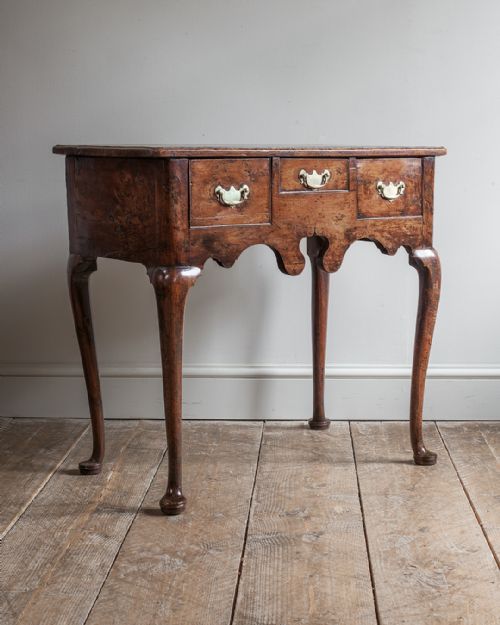
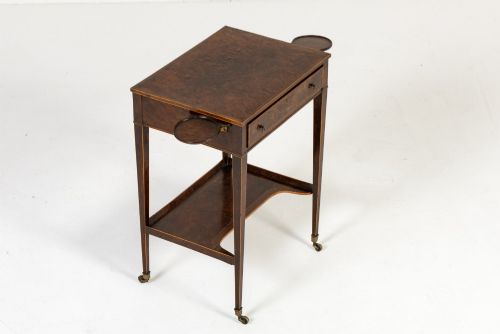
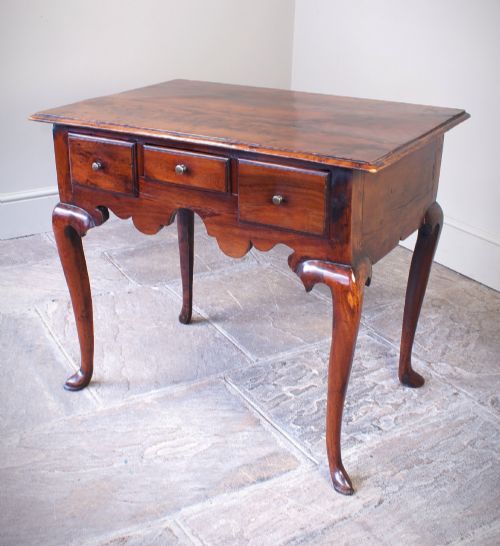
Makers in various English and Irish workshops also turned these timbers into lowboys, writing tables, and wine tables, utilising local woods alongside imported decorative veneers.
How they were made
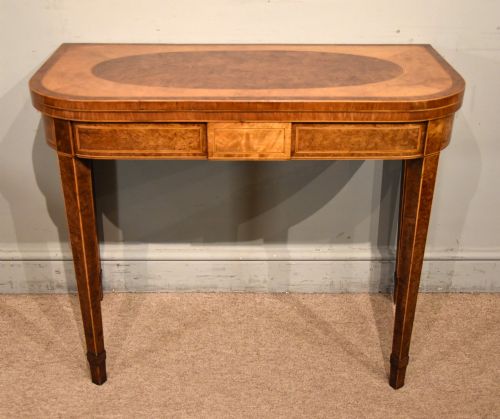
Cabinet makers built these tables using solid yew wood, elm, and oak for structural frames, frequently applying burr yew veneers to table tops to highlight the swirling patterns of the wood.
Turned pedestals, tripod legs, and brass hardware provide the structural support and detail, reflecting the prevailing styles from George III designs through to Victorian production.
Listings feature examples spanning the 17th century through to the 1920s, constructed in oak, elm, mahogany, and yew wood.
What varies in quality
The quality of an antique yew side table depends upon the selection of the timber and the crispness of the cabinet work. Tables featuring highly figured burr yew veneer and well-proportioned tripod bases command greater attention.
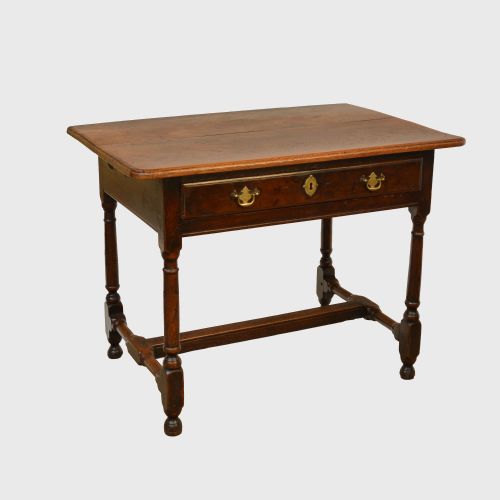
Simpler country pieces display honest construction using solid plank tops and straightforward joints, whereas metropolitan examples show refined turning and sophisticated cross-banding.
Gillows
The Antique Yew Side Table Glossary
- Burr yew
- A growth distortion on the yew tree that yields timber with intricate, swirling grain patterns. Cabinet makers prized this wood for decorative veneers on prominent table tops.
- Lowboy
- A small dressing or side table featuring one or more drawers beneath a rectangular top. These pieces typically date from the eighteenth century and stand on slender legs.
- Tripod table
- A small occasional table supported by a central pillar and three legs. This form became popular during the Georgian period for flexibility in domestic rooms.
- Wine table
- A compact table designed to hold a single glass or bottle during evening gatherings. They often feature tilt-top mechanisms and circular tops.
Antique Yew Side Table: Frequently Asked Questions
How are antique yew side tables used today?
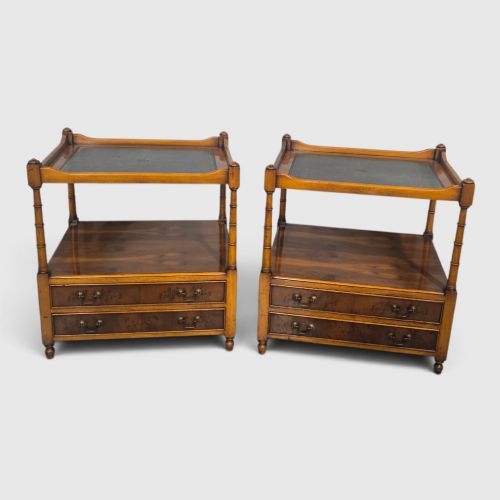
These compact tables function well as bedside stands or lamp tables in sitting rooms.
Their restrained proportions allow them to fit easily into smaller corners without dominating a space.
How do I identify a Georgian yew table?
Look for construction details such as pegged tenons, solid timber sub-frames, and hand-turned pillars.
Georgian examples typically display simpler lines compared to later nineteenth-century revival styles.
What is the difference between solid yew and yew veneer?
Solid yew furniture uses thick planks of the timber for the entire structure and top.
Veneered pieces apply thin slices of highly figured burr yew over a secondary wood like oak or mahogany.
Where were most antique yew tables made?
Many examples originated in English regional workshops where yew timber grew in abundance.
Irish makers also produced notable pieces utilising local burr yew during the Regency period.