

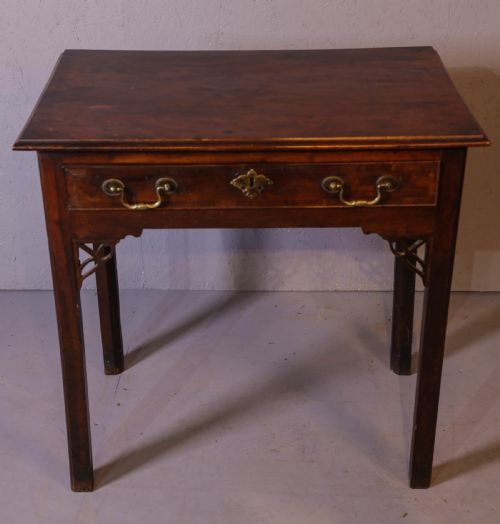


Antique Writing Table Yew
These antique writing table yew examples offer rich timber grain and period charm, making them sought-after centrepieces for a traditional study.
Antique Writing Table Yew
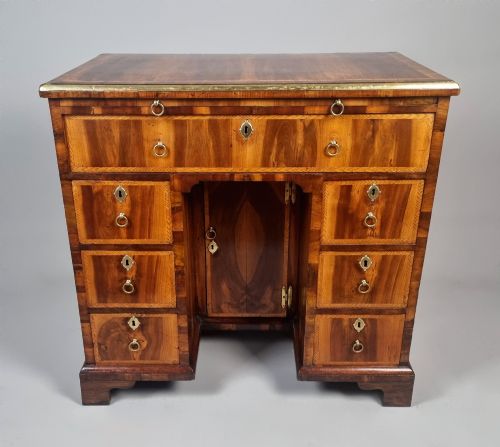
An antique writing table yew selection brings together diverse forms ranging from George II dressing tables and kneehole desks to compact writing tables and bureau on stand formats. Buyers seeking an antique writing table yew will encounter pieces spanning the eighteenth century through to the early twentieth century, alongside Victorian revivals.
The materials recorded across these examples encompass solid and veneered yew wood, burr yew, and figured elm, often combined with oak and brass hardware. Styles stretch from Georgian country and French provincial to Regency and Edwardian interpretations.
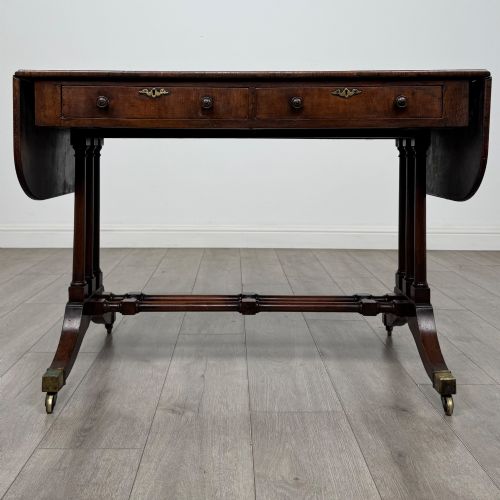
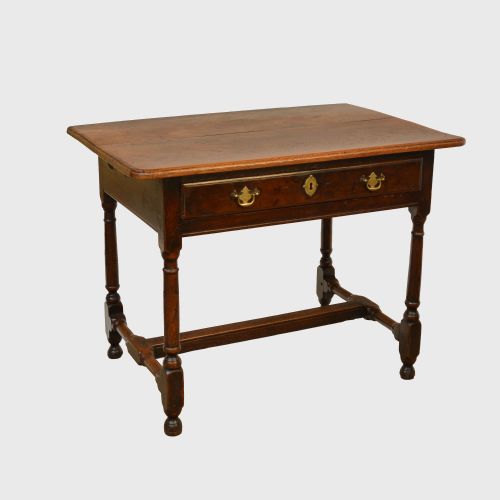
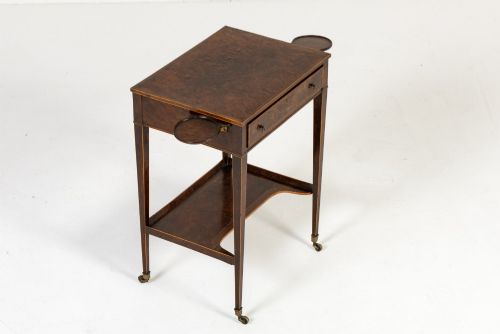
The most common formats you meet on this page are side tables, sofa tables, and writing desks, reflecting the practical domestic uses of past centuries.
How They Were Made
Cabinet makers utilised dense yew timber, often selecting burr yew and figured sections to create rich decorative surfaces on tabletops and drawer fronts. Featherbanding and crossbanding frequently embellished the borders of eighteenth-century desks and dressing tables.
Secondary timbers like oak and elm provided sturdy interior framing for drawers and carcases, whilst brass handles and drop leaves added functional utility to sofa tables and kneehole desks.
One listed display table bears later sign writing for Breitling watches, hinting at a twentieth-century retail past.
What Varies in Quality
The distinction between standard examples and the finest pieces lies in the selection of the timber figure and the crispness of decorative details like featherbanding. Richly figured burr yew surfaces and early Georgian proportions elevate the status of a desk above simpler vernacular side tables.
Construction methods also dictate quality, where precise dovetailing in drawer construction and well-preserved original brass mounts separate master cabinet work from later provincial adaptations.
The Antique Writing Table Yew Glossary
- Burr yew
- A growth deformity in the yew tree that produces highly figured, swirling wood grain patterns prized by cabinet makers.
- Featherbanding
- A delicate inlay technique using small strips of veneer arranged in a herringbone pattern around the edges of tabletops and drawer fronts.
- Kneehole desk
- A compact desk featuring a central recessed space for the legs, flanked by pedestals of small drawers.
- Sofa table
- A rectangular table designed to stand in front of a sofa, typically featuring drop leaves at either end.
- Bureaux
- A writing cabinet featuring a sloping lid that opens to reveal a fitted interior of small drawers and pigeonholes.
Antique Writing Table Yew: Frequently Asked Questions
How do I identify a Georgian yew desk?
Georgian yew desks are identified by their proportion, construction methods, and period-specific decorative details such as featherbanding.
They often feature solid brass hardware and secondary woods like oak within the drawer linings, characteristic of eighteenth-century workshop practices.
Where were yew tables used?
Yew tables served multiple domestic functions in parlours, bedrooms, and studies as writing desks, dressing tables, or side tables.
Their decorative timber made them suitable for principal reception rooms where both utility and visual appeal mattered.
How do I care for antique yew furniture?
Caring for antique yew furniture involves maintaining stable room temperatures and avoiding direct sunlight to protect the wood and veneer.
Regular dusting with a soft cloth and occasional application of appropriate beeswax helps preserve the historic finish.