


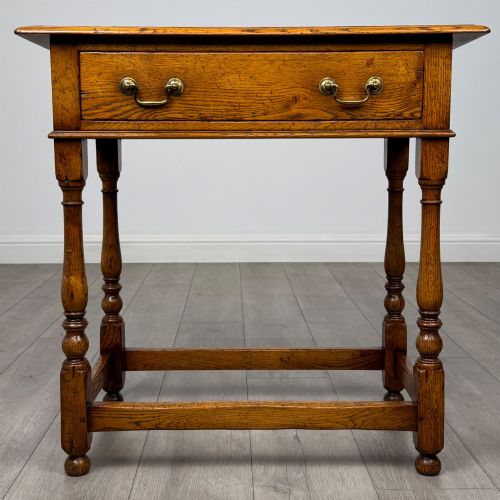
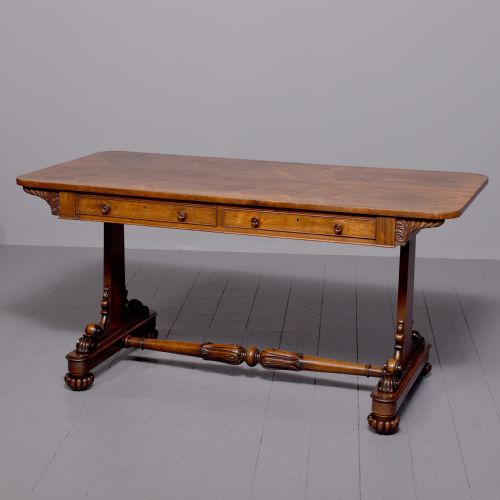
Antique Writing Sofa Table
An antique writing sofa table combines the utility of a desk with the elegant proportions of a central room piece.
Antique Writing Sofa Table
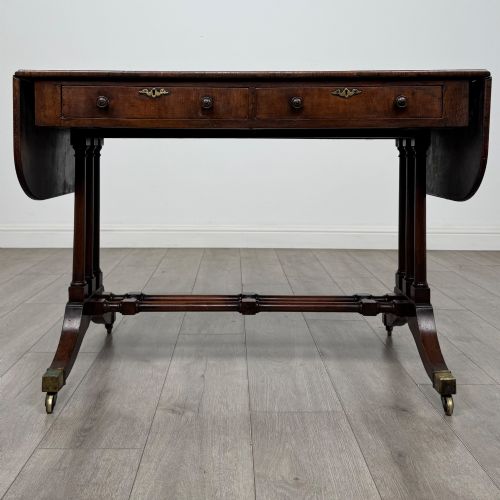
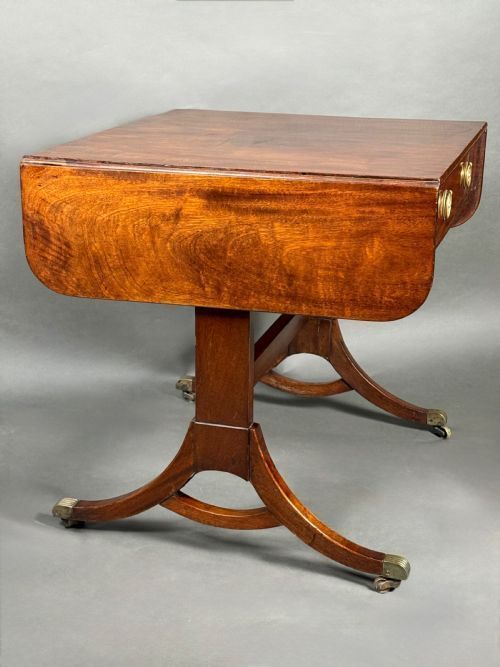
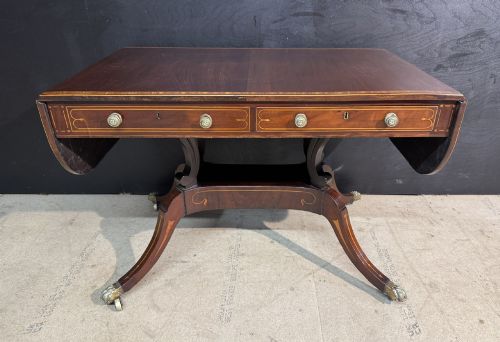
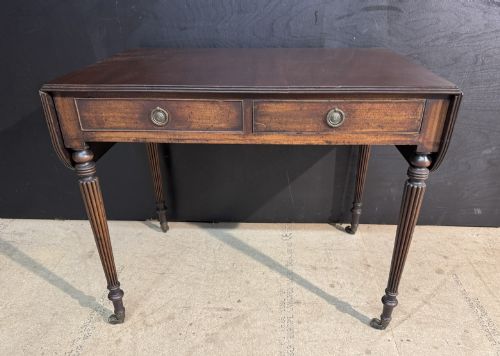
An antique writing sofa table serves as a versatile piece designed originally to sit before a sofa or stand freely in the centre of a room. These tables typically feature drop leaves on either side and integrated drawers suited for correspondence.
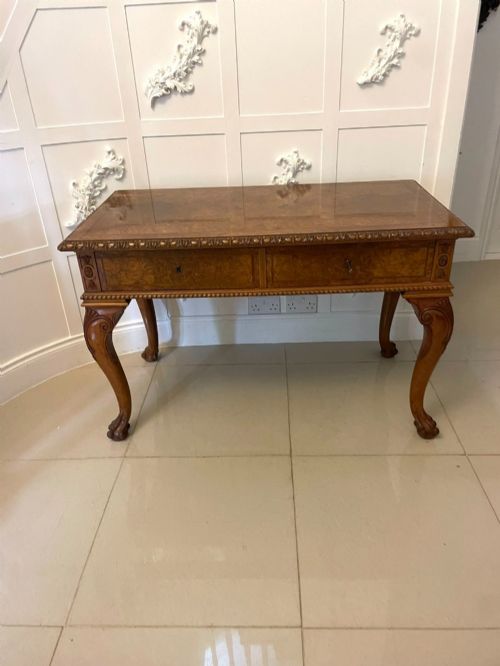
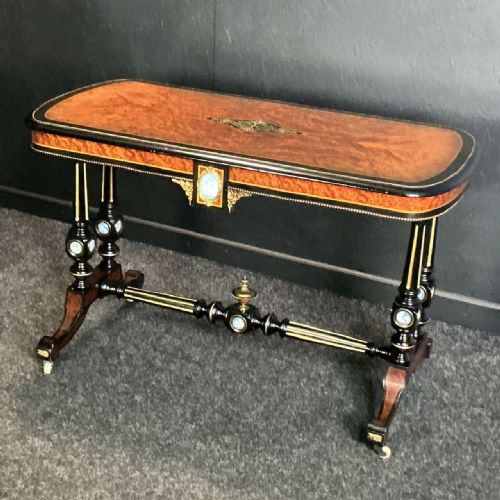
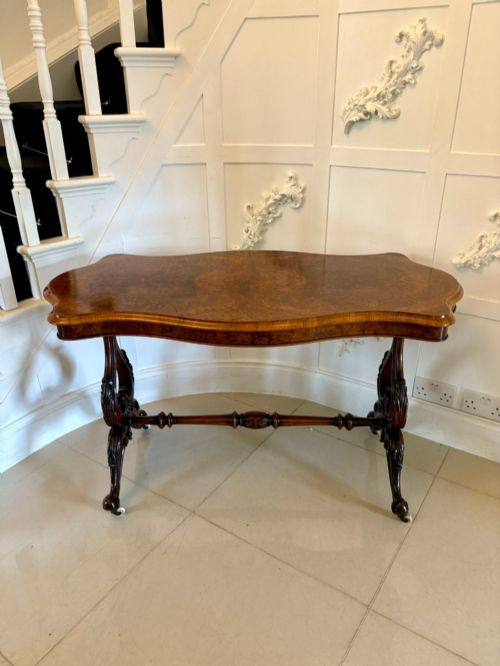
The versions most commonly met on this page span the Georgian, Regency, and Victorian periods, constructed primarily in rich timbers like mahogany, rosewood, and burr walnut.
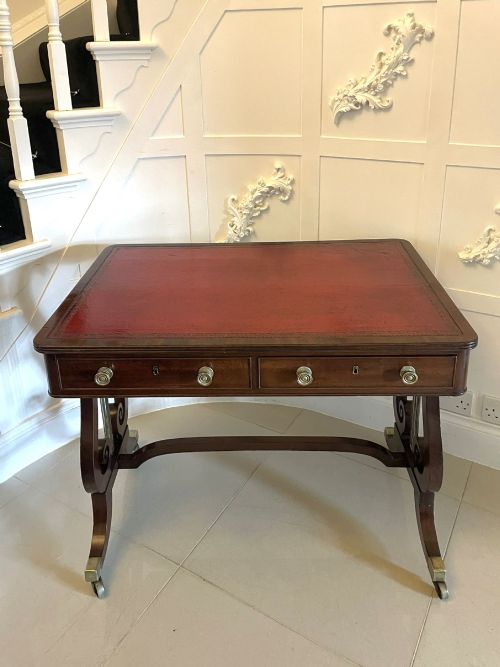
Makers often incorporated leather or suede writing surfaces into the top, bridging the gap between a formal library table and a domestic writing desk.
How they were made
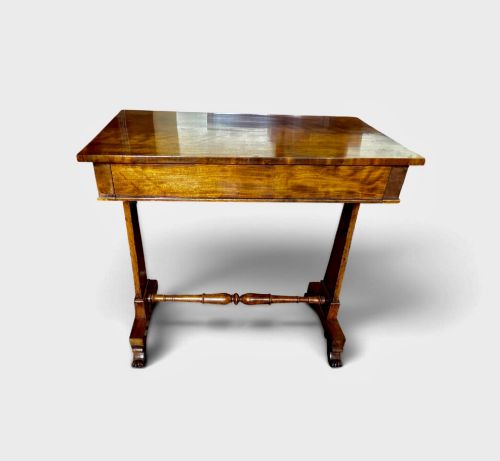
Cabinet makers utilised dense, figured hardwoods such as flame mahogany, rosewood, and burr walnut, often enhancing the surfaces with delicate wood inlay, boxwood, and ebony stringing.
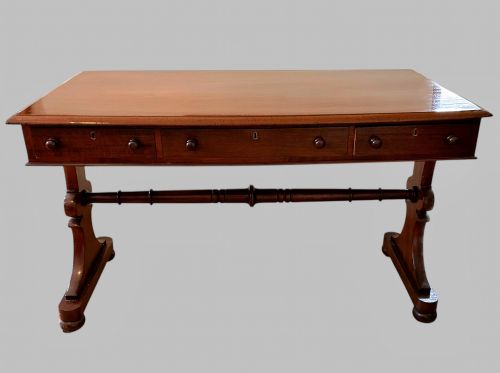
Structural stability relied on sturdy pedestals, pillar supports, or elegantly turned legs, frequently finished with brass castors and sometimes carved lion's paw feet.
Writing surfaces were typically inset with panels of tooled leather or suede, secured with fine borders.
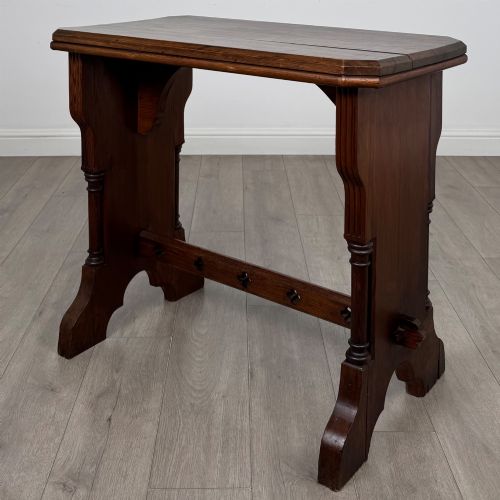
Listings feature woods including mahogany, rosewood, burr walnut, oak, and pitch pine, alongside brass and leather details.
What varies in quality
Quality rests significantly in the selection of the timber veneers, where highly figured flame mahogany or rich burr walnut displays superior grain movement and depth.
The refinement of secondary details, such as finely cut brass inlays, precise boxwood stringing, and solid brass hardware, separates standard workshop output from exceptional cabinet work.
Structural integrity is evident in the crispness of carved wooden elements, such as pedestal columns or paw feet, and the smooth operation of drop-leaf mechanisms and drawer joints.
Gillows·Mein of Kelso·Williams and Gibton
The Antique Writing Sofa Table Glossary
- Drop flap
- A hinged side leaf that can be raised to extend the surface area of the table or lowered when space is required. These leaves define the silhouette of a traditional sofa table.
- Inlay
- A decorative technique where contrasting materials like boxwood and ebony are set into the primary wood surface to create geometric or floral patterns. This ornamentation highlights the skill of the maker.
- Library table
- A substantial freestanding table used historically for reading and writing, often finished on all sides so it could sit in the middle of a room. They share many construction traits with sofa tables.
- Suede top
- A soft, napped leather or fabric inset into the writing surface of the table to provide a smooth plane for penmanship. It is frequently bordered with decorative gold tooling.
- Stringing
- Thin, narrow lines of contrasting wood inlay used to outline the edges of drawers and table tops. It adds understated definition to mahogany and rosewood surfaces.
Antique Writing Sofa Table: Frequently Asked Questions
Where should I place a sofa table?
These pieces look best placed freestanding in the centre of a room or positioned directly behind the back of a sofa. Because they are finished on all sides, they do not need to hug a wall.
Their narrow profile also makes them effective as console tables in hallways or as compact writing desks against a living room wall.
How do I care for the leather top?
Keep leather and suede writing surfaces away from direct sunlight to prevent the dye from fading and the material from drying out. Dust them regularly with a dry, soft cloth.
Avoid using harsh chemical cleaners or excess water, applying a specialised leather conditioner sparingly if the surface begins to show dryness.
Can I use these tables for daily writing?
They were originally built for correspondence and light reading, making them well-suited for modern laptop use or writing letters. The integrated drawers provide convenient storage for stationery and small items.
Ensure that heavy objects are kept toward the centre rather than on the drop leaves to protect the hinges.
How do I distinguish Regency from Victorian examples?
Regency tables, dating from the early nineteenth century, typically feature clean architectural lines, brass inlays, and rosewood or flame mahogany veneers. They often incorporate bold pedestal bases with brass castors.
Victorian pieces, emerging around the middle of the century, frequently showcase darker woods like burr walnut, heavier carved details, and more elaborate serpentine underframes.