
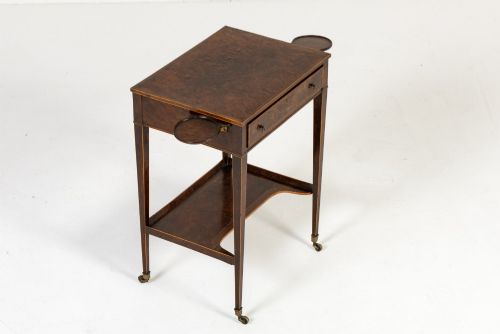
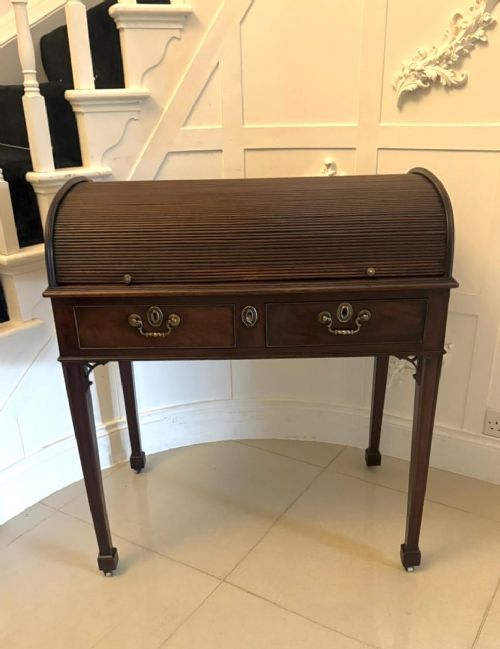
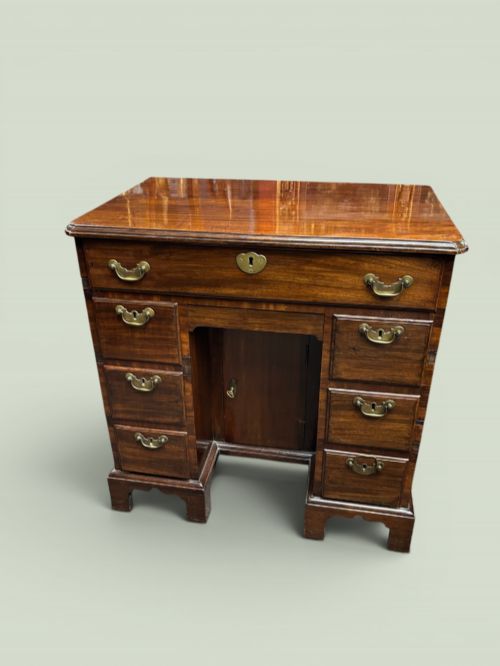

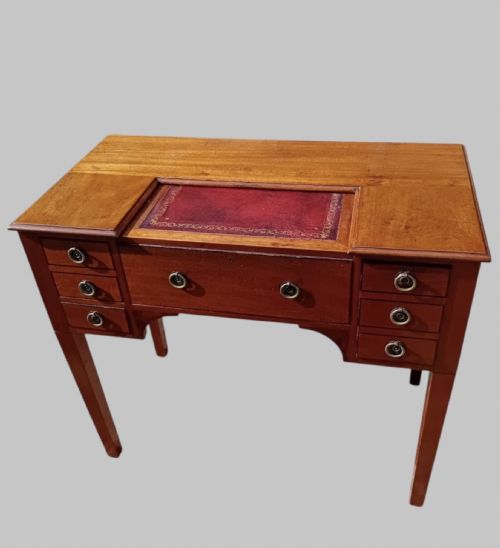


Antique Writing Slide Desk
An antique writing slide desk offers clever pull-out surfaces for correspondence, combining compact daily practicality with period timber work.
Antique Writing Slide Desk
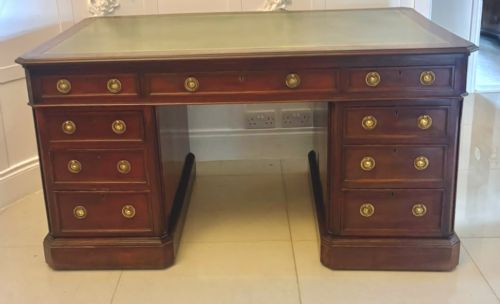
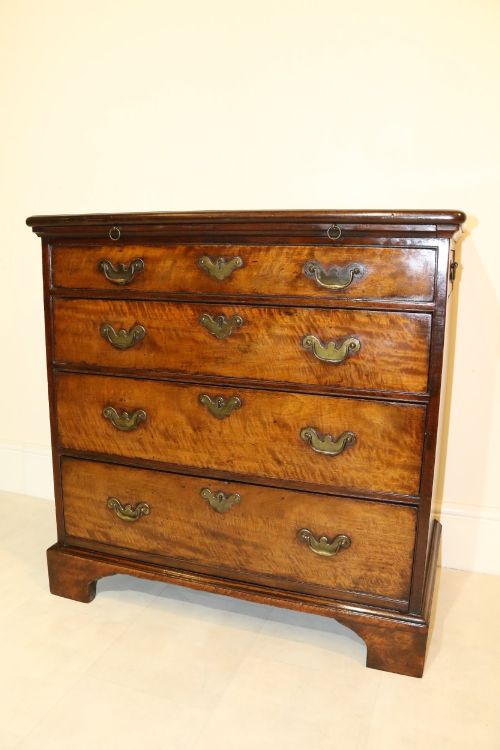
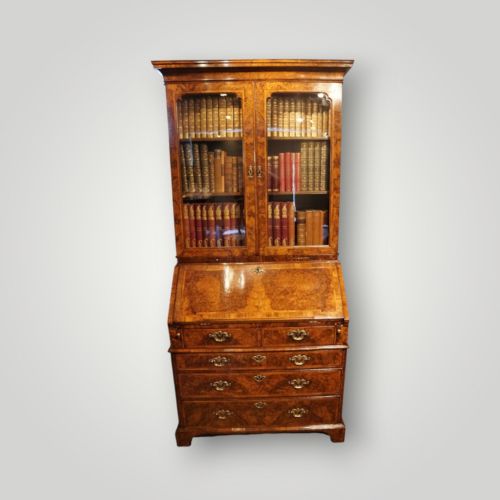
An antique writing slide desk brings together traditional case furniture and pull-out writing surfaces designed for correspondence and paperwork. Buyers encounter forms ranging from Georgian bachelors chests and kneehole desks to Regency Davenports, bureau bookcases, and occasional writing tables.
Mahogany predominates among the surviving pieces, accompanied by walnut, rosewood, burr yew, and pollard oak. These items span the eighteenth, nineteenth, and early twentieth centuries, reflecting the evolving domestic requirements of Georgian, Regency, and Victorian households.
Materials and Construction
Cabinetmakers utilised dense hardwoods like mahogany, walnut, and rosewood for structural integrity and fine figuring, often incorporating secondary timbers for interior drawer linings. Brass hardware, leather inserts, and occasionally boxwood inlay complete the construction of these writing surfaces.
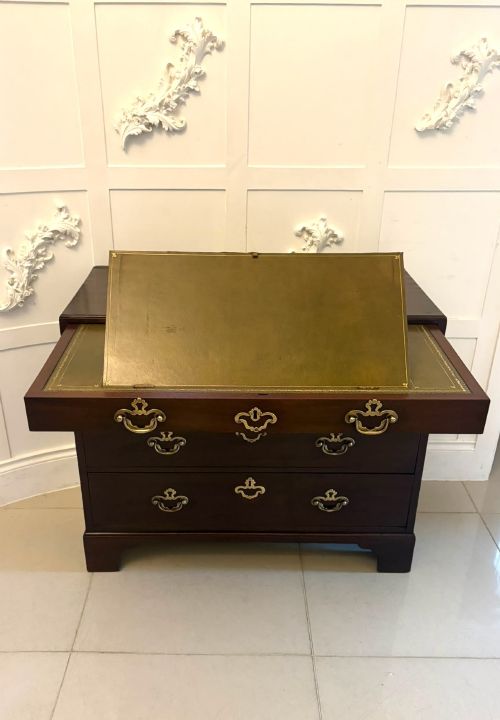
Sliding mechanisms rely on precision carpentry, allowing wooden shelves or pull-out boards to glide smoothly within the cabinet frame or beneath the main top. Drawers frequently feature hand-cut dovetails and fitted stationary compartments designed to organise writing implements.
Listings feature mahogany, rosewood, walnut, and oak across Georgian, Regency, and Victorian periods, alongside brass, leather, and sterling silver accessories.
Markers of Quality
The standard of an antique writing slide desk rests upon the selection of timber veneers and solid boards, where rich figuring and uniform grain distinguish finer examples. Superior pieces display crisp proportion, balanced hardware, and seamless integration of the sliding mechanism within the wider case furniture.
Internal organisation also separates grades of manufacture, with secondary fitted compartments, original leather inserts, and meticulous dovetailing indicating superior workshop standards. The survival of functioning candle slides, auxiliary drawers, and harmonious secondary woods underpins the distinction between standard production and exceptional cabinet work.
John McClean·Robert Gillows II·Sampson Mordan
The Antique Writing Slide Desk Glossary
- Writing slide
- A pull-out board integrated into a desk, chest of drawers, or cabinet to provide an auxiliary surface for correspondence without opening a main fall-front.
- Davenport
- A compact desk featuring a sloped writing surface above a pedestal of drawers, popular during the Regency and Victorian periods.
- Kneehole desk
- A pedestal desk featuring a central recess for the user's legs, flanked by banks of smaller drawers.
- Bureau bookcase
- A tall case piece combining a sloping desk compartment for writing with upper shelving enclosed by doors.
- Partner's desk
- A large freestanding desk designed with drawers and cupboards on both sides so two people can work facing each other.
Antique Writing Slide Desk: Frequently Asked Questions
What is an antique writing slide desk?
These pieces are traditional desks or storage chests fitted with pull-out wooden boards designed to extend the working surface.
They allow users to write letters or examine documents without occupying permanent floor space.
How were writing slides used?
Users pulled out the wooden boards beneath the main top or desk surface to hold paper, ink, or a quill while standing or sitting.
They were pushed back out of sight when correspondence concluded to save space in smaller rooms.
Where should I place one?
These items suit studies, living rooms, or bedrooms where compact surface area is useful for occasional correspondence or displaying desk accessories.
Freestanding pedestal versions also function well positioned in the centre of a room.
How do I identify the period?
Stylistic details such as brass handles, leg shapes, timber choices, and construction methods like dovetailing indicate the era of manufacture.
Georgian pieces often display plain mahogany or figured veneers, while Regency and Victorian examples introduce rosewood, ormolu mounts, or compact Davenport forms.