


Antique Writing Box Stand
An antique writing box stand offers a dedicated, elevated surface for correspondence, combining fine cabinetmaking with practical desk organisation.
Antique Writing Box Stand
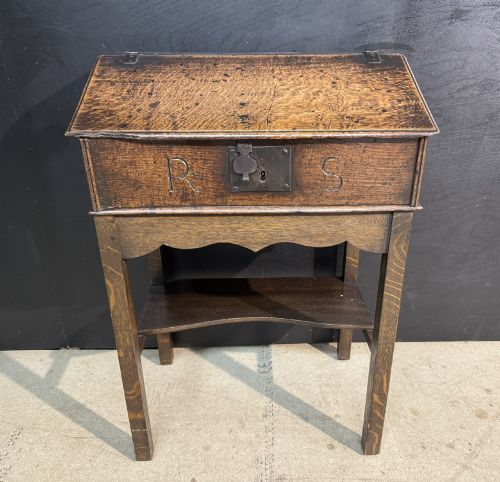
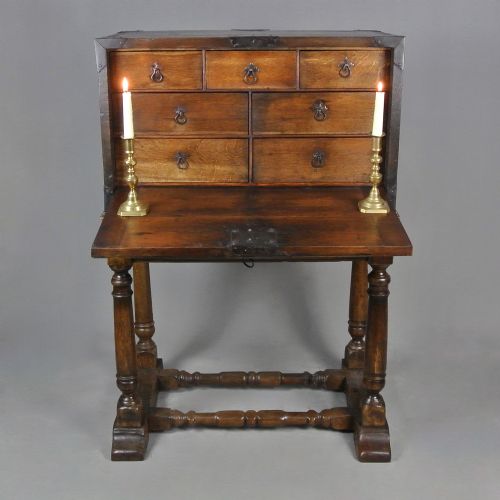
When you search for an antique writing box stand, you are looking at portable writing furniture paired with a matching base or raised support. The pieces on this page span from the seventeenth century through the Victorian era, encompassing forms such as bible boxes on stands, desks on stands, and fitted inkstands.
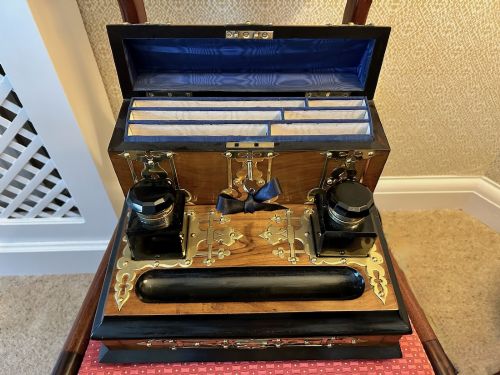
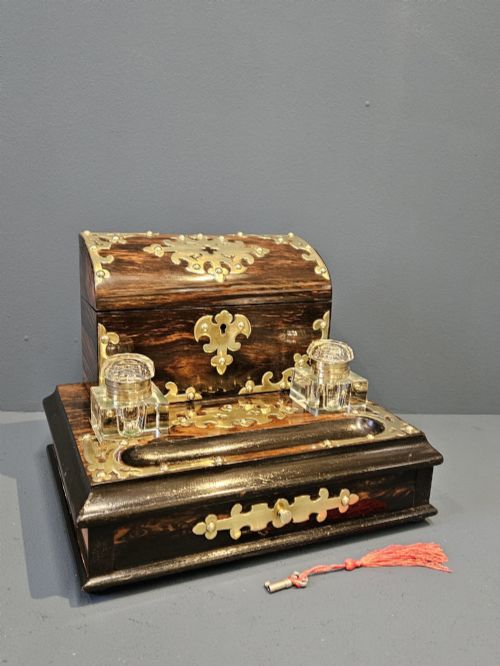
The most common versions you will meet are nineteenth-century walnut, coromandel, or rosewood desk stands and inkstands, alongside earlier seventeenth- and eighteenth-century English oak bible boxes mounted on stands. These items merge desk accessories with furniture, providing both storage for writing implements and a solid platform for letters.
Originating primarily from English and French workshops, these pieces reflect the shifting domestic habits of writing and record-keeping across several centuries. Whether you encounter a campaign desk, a French Boulle desk set, or an oak clerk's desk, each variant is designed to keep correspondence orderly and accessible.
Judging quality and craftsmanship
Quality in these pieces rests upon the crispness of the cabinetwork and the integrity of the materials. Superior examples display tightly fitted interior compartments, precise brass inlay, and well-figured wood grains such as burr walnut or rosewood.
The relationship between the box and its stand also dictates merit. Pieces retaining their original stands command greater interest than those where a box has been married to a later base, while intact original desk accessories like glass inkwells elevate the overall completeness.
Several boxes still contain their original glass inkwells, ready for the ghost of an eighteenth-century quill.
The Antique Writing Box Stand Glossary
- Bible box
- A small wooden box, often featuring a sloped lid, originally used to hold scriptures and later adapted for general writing purposes. These boxes frequently sit upon dedicated wooden stands.
- Coromandel
- A dense, heavily grained timber imported from Asia and utilised extensively in nineteenth-century luxury cabinetmaking for decorative boxes and desk sets.
- Boulle work
- An elaborate form of marquetry employing brass and tortoiseshell, popular in French furniture design during the nineteenth century and seen on high-end desk stands.
- Inkstand
- A tray or stand designed to hold inkwells, sanders, and penholders, often incorporating a small drawer or stationery rack.
- Campaign desk
- Folding or portable furniture constructed for travel, typically reinforced with brass corners and flush handles for durability.
- Writing slope
- A box with an angled lid that opens to reveal a flat or sloping surface lined for writing, accompanied by internal storage wells.
Antique Writing Box Stand: Frequently Asked Questions
What is an antique writing box stand?
An antique writing box stand is a piece of furniture that combines a portable writing box, slope, or inkstand with a matching or fitted base. These items were designed to elevate writing materials to a comfortable height for correspondence.
They range from seventeenth-century oak bible boxes on stands to ornate Victorian rosewood and coromandel desk sets equipped with inkwells and stationery compartments.
How were these stands used originally?
These pieces served as portable or stationary desks before fitted architectural writing tables became common in every home. Users stored paper, pens, and ink inside the box while writing upon the sloping lid or the integrated stand.
Wealthy households placed them on tabletops or used freestanding versions in studies and drawing rooms to manage daily letter-writing and personal accounts.
How do I date an oak bible box on stand?
Dating involves examining the construction methods, such as hand-cut dovetails, iron hinges, and the grain of the oak timber. Seventeenth-century examples often display simpler joinery and distinct peg construction.
Many surviving bible boxes were paired with stands later in their history, so checking whether the stand shares the same age, wear patterns, and wood species is essential for attribution.
How do I care for rosewood and coromandel stands?
Maintain these exotic wood surfaces by keeping them away from direct sunlight and sudden temperature changes, which can cause veneers to lift. Dust gently with a dry, soft cloth and avoid chemical polishes.
If the piece includes brass inlays, silk linings, or tortoiseshell, treat those areas with particular care to preserve the original materials without abrasion.