


Folding Desk on Stand
These pieces for folding desk on stand combine compact utility with portable design, offering a practical workspace that packs away cleanly when not in use.
Folding Desk on Stand
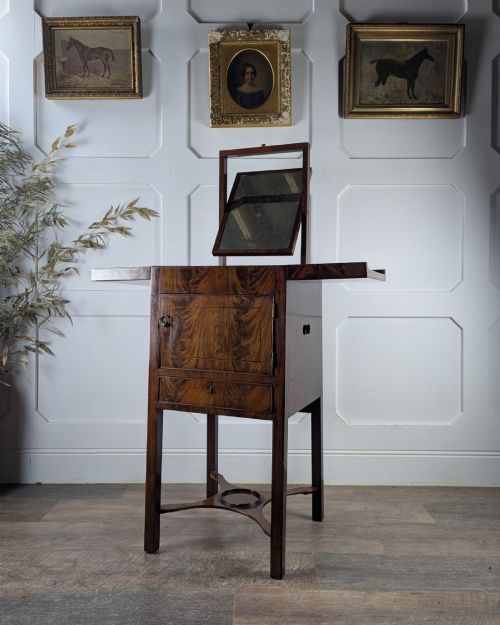
When you search for a folding desk on stand, you are looking at portable writing furniture designed for travel or compact rooms. These pieces encompass campaign items and folding tables originating from the Georgian era through to the interwar period.
The versions you are most likely to meet on this page span the Victorian and 19th-century periods, alongside campaign pieces in mahogany and walnut. They utilise folding mechanisms and removable stands to achieve their dual nature.
Makers often adapted these forms for colonial use or maritime travel, incorporating brass mounts for durability. The selection leans heavily toward campaign furniture and occasional tables rather than static library desks.
Materials and construction
Cabinet makers utilised dense timbers such as mahogany, walnut, teak, and oak to withstand regular transit and folding. These woods were chosen for structural integrity and finished with polished surfaces.
Brass fittings, hinges, and corner mounts provided essential reinforcement for joints subject to repeated movement. Glass and bone occasionally appeared in related desk accessories and finer internal details.
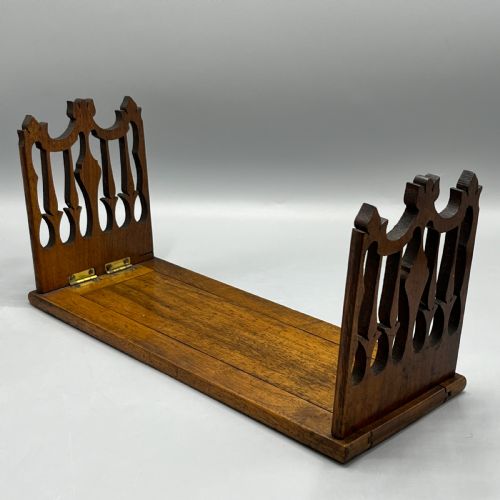
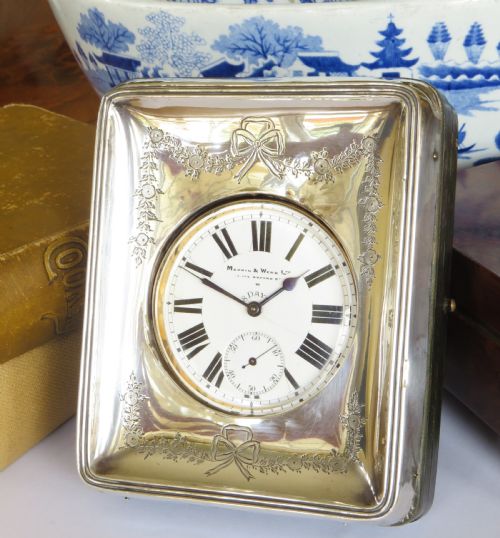
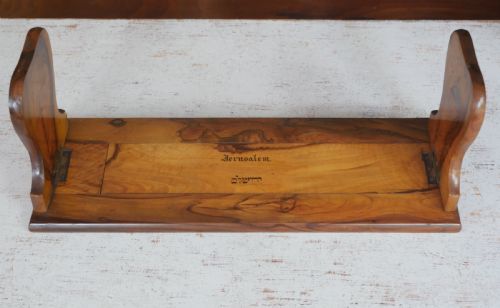
Several pieces include travel clocks and companion book slides, proving that Victorians truly could not bear to be unread while away from home.
Judging quality in folding furniture
The standard of a folding desk on stand rests upon the precision of its hinges and the snugness of fit when packed down. Superior examples demonstrate tight joinery that functions smoothly without relying on modern replacements.
Material selection dictates the upper tier of these objects, where figured mahogany or rich walnut is paired with heavy brasswork rather than plated substitutes. The integrity of the folding frame determines long-term utility.
The Folding Desk on Stand Glossary
- Campaign furniture
- Portable pieces designed for military officers and travellers, featuring folding frames, recessed brass handles, and removable stands. These items dismantle easily for transport.
- Walnut
- A dense, dark timber utilised extensively during the Victorian period for its rich grain patterns and durability in portable desks.
- Mahogany
- A heavy hardwood favoured by Georgian and Victorian cabinet makers for its stability and resistance to warping during travel.
- Brass mount
- Metal hardware fitted to the corners and edges of campaign items to protect against impact during transit.
Folding Desk on Stand: Frequently Asked Questions
What is a folding desk on stand?
It is a portable writing surface mounted on a collapsible or removable base, designed for easy storage and travel. These pieces reflect the pragmatic needs of 19th-century travellers and officers.
They combine the function of a writing desk with the portability of campaign furniture, allowing users to set up a workspace anywhere.
How were these desks used?
Owners used them for correspondence and administrative tasks while away from a permanent home or office. The folding design permitted rapid packing for transport.
Officers, diplomats, and scholars relied on such furniture during postings abroad or travels across the British Empire.
How do I care for campaign furniture?
Keep wooden surfaces conditioned with appropriate wax and protect brass hardware from excessive moisture. Avoid placing them in direct sunlight or near heat sources.
Check folding hinges periodically to ensure movement remains smooth and unimpeded by dust or dry joints.
How can I tell the period?
Dating relies on timber choice, construction methods, and the style of brass mounts. Georgian pieces typically display simpler lines, while Victorian versions incorporate heavier hardware.
Examining the screw types and joint construction provides further clues to whether a piece originates from the 18th, 19th, or early 20th century.