


Antique Woven Tent Bag
When you handle an antique woven tent bag, you hold a piece of Central Asian tribal artistry created for nomadic life.
Antique Woven Tent Bag
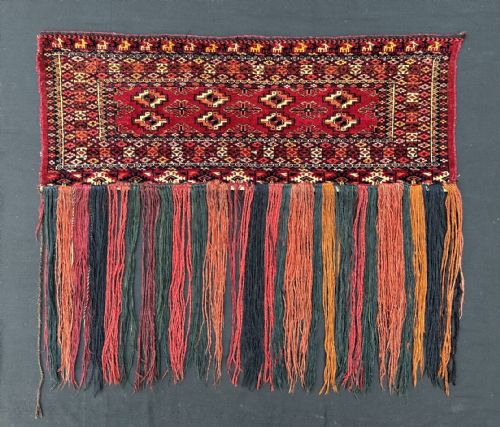
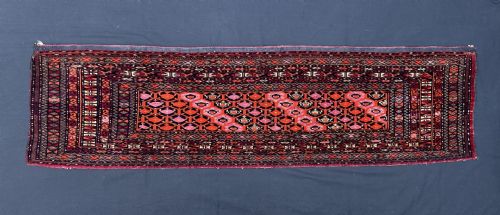
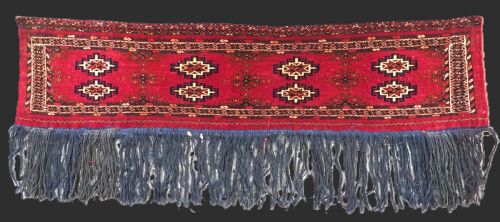
An antique woven tent bag represents utilitarian Central Asian tribal weaving produced by nomadic and semi-nomadic groups, most frequently encountered here as torba or chuval formats originating from Turkmen tribes such as the Tekke, Yomut, Ersari, and Saryk.
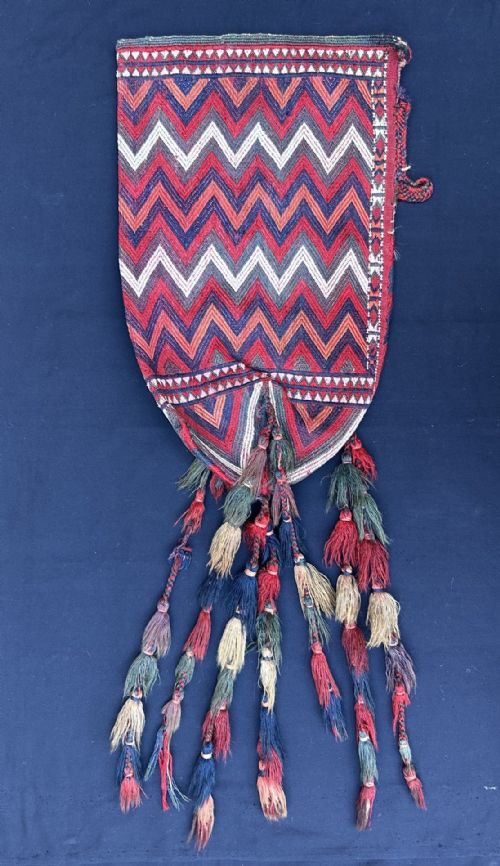
These textiles served practical storage functions inside traditional dwellings, designed to hold household goods, bedding, or tent poles, and many survive today either as complete pouches with backs and tassels or as flattened faces intended for wall hanging.
The material record spans from the mid-nineteenth century through to around nineteen hundred, alongside occasional eighteenth-century fragments, reflecting the traditional craft output of the Merv and Yolatan oases and the Trans-Caspian steppes.
Materials and construction
Weavers utilised hand-spun wool as the primary foundation for pile and flat-weave structures, frequently incorporating natural dyes to achieve deep crimson grounds alongside contrasting ivory and dark tones.
Selected examples integrate supplementary materials, employing white cotton or silk highlights for specific design motifs, embroidery, or structural edging to enhance visual depth.
The structural technique relies on dense knotting or flat-weaving traditions, producing resilient surfaces capable of withstanding nomadic movement and daily domestic use.
Some tent bags survived centuries of nomadic migration simply because they stored the family bedding.
Variations in quality
Quality varies significantly through the density and tightness of the weave, where finer knots per square centimetre indicate greater technical skill and time invested by the maker.
The sophistication and clarity of tribal guls, such as Salor or kepse motifs, together with the variety and preservation of natural dye colours, separate standard utility pieces from exceptional examples.
Survival of original components like backing panels, tassels, and complete side dimensions elevates the historical integrity of a piece compared to isolated fragments.
The Antique Woven Tent Bag Glossary
- Torba
- A small utilitarian wall or tent hanging bag produced by Turkmen and other Central Asian tribes for domestic storage.
- Chuval
- A large storage bag traditionally used inside a yurt for holding household goods and blankets.
- Gul
- A primary medallion motif repeated across Turkmen carpets and bags, often distinctive to a specific tribe or sub-tribe.
- Asmalyk
- A pentagonal trapping often associated with camel decoration during tribal wedding processions.
Antique Woven Tent Bag: Frequently Asked Questions
What is an antique woven tent bag?
These pieces are functional storage containers made by nomadic tribes in Central Asia, primarily woven from wool using natural dyes.
They were hung inside tents to organise possessions and showcase tribal identity through traditional patterns.
How were these bags used?
Nomadic families utilised them inside dwellings to store clothing, utensils, and bedding off the ground.
Smaller formats held specific items like tent poles, while larger ones served general household storage.
How do I identify different tribes?
Tribal identity is typically determined by the specific repeating guls, colour palettes, and structural weaving techniques employed.
For instance, Yomut and Tekke pieces display distinct medallion geometry and border arrangements.
How should I display them?
Many examples are mounted on walls as textile art or displayed as flat decorative panels.
Ensure they are kept out of direct sunlight to protect the natural wool and dyes.