
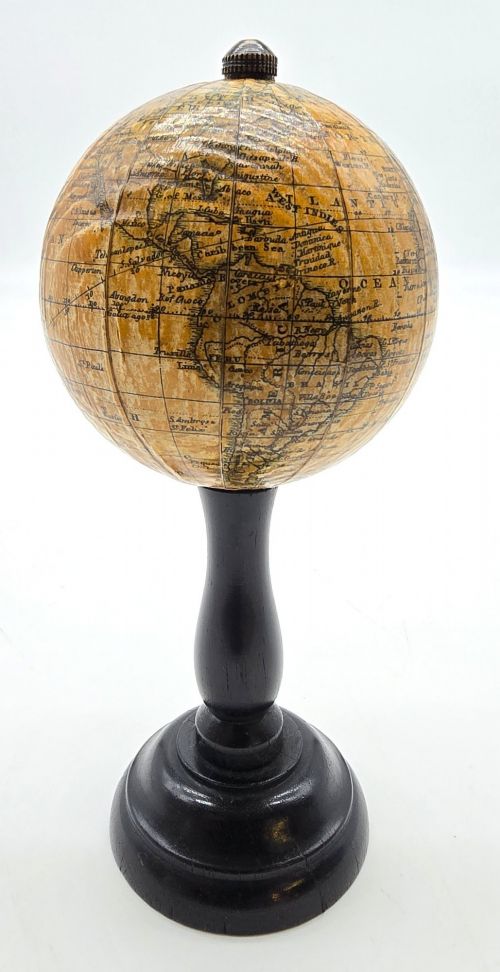
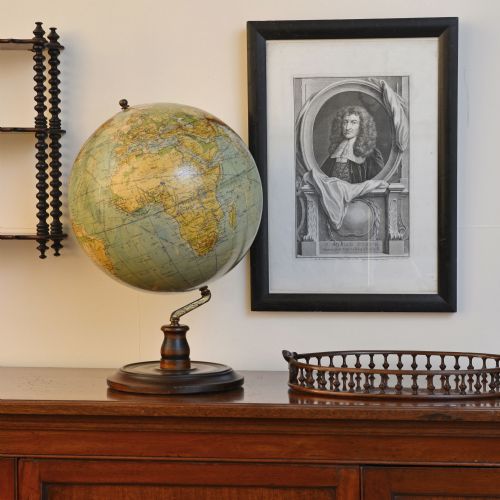


Antique World Globe
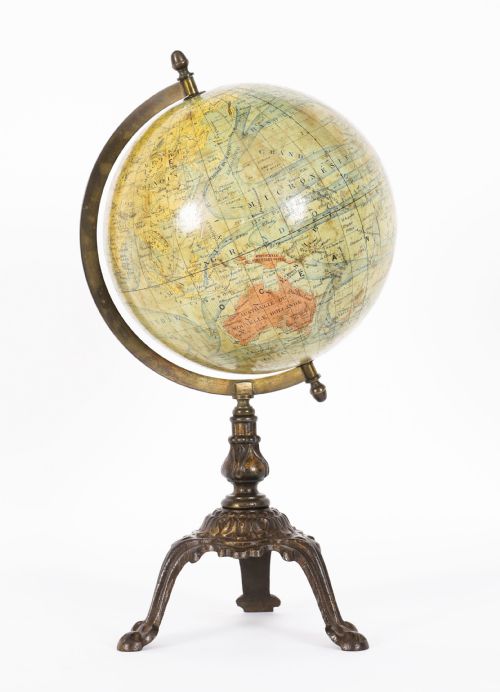
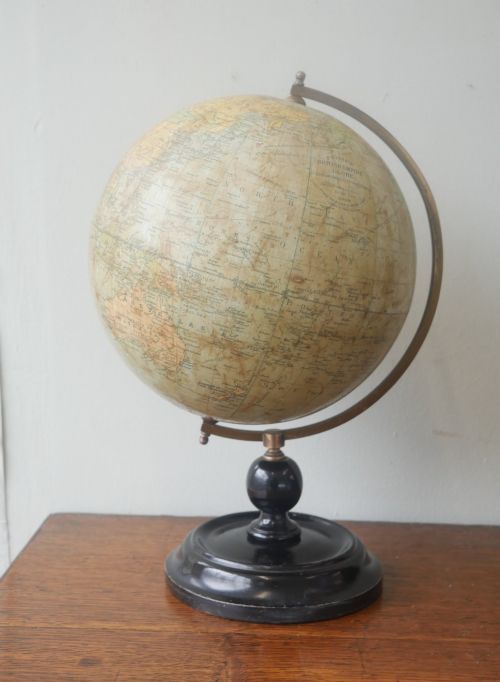
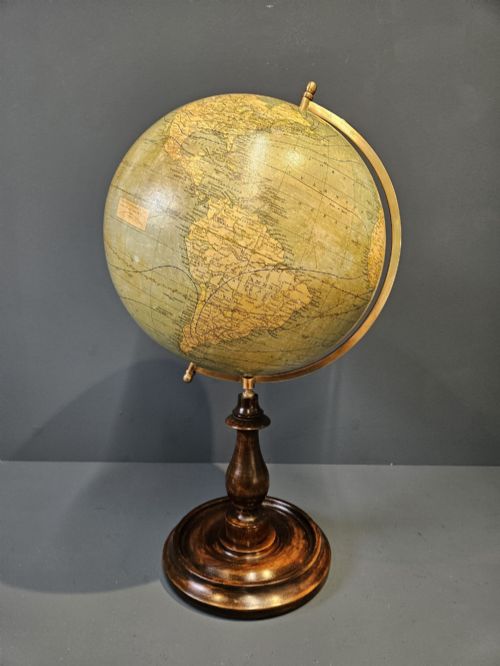
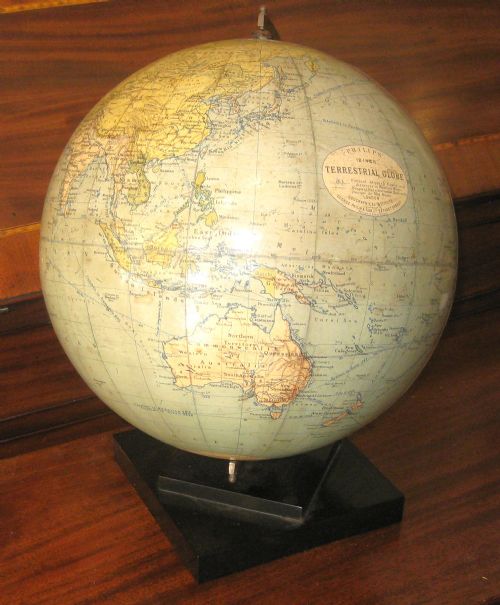
An antique world globe brings geography into the room on a turned stand, offering a tactile piece of cartographic history for the study or desk.
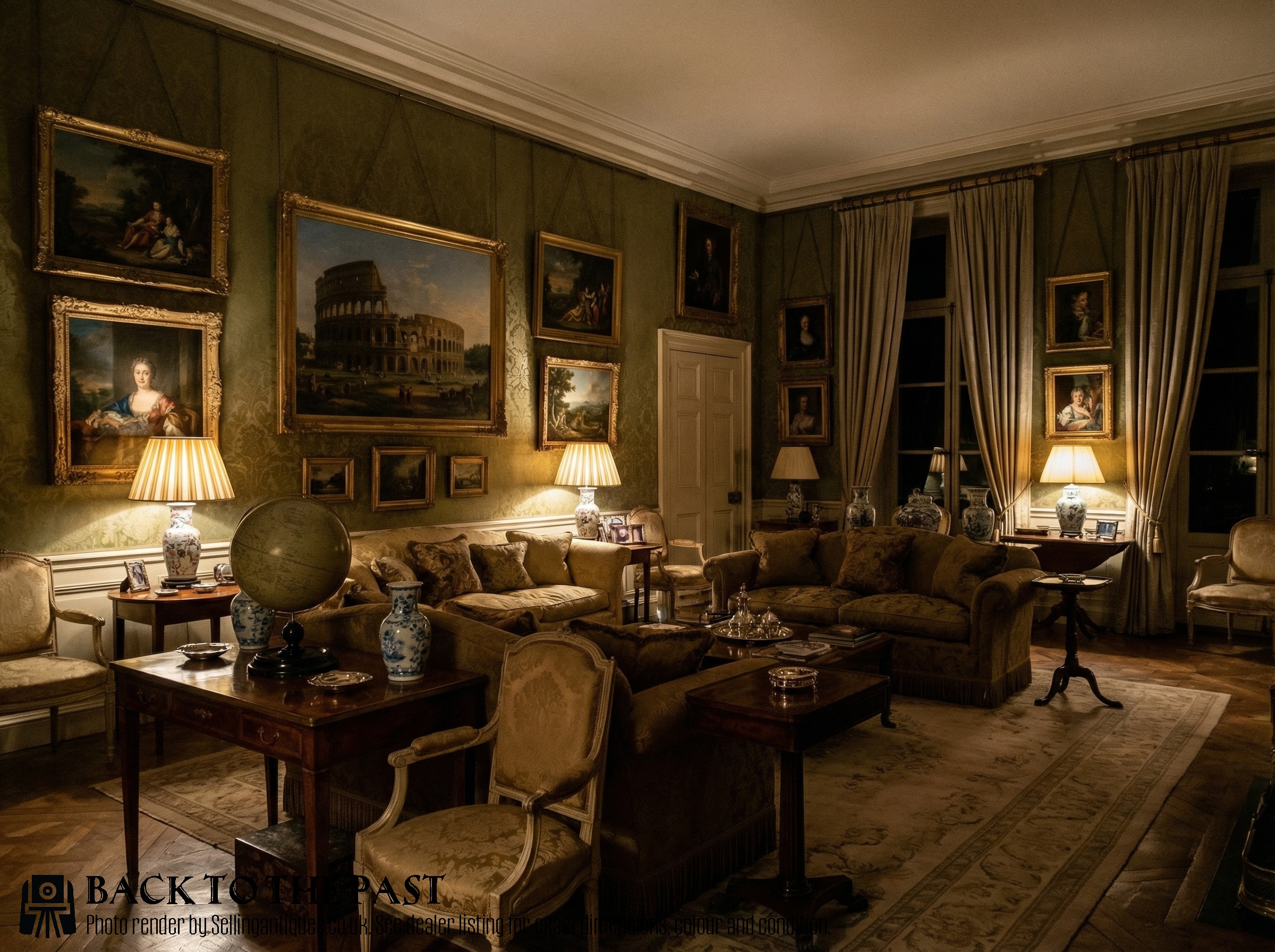
Antique World Globe
An antique world globe represents the earth mapped across a spherical surface, mounted on a stand for desktop or floor use. These pieces record historical borders, colonies and shipping routes from past decades and centuries.
The selections available here range from compact desk models to large library examples. Collectors encounter library globes alongside smaller table and desk variants.
Dating ranges from the Victorian era through the Edwardian period into the interwar years of the 1920s and 1930s. Makers such as Bacon, Newton and Sons, Phillips, Malby and Geographia dominate the available forms.
Materials and construction
The core structure typically consists of plaster applied over a spherical form, carrying printed paper gore segments. These paper gores are painstakingly pasted onto the sphere to align cartographic details accurately.
Stands and mountings utilise traditional timbers including mahogany, walnut and ebonised wood. Brass meridians and cast iron bases provide structural support and a contrasting metallic finish.
Antique World Globe Retail Price Guide 2026
Typical asking prices for world globe among the pieces listed under this phrase on Sellingantiques today, from the lower quarter to the upper quarter. They describe what is for sale here now, not the wider market.
Judging quality
Quality rests in the clarity of the lithographic printing and the precision of the paper gore application. Finer globes exhibit seamless alignment where the paper segments meet at the poles.
The substance of the base elevates the piece, distinguishing simple turned timber feet from heavy brass meridians and substantial mahogany or walnut mounts.
Bacon·Newton and Sons·Phillips·Malby·Geographia
The Antique World Globe Glossary
- Gores
- The paper segments printed with map details that are curved and pasted onto the spherical globe body.
- Terrestrial globe
- A model representing the earth rather than the celestial sphere.
- Meridian
- The brass or metal ring surrounding the globe that holds it on its axis and allows rotation.
- Library globe
- A large floor-standing globe traditionally housed in a study or library for detailed reference.
Antique World Globe: Frequently Asked Questions
How do I date a globe?
Examine the geopolitical boundaries, country names and colonial territories printed on the paper gores. Cartographers often updated plates to reflect historical changes.
Makers' signatures and publication dates printed near the cartouche offer a direct indicator of the year of manufacture.
What is the difference between a desk globe and a library globe?
Desk globes are smaller models designed to sit comfortably on a table or writing surface for quick reference. They utilise compact stands made of timber or cast iron.
Library globes are substantially larger floor-standing pieces. They often feature elaborate wooden frames with integrated compasses or horizon rings.
Where should I place a globe in a room?
Position the piece away from direct sunlight to prevent the printed paper gores and delicate varnishes from fading over time. Stable room temperatures protect the plaster core and wooden stands.
Allow enough clearance around the mounting so the sphere rotates freely within its brass meridian without obstruction.