



Antique Wool Hall Rug
An antique wool hall rug brings genuine warmth and historical character to a long corridor.
Antique Wool Hall Rug
An antique wool hall rug is typically a narrow runner designed to fit corridors, landings and passageways in traditional homes. These long floor coverings soften hard timber and stone flooring while providing a durable surface for high-traffic areas.
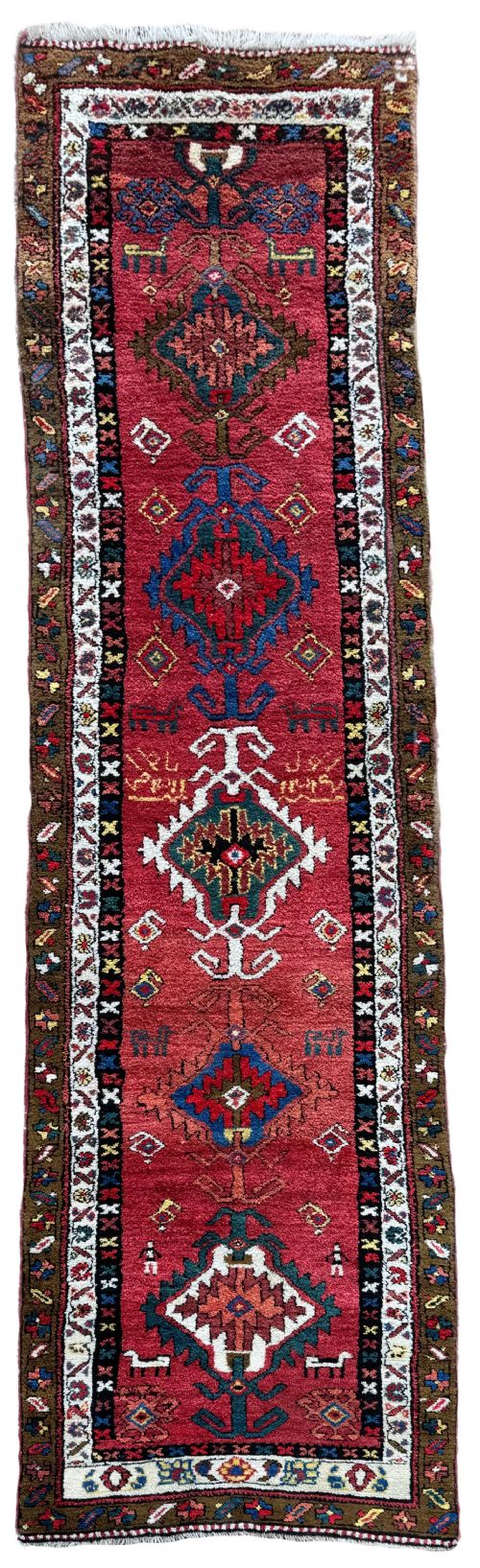
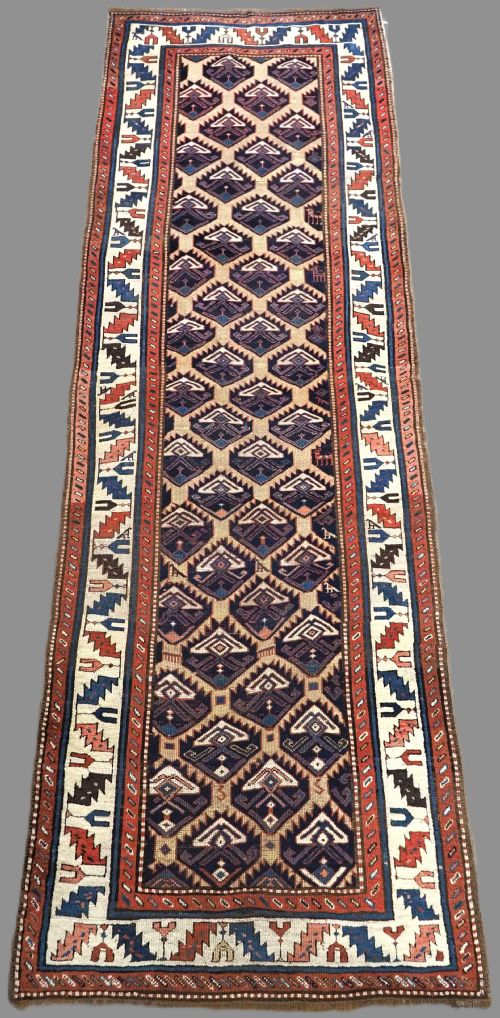
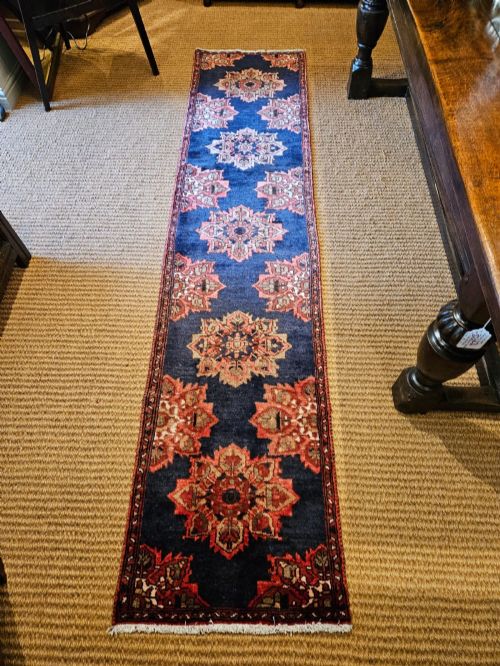
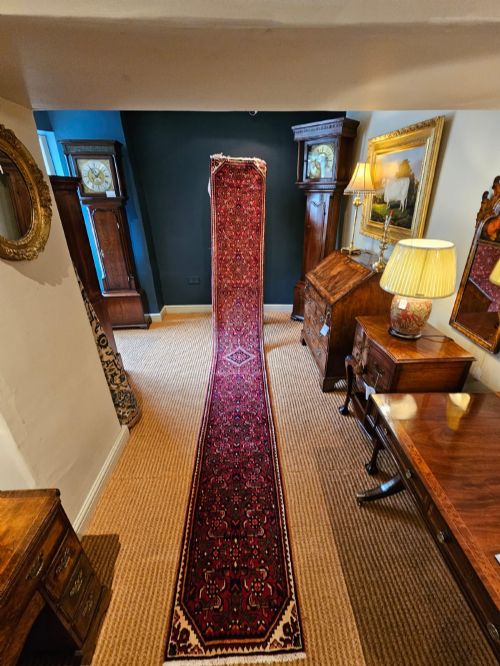
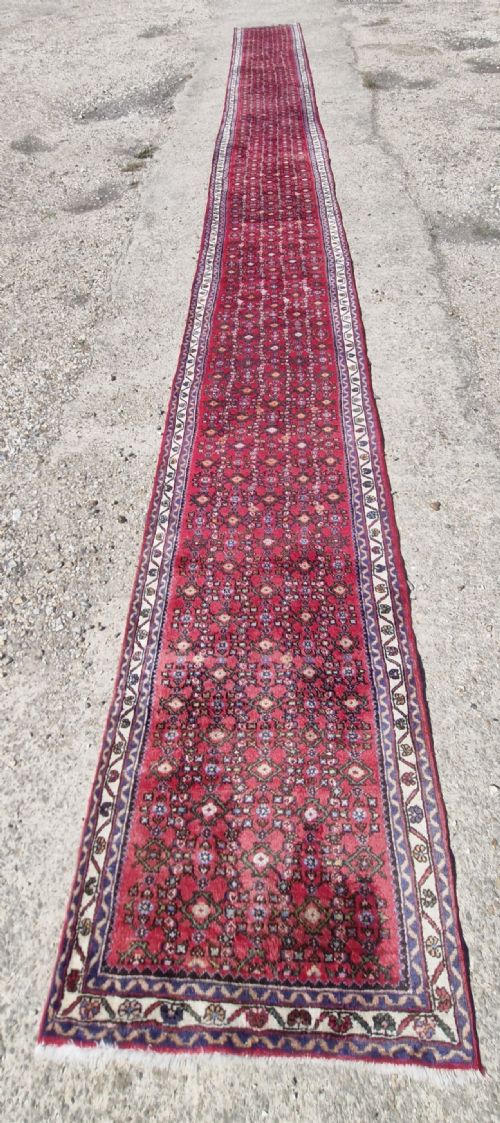
The pieces seen here span regional traditions from Persian and Caucasian workshops to Kurdish and Anatolian weaving centres. Buyers meet formats ranging from compact narrow carpets to exceptionally long runners stretching past thirty feet.
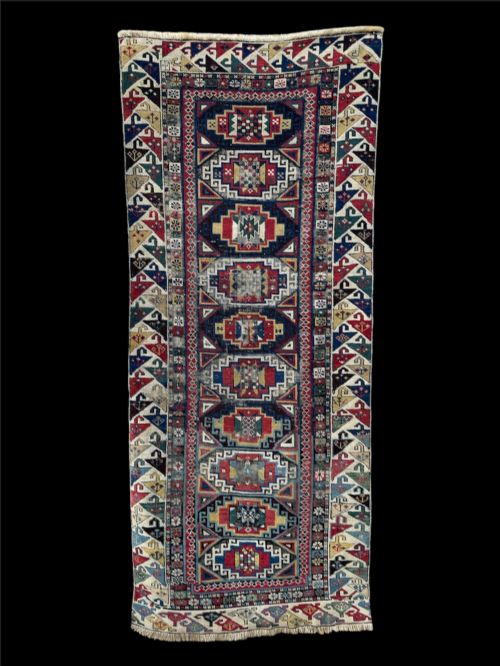
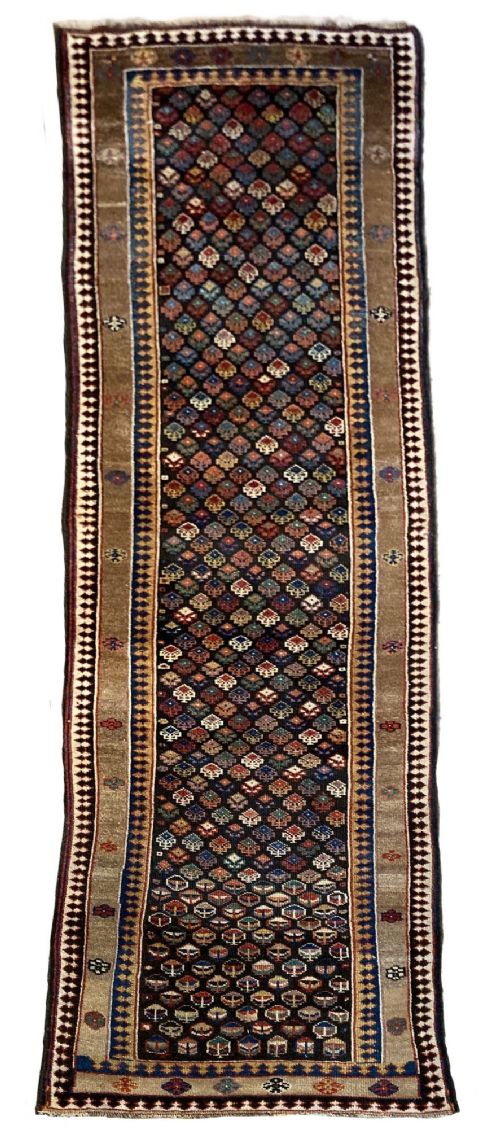
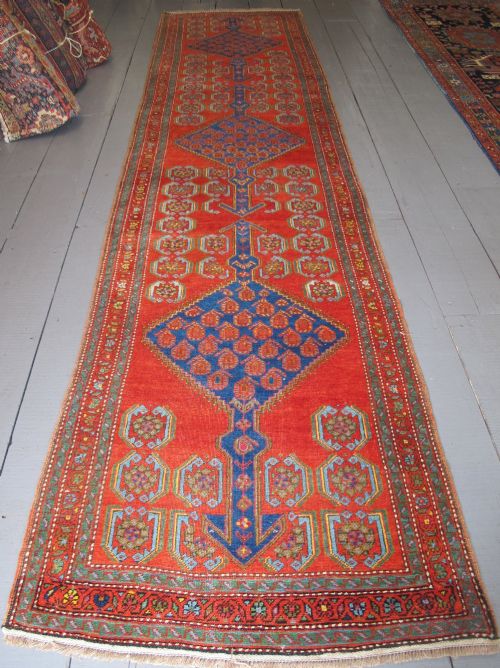
Dating across the nineteenth and early twentieth centuries, these textiles reflect distinct tribal and regional designs including Heriz, Gendje, Kurdish and Kazak patterns. Each example represents traditional floor coverings built for domestic utility.
How They Were Made
Construction relies primarily on wool piles knotted onto cotton or wool foundations, utilising hand-spun fibres that yield a dense and resilient texture. Natural dyes provide the underlying palette, creating rich colour variations across the length of the rug.
Weavers incorporated camel hair alongside standard wool in specific sections to introduce un-dyed tonal depth and robust wear resistance. Traditional upright looms sustained the creation of these elongated formats through meticulous hand-knotting techniques.
Camel hair occasionally found its way into the weave, offering an un-dyed, rustic softness that stubbornly refuses to wear out.
What Varies in Quality
Quality reveals itself in the density of the knotting and the precision of the geometric or floral motifs executed across the runner. Tighter foundations and well-balanced proportions separate finer workshop output from simpler utilitarian weaving.
The integrity of the wool pile and the stability of the structural edges dictate how well a runner handles prolonged corridor traffic. Original dye saturation and the preservation of natural colour variation further distinguish superior examples.
The Antique Wool Hall Rug Glossary
- Runner
- A long, narrow carpet format specifically proportioned for hallways, corridors and staircases. These pieces measure significantly longer than they are wide to fit restricted floor spaces.
- Natural Dyes
- Colouring agents derived from plant, root and insect sources rather than synthetic chemical compounds. They impart a rich, varied patina that develops character over decades.
- Boteh
- A traditional almond-shaped or paisley motif representing a floral spray or cypress tree. This ancient symbol appears frequently in Persian and Caucasian textile designs.
- Pile
- The upright yarn loops or cut ends that form the soft upper surface of a rug. It provides both cushioning underfoot and protection for the foundation structure underneath.
- Foundation
- The underlying grid of warp and weft threads that supports the knotted wool pile. Cotton and wool are the primary materials utilised for this structural framework.
Antique Wool Hall Rug: Frequently Asked Questions
How do I measure for a hall rug?
Measure the clear floor space of your corridor while leaving an equal margin of exposed wood or stone visible around the perimeter. Account for door clearances so the rug does not obstruct movement when entering or leaving rooms.
Keep in mind that very long runners can be visually balanced by leaving generous clearance at both ends of the hallway. Accurate measurement ensures the runner sits comfortably within the architectural proportions of the passage.
Where should I place a long runner?
These narrow floor coverings suit high-traffic hallways, entrance passages, long landings and transitional spaces between main rooms. They protect high-use wooden floorboards while introducing texture and historical pattern to otherwise plain corridors.
Avoid placing them in areas prone to dampness unless adequate ventilation is maintained beneath the wool fibres. Proper placement transforms purely functional circulation space into a decorative gallery.
How do I care for antique wool?
Vacuum your runner gently using suction power without a rotating brush roll to protect the delicate hand-knotted pile. Rotate the piece periodically to distribute foot traffic evenly across the length of the rug.
Professional cleaning should be undertaken sparingly by specialists experienced in antique textiles and natural dyes. Promptly blot liquid spills with a clean, dry cloth rather than rubbing the fibres.
How do I identify regional rug styles?
Study the specific geometric motifs, border arrangements and colour palettes characteristic of traditional weaving regions like Heriz, Kazak or Kurdistan. Caucasian pieces often display bold, angular medallions while Persian workshop runners feature intricate floral lattices.
Comparing the weave density and foundation materials helps narrow down the probable geographical origin of an antique textile. Examining these structural clues connects each runner to its historical weaving tradition.