




Antique Woodland Wall Art
Antique woodland wall art brings the quiet depth of forests and shaded groves directly into interior spaces through centuries of traditional painting and tapestry.
Antique Woodland Wall Art
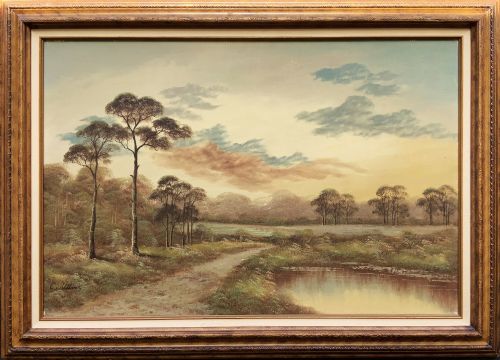
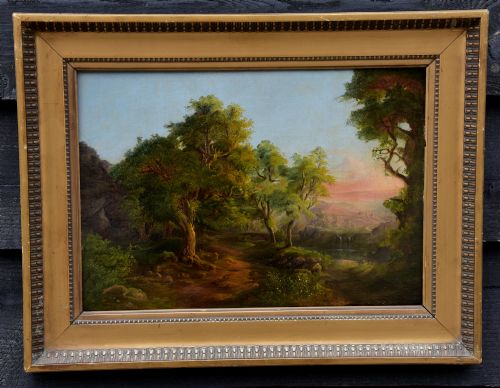
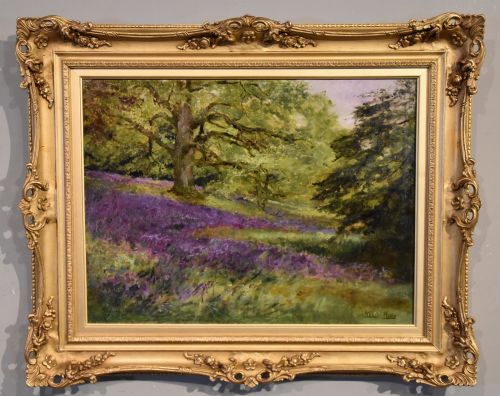
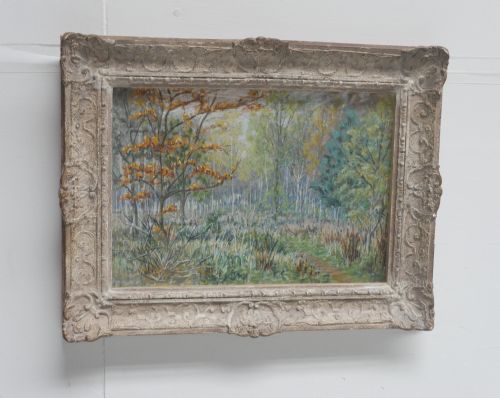
Antique woodland wall art encompasses framed oil paintings, watercolours, pastels, drawings, collotype prints, and tapestries featuring trees, forests, and rural glades. These works bridge landscape tradition and natural observation, capturing shaded paths, bluebell woods, and cattle beneath boughs.
The pieces span from the seventeenth century through to the mid-twentieth century, with Victorian and nineteenth-century canvases forming a substantial portion of the selection. Alongside British and Irish countryside scenes, buyers encounter Dutch school landscapes and Flemish verdure textiles.
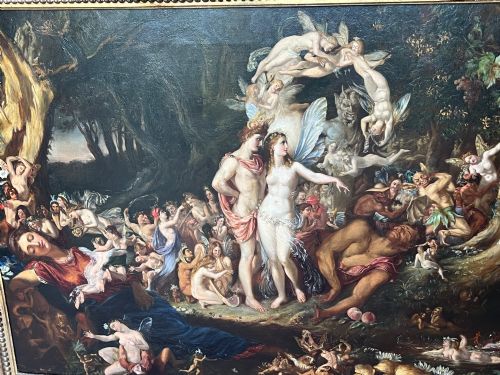
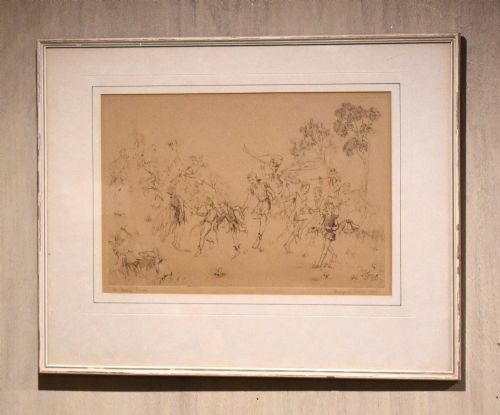
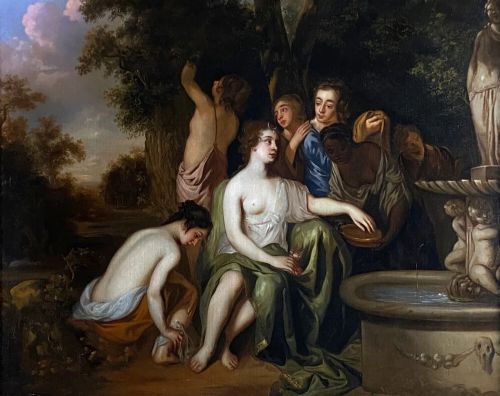
Subjects range from pure pastoral topography to narrative scenes involving figures, such as children gathering firewood, bathers, fairy tales, and cattle watering by woodland rivers. The diversity of mediums allows collectors to choose between heavy impasto oils and delicate watercolours.
Materials and Construction
Oil on canvas and board dominate the selection, utilising oil paint applied with brushes or palette knives to build texture and depth in foliage and tree trunks. Many of these paintings retain their original gold leaf frames which complement the warmth of the pigments.
Watercolour and pastel works on paper or card capture lighter atmospheric effects in woodland scenes, often framed behind glass to protect the delicate dry pigments and washes. Tapestries employ woven wool and silk threads to construct complex verdure compositions featuring dense architectural foliage.
Antique Woodland Wall Art Retail Price Guide 2026
Typical asking prices for woodland wall art among the pieces listed under this phrase on Sellingantiques today, from the lower quarter to the upper quarter. They describe what is for sale here now, not the wider market.
Hansel and Gretel make a shadowy appearance alongside cattle, deer, and fairies in the woods.
Distinctions in Quality
The handling of light, shadow, and perspective dictates the artistic merit of each piece, distinguishing ambitious compositions from formulaic studio output. Skilled brushwork in the rendering of bark, canopy density, and dappled sunlight separates superior canvases from simpler decorative works.
The integrity of the medium matters greatly, from the stability of the canvas and paint layers in oils to the preservation of paper and colour vibrancy in watercolours and pastels. Original frames and documented attribution to listed artists further elevate the standing of individual works.
Sir Joseph Noel Paton·Richard Sebastian Bond·William H Myers·Thomas W Lascelles·Henry Yeen King·Arthur Herbert Rigg·Thomas Bromley Blacklock·James Mallard Bromley·William Mellor·Alfred Grey RHA·John Wright Oakes·Rowland Henry Hill·Abraham Hulk Jnr·Harold Swanwick·Charles James Adams·Edward H Holder·George F Wetherbee·J McIntyre·John Falconar Slater
The Antique Woodland Wall Art Glossary
- Verdure tapestry
- A wall hanging woven with a dominant theme of plants, trees, foliage, and often animals in a landscape setting. These textiles originate largely from seventeenth and eighteenth-century European workshops.
- Collotype
- A planographic printing process that uses bichromated gelatin to produce high-detail photographic reproductions. Art Deco examples often utilise this technique for affordable wall decor.
- Impasto
- Paint applied thickly to a canvas so that it stands out from the surface, creating tangible texture. This technique appears frequently in nineteenth and twentieth-century oil paintings to render rough tree bark and foliage.
- Barbizon School
- A nineteenth-century French art movement championing realism in landscape painting, focusing on direct observation of nature and woodland environments. Its influence spread widely among British and European painters.
Antique Woodland Wall Art: Frequently Asked Questions
How do I date an antique woodland painting?
Dating relies on stylistic clues, canvas preparation, pigments, and framing techniques characteristic of periods like the Victorian era or the early twentieth century. Signatures, inscriptions on the reverse, and artist records provide further chronological certainty.
Changes in artistic movements, such as the shift from romantic nineteenth-century realism toward post-war mid-century abstraction, help narrow down the decade of creation.
Are tapestries considered wall art?
Large verdure tapestries function historically as textile wall art, providing insulation and decorative scenes of woodlands for large rooms. They occupy a distinct category from oil paintings and watercolours due to their woven construction.
These textile pieces often date back to the seventeenth and eighteenth centuries and require careful wall mounting away from direct sunlight.
How should I care for oil paintings?
Oil paintings on canvas require stable indoor humidity and temperatures to prevent warping of the wooden stretcher frames and cracking of the paint layer. Displaying them out of direct sunlight protects organic pigments from fading over time.
Dusting should be performed gently with a soft, dry brush, avoiding any moisture or chemical cleaning agents on the painted surface.
What is the difference between watercolours and oils here?
Watercolours utilise water-soluble pigments on paper, resulting in lighter, translucent woodland scenes that typically require glass framing for protection. Oil paintings use slow-drying pigments suspended in medium on canvas or board, allowing for rich textures and deeper colour saturation.
Oils are generally more robust and traditionally housed in heavy ornamental frames without glass barriers.