



Muted Green Watercolour Painting
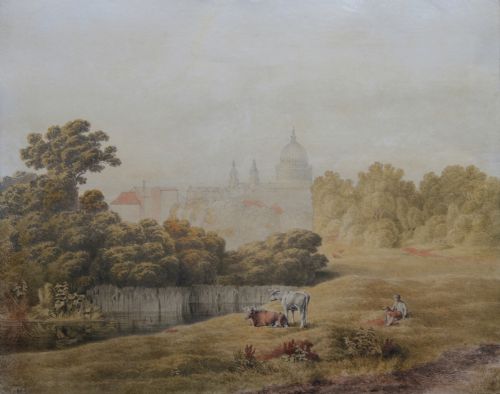
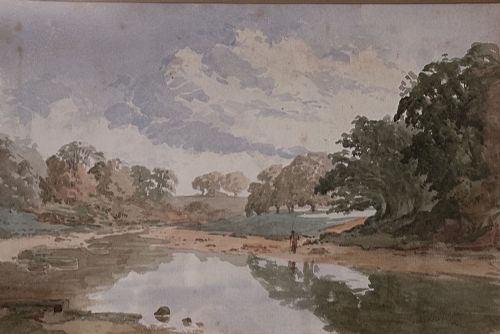
These muted green watercolour painting examples offer quiet pastoral landscapes and river scenes framed under glass.
Muted Green Watercolour Painting
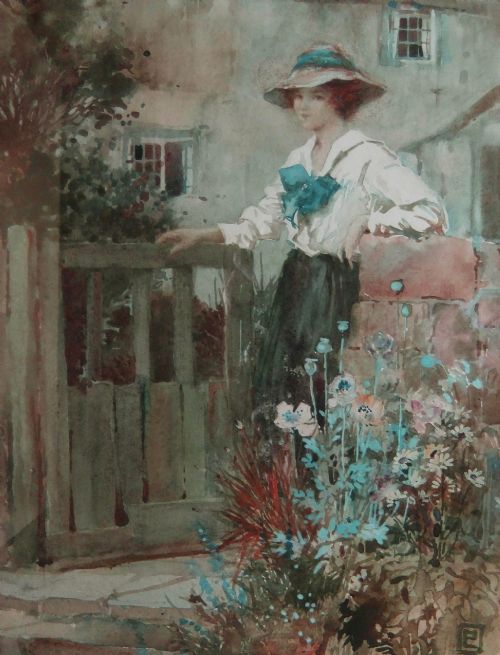
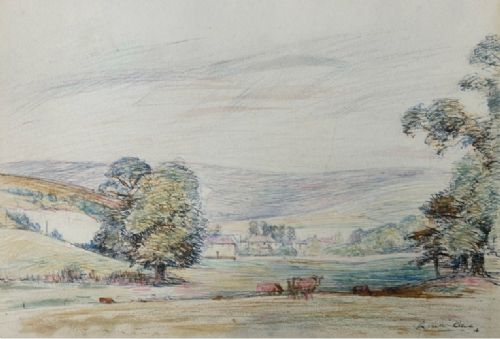
A muted green watercolour painting brings together works originating from the nineteenth century through the mid twentieth century, with a strong representation of early twentieth century pieces. Buyers examine original fine art paintings depicting English pastoral landscapes, coastal views, and rural scenes featuring cottages, rivers, and figures. The selection spans Victorian, Edwardian, and British Impressionism styles, capturing subdued green tonalities across paper supports.
Most items on this page lean towards traditional British landscape painting from periods such as the nineteen-tens and nineteen-twenties. These works typically present rural tranquility through restrained palettes and careful observation of countryside light and atmosphere.
How they were made
These works employ watercolour pigment and paint applied directly onto paper supports, often protected beneath glass within wooden frames. Artists utilise the natural white or cream tone of the paper to provide luminosity through translucent washes of colour.
The technique relies on fluid brushwork where water thins the pigment to create gentle gradients and soft atmospheric effects. Painters build up muted green tones using layered washes to render foliage, meadows, and riverbanks.
Muted Green Watercolour Painting Retail Price Guide 2026
Typical asking prices for muted green watercolour painting among the pieces listed under this phrase on Sellingantiques today, from the lower quarter to the upper quarter. They describe what is for sale here now, not the wider market.
Subject matter centres on British landscapes, coastal views, and pastoral scenes populated by country folk and farm animals.
What varies in quality
Quality rests upon the artist's handling of tone and perspective, distinguishing confident brushwork from rigid application. Superior examples capture atmospheric depth and natural light with economy of mark, whereas weaker pieces remain flat and overworked.
Condition also plays a part, as works preserved properly under glass maintain the integrity of the paper and the subtle vibrancy of the pigment without severe fading or foxing.
Russell Sidney Reeves·Percy Lancaster·Cuthbert Crossley·Thomas Hunn·James Orrock·Percy Robertson·Linnie Watt·Henri Joseph Harpignies·Sidney James Beer·Henry Charles Fox·Thomas James Lloyd·Harold Swanwick·Henry Sykes·Thomas Mackay·George Faulkner Wetherbee·Clarence Woodburn·Henry John Sylvester Stannard·William Stephen Coleman·GM de L'Aubiniere·John J Hamer·Fred Lawson·Theresa Sylvester Stannard·John Pedder·Angus Rands·John D Walker
The Muted Green Watercolour Painting Glossary
- Watercolour paint
- A medium consisting of colour pigments suspended in a water-soluble vehicle, applied to paper to create translucent washes.
- British Impressionism
- A late nineteenth and early twentieth century painting movement focusing on light, everyday subjects, and plein air observation.
- Victorian pastoral
- A genre depicting idealised rural life, agricultural scenes, and tranquil countryside views typical of the nineteenth century.
- Foxing
- Brown spots and discolouration caused by chemical reactions in ageing paper, frequently encountered in antique works on paper.
Muted Green Watercolour Painting: Frequently Asked Questions
What periods do these paintings cover?
The works span from the nineteenth century through the Victorian and Edwardian eras into the early twentieth century, extending up to the nineteen-forties.
Most examples date from the decades surrounding nineteen hundred, reflecting traditional British landscape traditions.
Where were these scenes painted?
The subjects are primarily drawn from English, Welsh, and Irish locations, including Yorkshire, Sussex, Devon, and Cardigan Bay.
Artists frequently recorded rural villages, riversides, coastal cliffs, and pastoral meadows during outdoor sketching trips.
How do I identify a Victorian landscape?
Victorian landscapes often feature narrative elements such as children fishing, figures walking over bridges, or cottages nestled in rural valleys.
They rely on detailed draughtsmanship combined with muted naturalistic palettes.