




Edwardian Woodland Art
Edwardian woodland art captures pastoral calm and botanical detail through works created during the early twentieth century.
Edwardian Woodland Art
Edwardian woodland art encompasses paintings and drawings produced around the start of the twentieth century that focus on trees, bluebell woods, and rural paths. These pieces capture the natural landscape with a distinct pastoral charm typical of the period.
The works appearing here are most commonly watercolours and oil paintings on canvas or paper. Artists of this era frequently depicted cattle in woodlands, quiet rivers, and seasonal blossoms.
Originating largely from British and Irish artistic traditions, these works reflect the prevailing styles of late Victorian and Edwardian landscape painting. They range from intimate watercolours to larger framed oils.
Materials and techniques
Artists worked primarily with oil paint on canvas or watercolour pigment on paper, applying mediums to capture the varied light of forest floors and canopies. Charcoal drawings on canvas also appear, showing preparatory or illustrative techniques from the period.
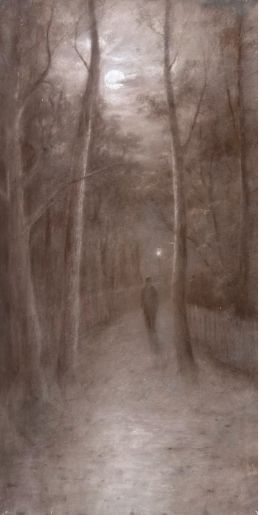
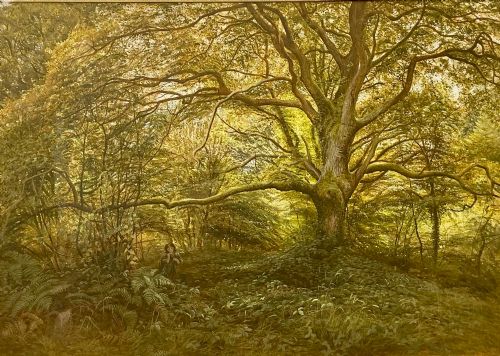
Pigments were handled with techniques ranging from tonalism and impressionistic brushwork to detailed realism. The application of paint builds texture in oil pieces, while watercolours rely on fluid washes to denote light and shadow among trees.
Edwardian Woodland Art Retail Price Guide 2026
Typical asking prices for edwardian woodland art among the pieces listed under this phrase on Sellingantiques today, from the lower quarter to the upper quarter. They describe what is for sale here now, not the wider market.
Cows feature so frequently in these woods that one might suspect the Edwardian bovine population spent most of its time posing by streams.
Assessing quality
Quality in these paintings rests on the artist's handling of light filtering through branches and the convincing depth of the woodland space. Stronger examples display confident brushwork and a balanced composition rather than purely illustrative repetition.
Condition of the paper, canvas, and original pigment preservation heavily influence the standing of a piece. Works that retain their original colour intensity without excessive fading or discolouration represent the better end of the range.
William H Myers·Thomas Bromley Blacklock·Clarence Henry Roe·Alfred Grey·Rowland Henry Hill·Alfred W Parsons·Harold Swanwick·Charles James Adams·Ernest Higgins Rigg·George Graham·Beatrice Parsons·Edward H Holder·George F Wetherbee·Charles Edward Wilson·John Falconar Slater·Lester Sutcliffe·George Neil
The Edwardian Woodland Art Glossary
- Watercolour pigment
- A colourant ground with a water-soluble binder, used on paper to create translucent washes. It allows artists to build delicate layers of light.
- Oil on canvas
- Pigment suspended in drying oils applied to stretched woven fabric. This medium offers rich texture and depth.
- Tonalism
- An artistic style focusing on shadow, atmosphere, and a unifying colour palette. It creates a moody or contemplative landscape.
- British Impressionism
- A movement incorporating loose brushwork and natural light into traditional British subjects. It influenced many landscape painters of this era.
Edwardian Woodland Art: Frequently Asked Questions
What subjects do these paintings show?
These works primarily depict rural scenes, including bluebell woods, cattle resting under trees, and quiet forest pathways.
Artists focused on capturing seasonal changes, from spring blossoms to winter snow across British and Irish landscapes.
How should I hang these watercolours?
Watercolours require careful placement away from direct sunlight to prevent the pigments from fading over time.
Framing them behind protective glass with neutral mounts preserves the paper and the integrity of the original painting.
Are these works signed by the artists?
Many pieces feature visible artist signatures, dates, or inscriptions left by the painter on the front or reverse of the canvas.
Documentation of this kind helps attribute the work to specific late Victorian and Edwardian painters.
How do I distinguish oil from watercolour?
Oil paintings present a heavier texture with visible brush relief and are typically executed on canvas or board.
Watercolours appear flat against paper supports, relying on the white of the paper to generate brightness through translucent washes.