

Antique Wooden Toilet Mirror
An antique wooden toilet mirror brings a quiet focus to a dressing surface, offering a pivot of polished timber and clear glass.
Antique Wooden Toilet Mirror
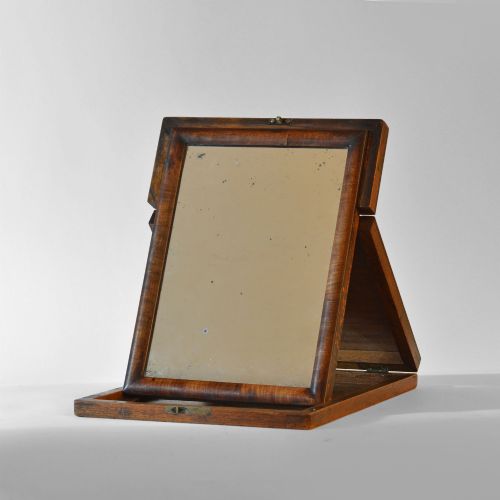
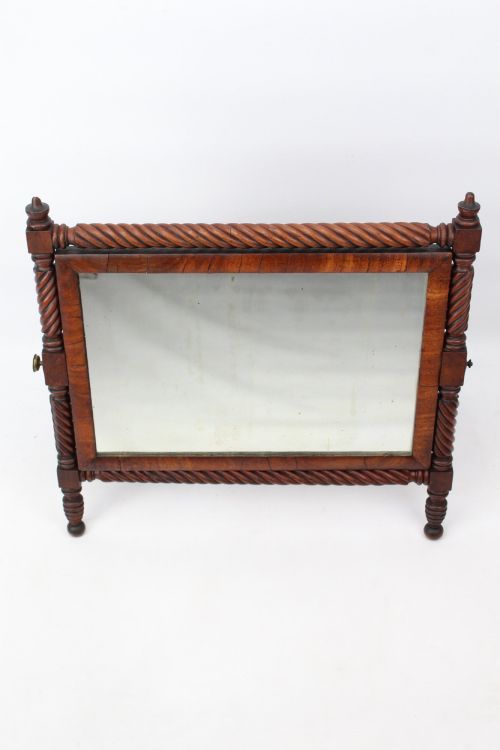
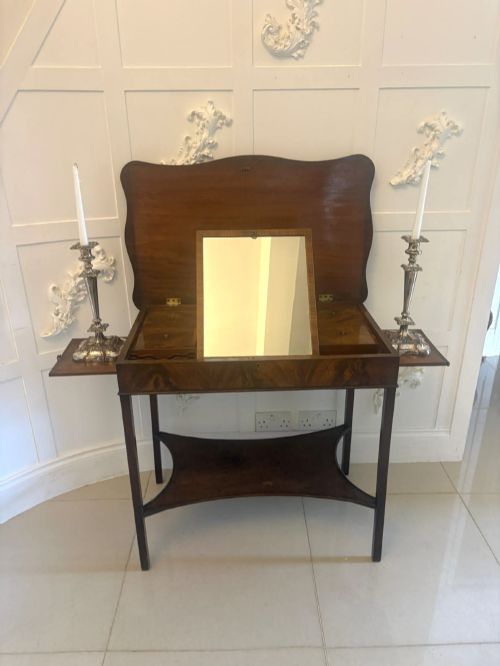
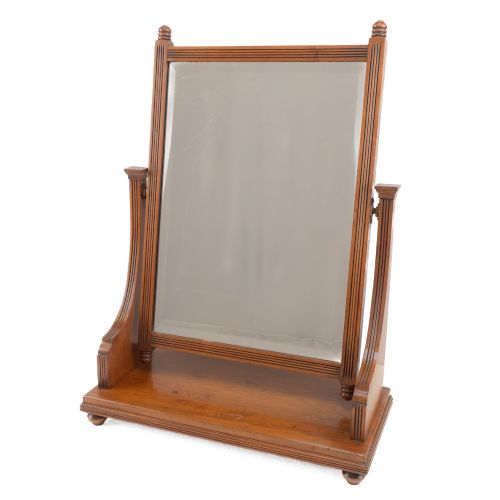
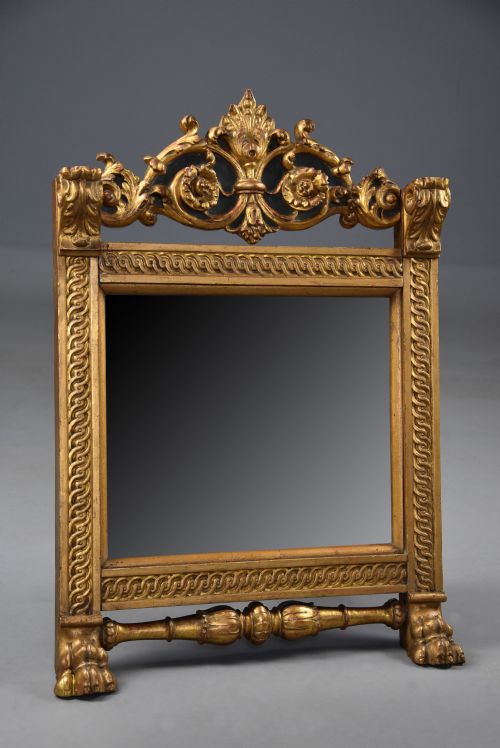
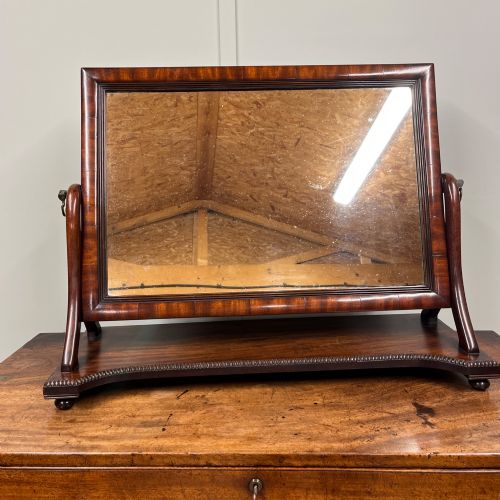
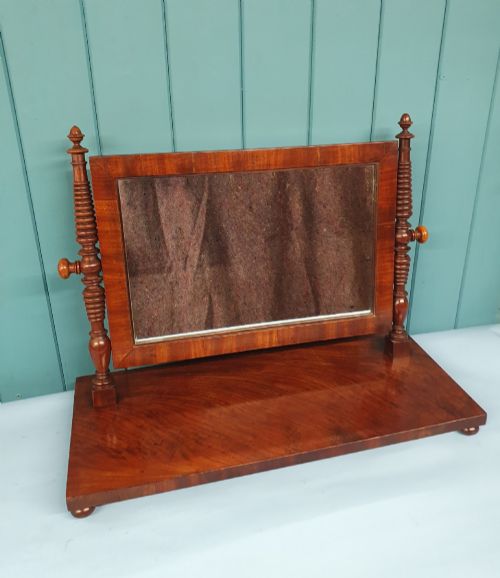
An antique wooden toilet mirror is a small, portable looking glass designed to sit upon a chest of drawers or a dedicated dressing table. Buyers searching for an antique wooden toilet mirror encounter forms ranging from simple eighteenth-century swing frames to elaborate Victorian iterations.
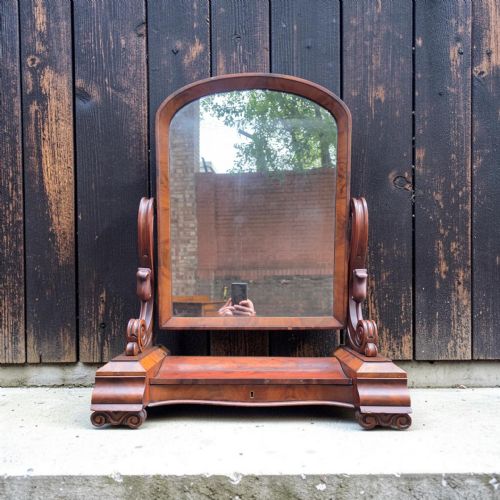
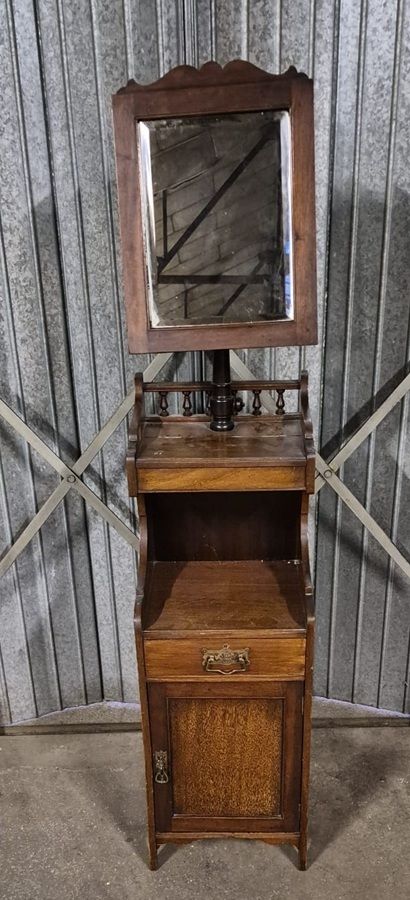
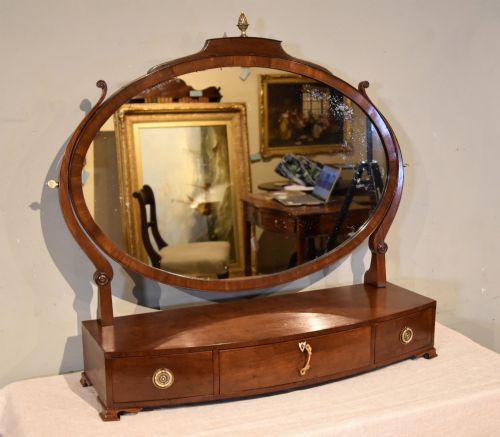
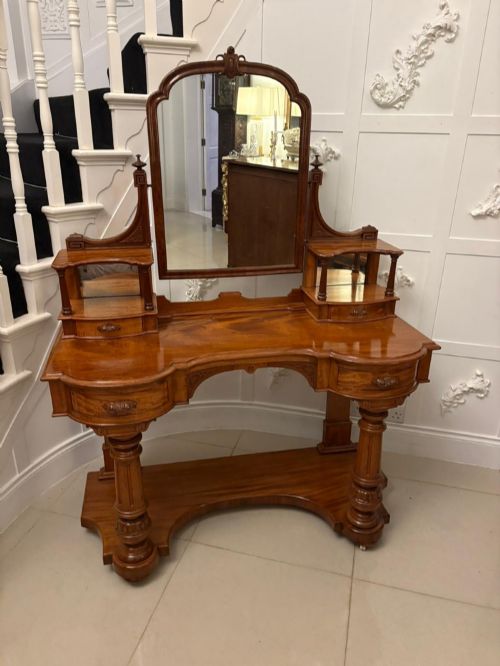
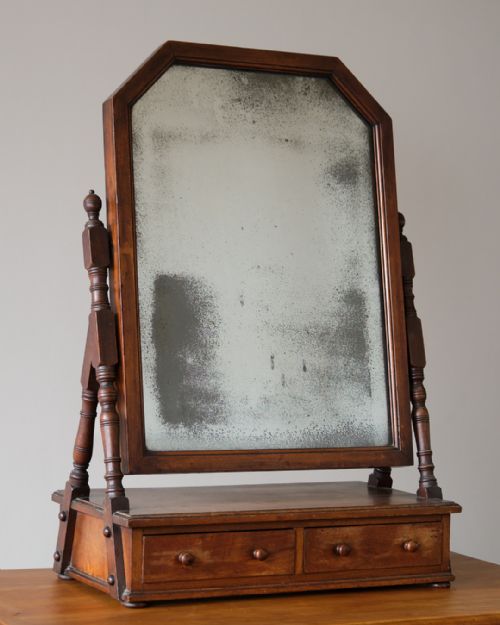
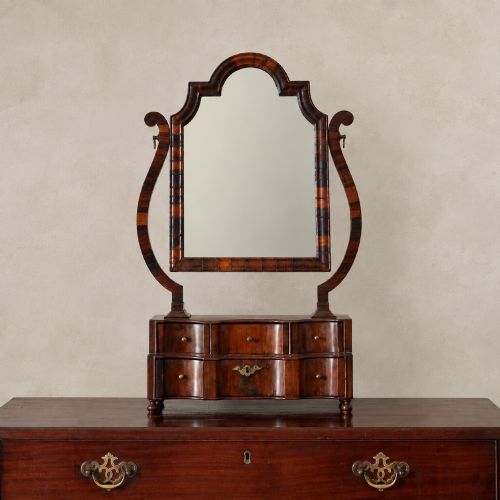
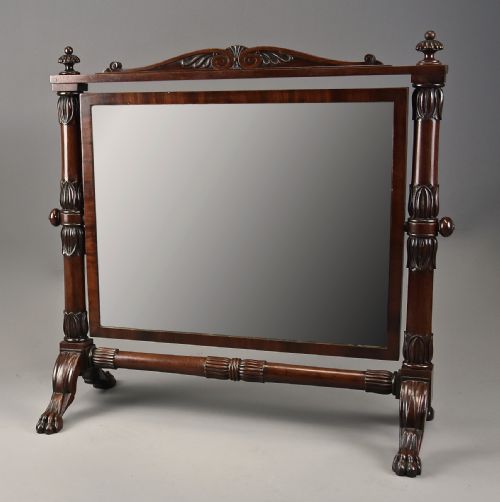
The pieces on this page span the Georgian, Regency, Victorian, and Edwardian eras, utilising timber frames mounted on upright arms above a box base or small drawers. Mahogany and walnut appear most frequently, shaped into rectangular, arched, or serpentine profiles.
Many examples incorporate pivoting brass screw caps that allow the glass to tilt at different angles. Simpler table mirrors sit on easel supports, while larger variants rest on substantial drawer bases meant to hold small valuables.
Materials and Construction
Cabinetmakers constructed these frames primarily from dense hardwoods like mahogany and walnut, occasionally employing oak, satinwood, laburnum, or giltwood for decorative contrast. Timber was selected for its grain and figure, then polished to a deep sheen using traditional finishing methods.
The mirror plates themselves utilised early glass, often set into rebated wooden frames with backboards held by small pins. Brass hardware, including adjustable side screws and tiny drawer pulls, provided both structural function and subtle ornamentation.
Joinery methods such as dovetailing secure the small storage boxes beneath the glass, ensuring the assembly remains rigid despite the weight of the pivoting frame.
Antique Wooden Toilet Mirror Retail Price Guide 2026
Typical asking prices for wooden toilet mirror among the pieces listed under this phrase on Sellingantiques today, from the lower quarter to the upper quarter. They describe what is for sale here now, not the wider market.
Listings feature woods such as mahogany, walnut, oak, and satinwood, spanning the eighteenth to early twentieth centuries.
Indicators of Excellence
Quality rests in the crispness of the timber carving and the subtlety of the veneer work, particularly on serpentine and marquetry fronts. Superior pieces display carefully matched wood grains across the drawer faces and frame borders.
The weight and proportion of the upright support arms dictate the structural integrity, preventing the swing glass from sagging over time. Original mirror glass with gentle foxing adds character, though the stability of the inner frame remains paramount.
P & MA Nicholson·Heal & Sons·Gillows
The Antique Wooden Toilet Mirror Glossary
- Swing mirror
- A looking glass hung on pivots between two vertical posts, allowing it to tilt back and forth. This mechanism is central to the design of traditional toilet mirrors.
- Serpentine
- A curved line of furniture fronts featuring a convex centre flanked by concave sides. This shape demands high woodworking skill to execute properly on small drawer boxes.
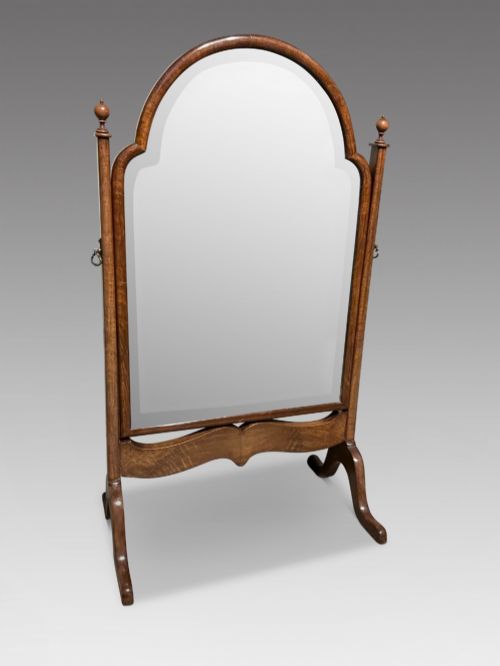
- Cheval mirror
- A full-length dressing glass supported by a freestanding frame with four legs. Some variants sit on tabletops as scaled-down versions.
- Marquetry
- The art of applying pieces of veneer to a structure to form decorative patterns. Dutch examples often display floral marquetry across the entire frame and base.
Antique Wooden Toilet Mirror: Frequently Asked Questions
Where should I place a toilet mirror?
These mirrors sit comfortably on top of chests of drawers, sideboards, or dressing tables where the height allows for a clear reflection. Ensure the surface is stable and level to support the weight of the pivoting frame.
Because they are portable, you can move them around rooms to capture natural light from a nearby window during morning routines.
How do I adjust the mirror angle?
Most antique toilet mirrors feature brass screw caps or threaded bolts set into the supporting upright arms. Turning these gently loosens or tightens the grip on the side pins, allowing you to set the desired tilt.
Avoid forcing the glass without loosening the side hardware first, as this can strain the wooden frame and original pivot joints.
Are the mirror plates original?
Many surviving pieces retain their original glass, which often exhibits minor foxing, dark spots, or slight distortions from early manufacturing processes. These visual traits confirm age and authenticity rather than acting as defects.
When replacement glass occurs, it is usually fitted neatly into the historic rebate without altering the outer wooden structure.
What is stored in the base drawers?
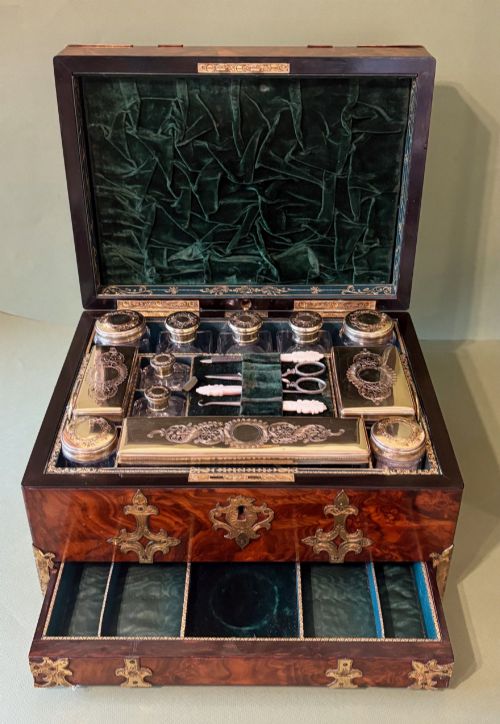
The small compartment boxes beneath the glass were traditionally used to store rings, brooches, cosmetics, and personal letters. The presence of tiny drawers adds practical utility alongside the reflective glass.
Keep contents light to maintain the balance of the table mirror and avoid placing damp items directly against historic wood linings.