





Antique Wooden Spoon
An antique wooden spoon brings the honest craft of the domestic interior right to your table, combining simple utility with vernacular design.
Antique Wooden Spoon
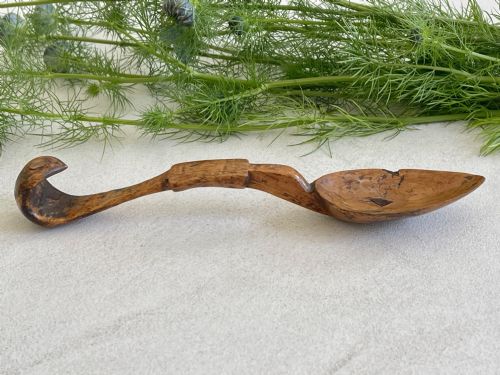
An antique wooden spoon encompasses everything from everyday kitchen utensils to ornate lovespoons carved by hand across European folk art traditions. The selection includes Welsh, Swiss, and Scandinavian examples, ranging from early nineteenth-century basting spoons to smaller condiment pieces and decorative lovespoons.
Domestic forms like sycamore egg bowl ladles and beechwood basting spoons sit alongside symbolic lovespoons decorated with polychrome wax, initials, dates, and carved vine leaves. These objects reflect the daily food preparation and rural traditions of their period.
Most pieces date from the nineteenth century into the early twentieth century, utilising traditional regional styles such as Welsh folk art, Swiss folk art, and Scandinavian folk art. Each spoon shows the hand of a maker working within a distinct local vernacular.
How they were made
Maker-carpenters and rural craftspeople carved these spoons from domestic hardwoods such as yew-wood, beech, sycamore, and fruitwood. The choice of timber depended on local availability and the intended use of the utensil, whether for heavy kitchen work or delicate carving.
Decoration involved hand-carving techniques, incised engraving, and occasionally polychrome wax decoration to highlight initials and dates. Working directly with the grain of the wood ensured both structural integrity and a smooth tactile finish for the user.
Antique Wooden Spoon Retail Price Guide 2026
Typical asking prices for wooden spoon among the pieces listed under this phrase on Sellingantiques today, from the lower quarter to the upper quarter. They describe what is for sale here now, not the wider market.
Current listings feature materials including wood, wax, glass, brass, carved wood, yew wood, beech, and hardwood across the nineteenth and early twentieth centuries.
What varies in quality
Quality rests on the crispness of the carving, the finesse of the handle shaping, and the balance of the spoon in the hand. Finer pieces demonstrate confident knife work, particularly in pierced details, carved leaves, and well-defined bowl depths.
The preservation of original surface finishes, such as aged wax or natural patination from years of handling, distinguishes superior examples. Surface integrity and the absence of clumsy restoration preserve the historical character of each piece.
The Antique Wooden Spoon Glossary
- Treen
- Small handmade wooden household objects. This term covers everything from spoons and ladles to bowls and small containers.
- Lovespoon
- A carved wooden spoon given as a token of affection or betrothal. These often feature symbols, initials, and dates.
- Folk art
- Utilitarian and decorative objects made within a traditional community style. These pieces rely on regional techniques rather than academic design.
- Sycamore
- A light-coloured hardwood commonly used for domestic dairy and kitchen utensils. Its dense grain resists splitting during use.
- Polychrome wax
- Coloured wax applied to carved surfaces to highlight details and lettering. This technique appears on decorative presentation spoons.
Antique Wooden Spoon: Frequently Asked Questions
What were antique wooden spoons used for?
These spoons served both practical and symbolic functions in the historic household, ranging from large basting and egg bowl ladles used in food preparation to small condiment spoons.
Decorative lovespoons, conversely, were created as romantic gifts or tokens of affection rather than for daily dining, featuring carved details, initials, and dates.
How do I care for an antique wooden spoon?
Keep wooden pieces away from direct sunlight, extreme heat, and moisture to prevent the timber from warping or splitting over time.
Clean them gently with a dry or barely damp cloth, avoiding soaking or dishwashers, and occasionally apply a neutral wax to nourish the dry wood.
How can I tell the region of a wooden spoon?
Regional origins are identified through specific decorative motifs, carving styles, and the choice of local timber.
Welsh pieces often present distinct lovespoon traditions, while Swiss and Scandinavian examples show their own characteristic folklife patterns and handle forms.
What woods were used for these spoons?
Carvers utilised dense regional hardwoods such as beech, sycamore, fruitwood, and yew-wood depending on availability and purpose.
Softer or more decorative woods were chosen for ceremonial lovespoons, while hard-wearing timbers suited functional kitchen implements.