
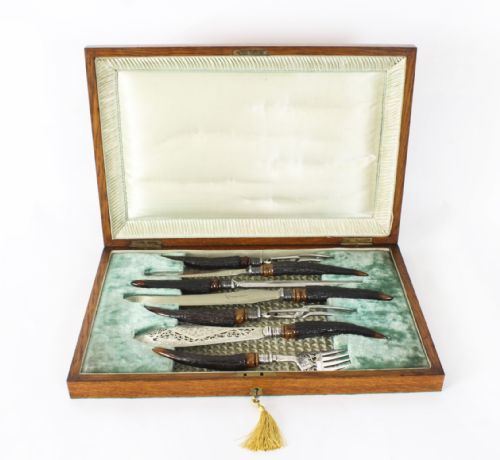
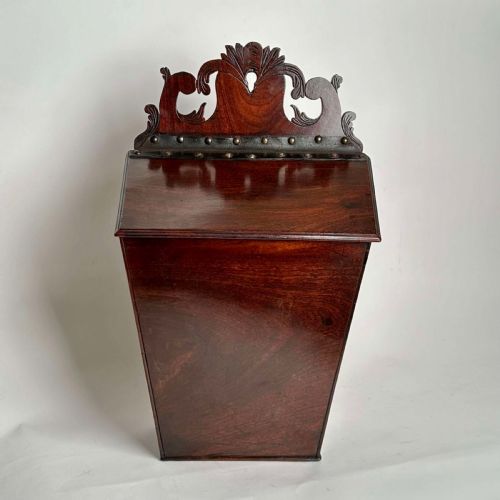


Antique Wooden Knife Case
An antique wooden knife case brings refined Georgian craftsmanship to the dining table, offering a handsome vessel to store your finest cutlery.
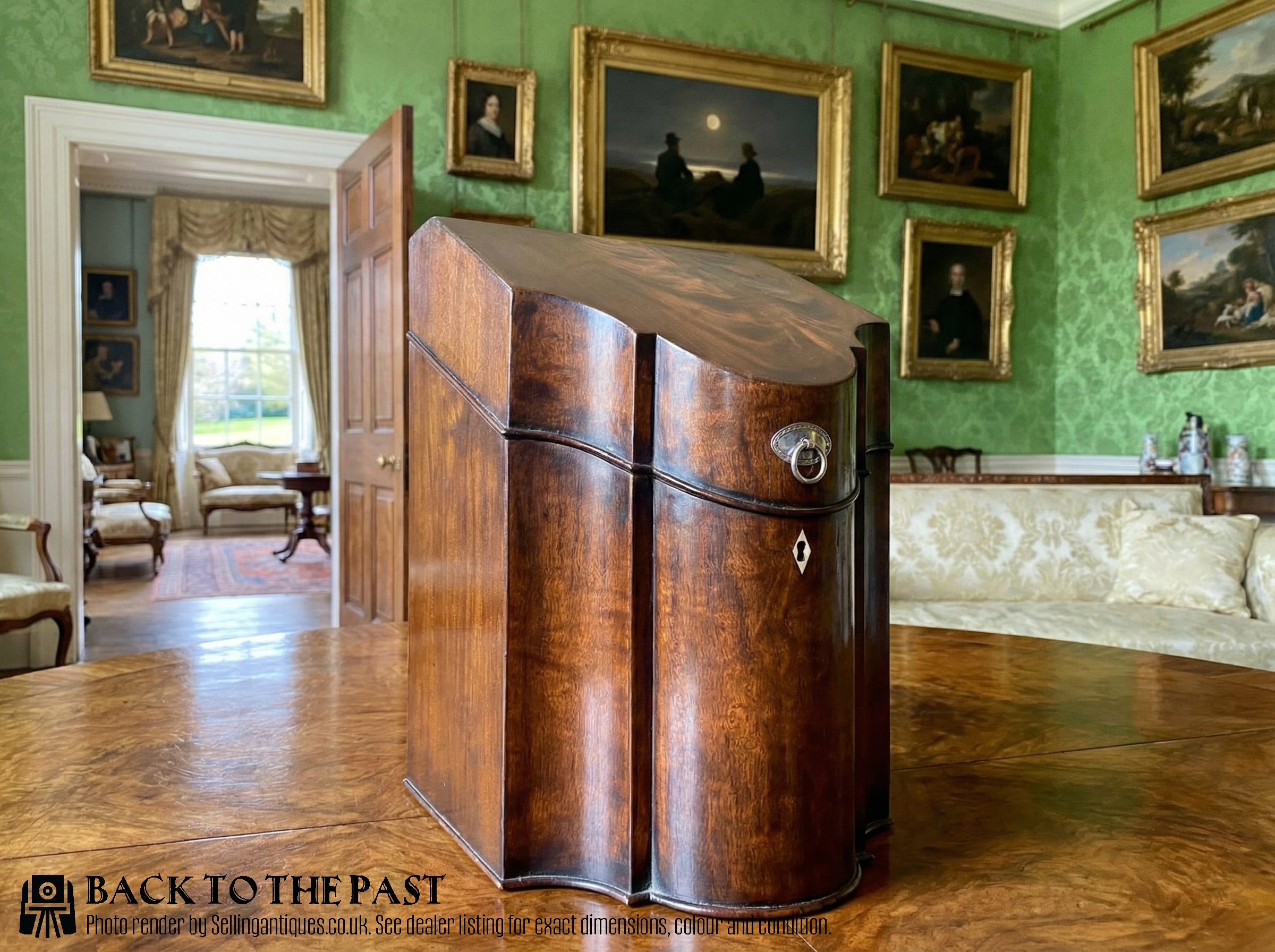
Antique Wooden Knife Case
The evidence shows forms ranging from standard knife boxes to larger stationery cabinets and fitted canteens in oak or mahogany. Makers originally built these to sit on sideboards, protecting steel blades from damp air while displaying rich timber grains to dining guests.
How they were made
Cabinet makers utilised solid mahogany and oak as the primary structural woods, often enhancing the exterior surfaces with delicate boxwood stringing and contrasting satinwood veneers. These timbers were selected for their stability and depth of grain.
Constructed pieces incorporate heavy brass carrying handles, escutcheons, and hinges that secure the sloping lids. Interior compartments are frequently lined with velvet to cushion the cutlery sets.
Listings demonstrate that mahogany remains the dominant material for these pieces, spanning Georgian to Victorian eras.
What varies in quality
Quality rests in the precision of the cabinet work and the selection of timber veneers. Superior examples display mirrored grain patterns and intricate inlay work rather than plain surfaces.
Hardware weight and interior preservation also separate standard examples from finer items. Original brass fittings and intact velvet linings elevate a piece significantly.
The Antique Wooden Knife Case Glossary
- Mahogany
- A durable tropical hardwood prized for its deep reddish-brown colour and fine grain. Cabinet makers relied upon it heavily for high-status furniture and boxes.
- Escutcheon
- A protective brass plate surrounding a keyhole. It prevents the surrounding wood from wearing down through repeated use.
- Stringing
- A narrow inlay of contrasting wood used to outline panels and edges. It creates a crisp, decorative border on box lids.
- Canteen
- A fitted box or cabinet designed to hold a complete set of cutlery. These organise multiple tiers of knives and forks securely.
Antique Wooden Knife Case: Frequently Asked Questions
How were antique knife cases used?
These boxes stood on sideboards in the dining room to store and protect steel-bladed knives when not in use. Servants would retrieve the cutlery for formal meals and return them to the compartments afterwards.
The sloping lid design allowed guests to admire the timber grain while keeping the contents secure. Later adaptations sometimes saw them repurposed to hold stationery.
How do I date an antique knife case?
Dating relies on observing the timber choice, construction methods, and hardware styles. Georgian examples typically feature sloping lids and mahogany construction, sometimes with elaborate serpentine fronts.
Later Victorian and Edwardian pieces introduce alternative woods like oak and different internal fittings for canteens. Examining the brass hinges and locks offers further clues to the period of manufacture.
Are knife cases found as pairs?
Yes, many Georgian knife boxes survive as matched pairs designed to sit symmetrically on either side of a sideboard. These matching sets were standard in prosperous dining rooms of the eighteenth century.
Finding a true pair increases the appeal for collectors who wish to recreate a formal historical dining arrangement.
Can I use them for modern cutlery?
Many interior compartments can accommodate modern flatware, though older slots were tailored for narrower antique knife blades. You should check the internal dimensions before storing contemporary sets.
Many owners choose to display them empty as decorative wooden objects on sideboards or desks.