

Antique Wooden Folding Table
An antique wooden folding table offers clever space-saving utility combined with traditional craftsmanship that suits modern rooms.
What an antique wooden folding table is
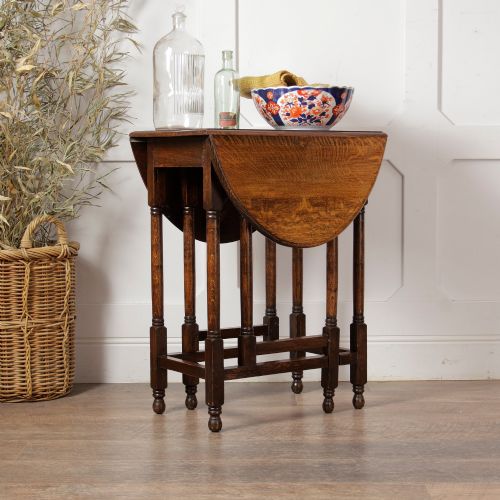
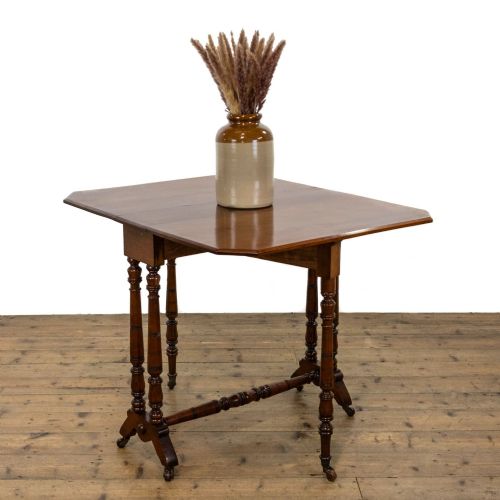
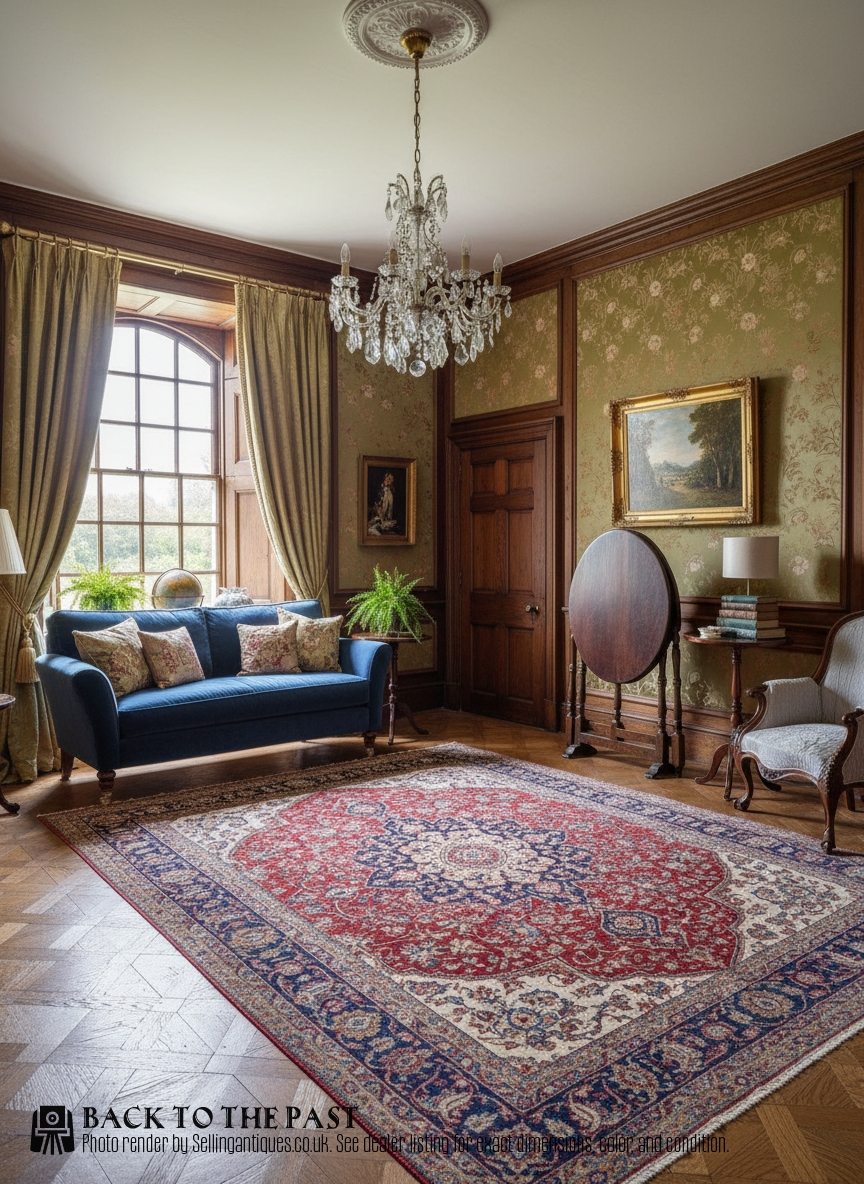
An antique wooden folding table brings versatile surface space through historical forms designed for easy storage or transport. Buyers searching for an antique wooden folding table encounter formats ranging from gateleg and Sutherland tables to campaign tables and fold-over tea tables.
The pieces listed here span the eighteenth century, the Georgian period, the Victorian era, and the Edwardian period. Forms include occasional tables, side tables, and dining tables suited to compact rooms.
How they were made
Joiners and cabinet makers utilised solid timbers and veneers such as mahogany, yew wood, oak, rosewood, and satinwood. Construction often involved hinged leaves, folding legs, and drop-action mechanisms supported by secondary woods.
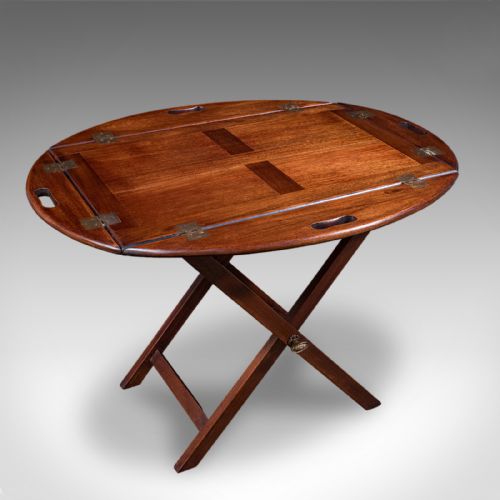
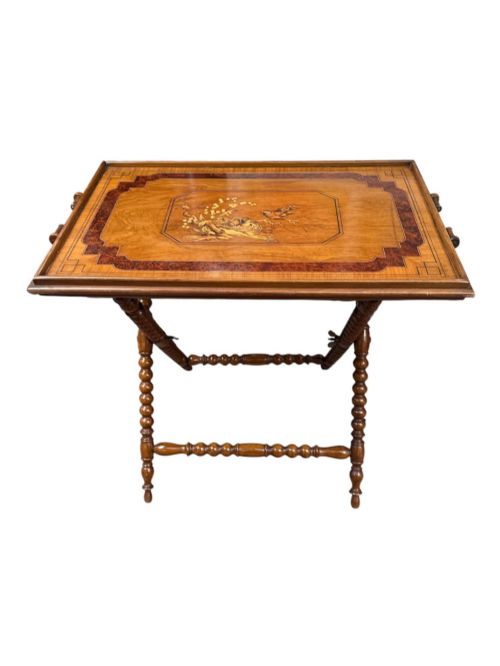
Hardware elements like brass hinges and iron fittings provided the structural movement necessary for folding actions. Inlaid details in boxwood and specialised turning added decorative refinement to the timber frames.
Retail Price Guide 2026
Typical UK retail prices for wooden folding table, calculated from the Sellingantiques database of over a million retail prices indexed since 2003. This retail price guide relies exclusively on Sellingantiques data; no external sources or auction records are used, so the figures do not describe the wider market.
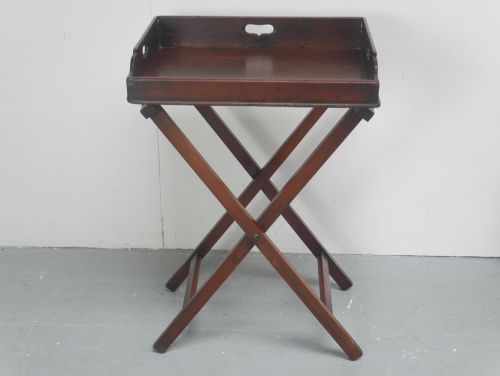
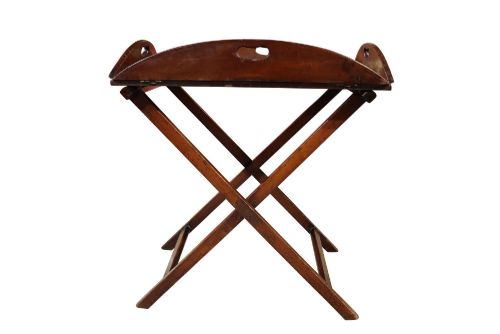
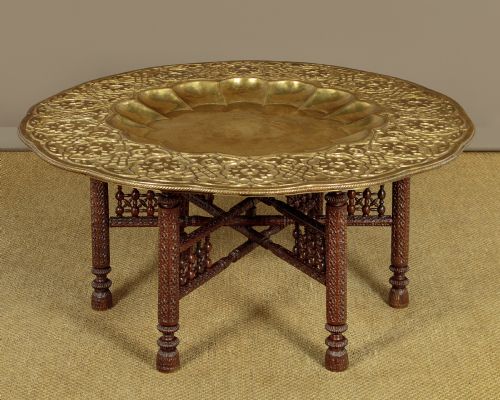
Travel-ready coaching tables prove that nineteenth-century officers still expected proper tea service wherever they pitched their tents.
What varies in quality
Quality rests upon the selection of figured timber, the precision of the joinery, and the integrity of the folding mechanism. Superior examples display seamless movement in their leaves and gates without timber warping or loose joints.
Fine decorative choices, such as delicate boxwood inlay or choice mahogany grain, elevate a piece above utilitarian camp furniture. The cleverness of the folding engineering defines the distinction between standard items and exceptional workshop output.
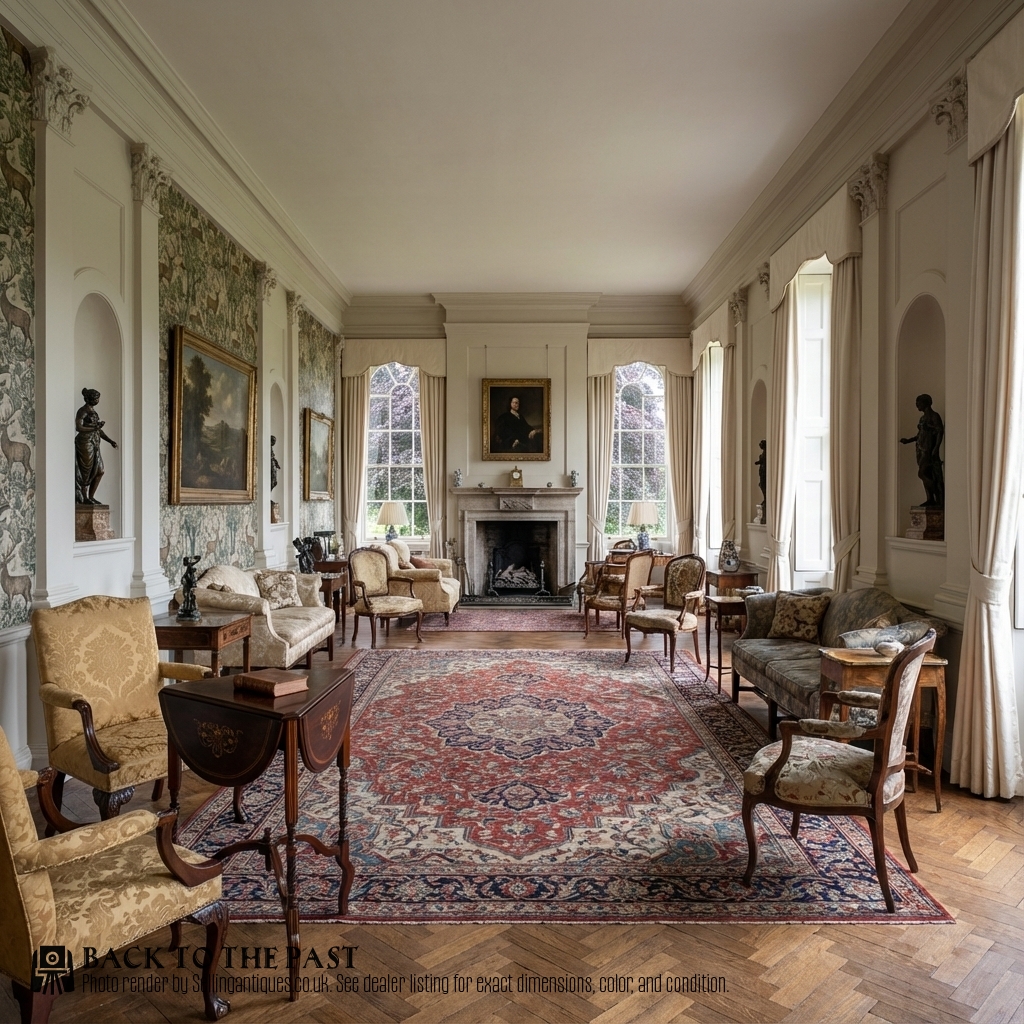
The Antique Wooden Folding Table Glossary
- Gateleg table
- A table with hinged leaves supported by legs that swing outward like a gate. This design provides a large surface area that collapses into a slim profile when not in use.
- Coaching table
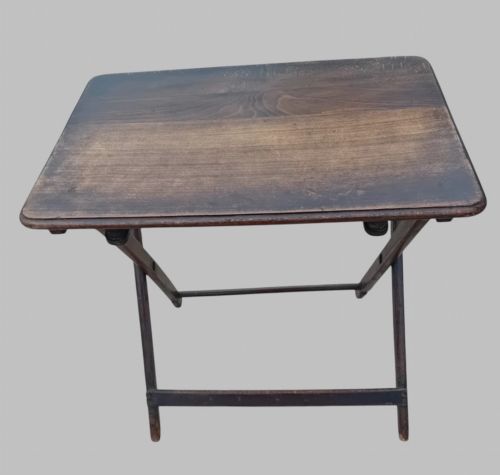
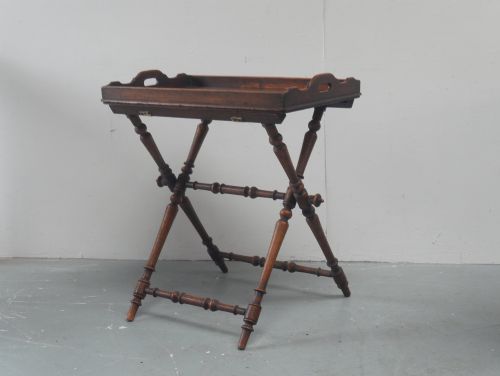
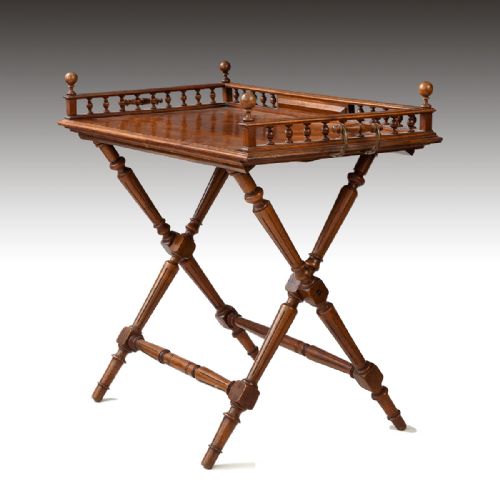
- A portable folding table originally designed for travel and military campaigns. They utilise X-frame folding bases for rapid assembly and dismantling.
- Drop leaf table
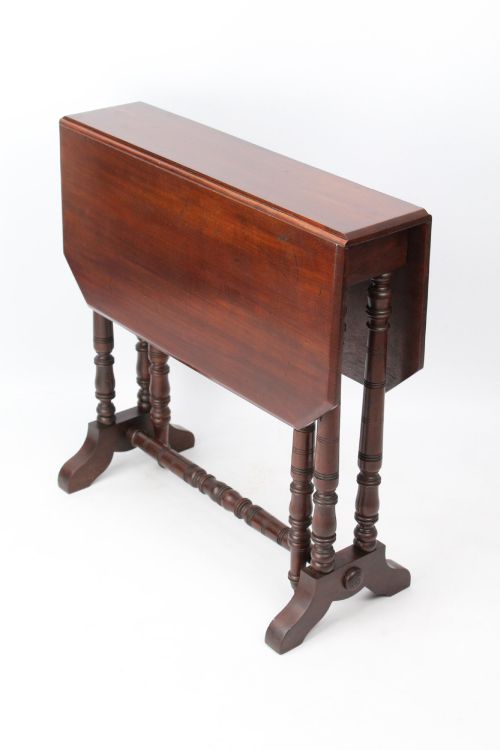
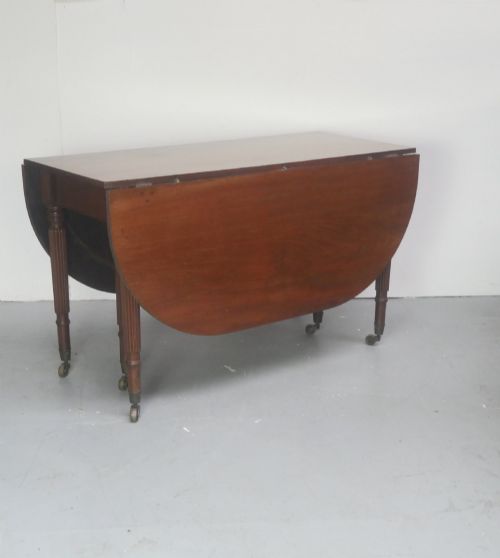
- A table with a fixed centre section and hinged flaps that fold down at the sides. Brackets or swing legs support the leaves when raised.
- Fold over tea table
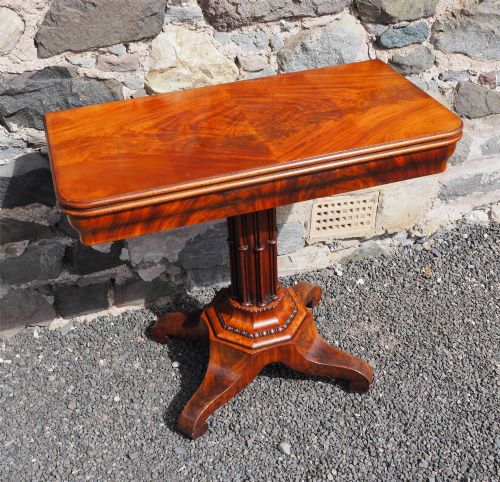
- A table featuring a hinged top that rotates and folds out to double its surface area. Georgian examples often stood against a wall until evening tea service.
Frequently Asked Questions
How do I use an antique folding table today?
These tables adapt easily to smaller rooms by expanding only when needed for dining or serving.
Folded down, they function well as side tables or console surfaces against a wall.
What woods were used for these tables?
Cabinet makers utilised dense hardwoods like mahogany, oak, yew wood, and rosewood for durability and rich grain appearance.
Satinwood and boxwood frequently provided contrasting inlay details on later Edwardian and Georgian pieces.
How can I tell a Georgian table from a Victorian one?
Georgian pieces generally show restrained classical lines and solid timber construction focused on proportion.
Victorian and Edwardian examples often introduce more complex folding mechanisms, darker finishes, and decorative inlay.
Are campaign folding tables sturdy?
Campaign and coaching tables rely on clever X-frame or folding leg structures designed for travel.
When properly maintained, their brass and iron fittings provide reliable everyday support.