
Antique Wooden Dining Buffet
An antique wooden dining buffet anchors a dining room with practical storage and enduring presence, spanning Georgian elegance to Art Deco clean lines.
Antique Wooden Dining Buffet
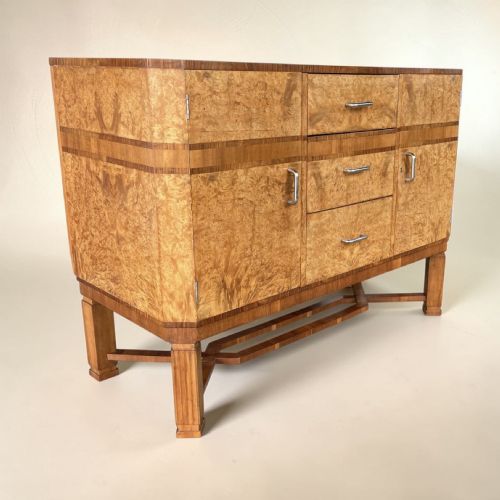
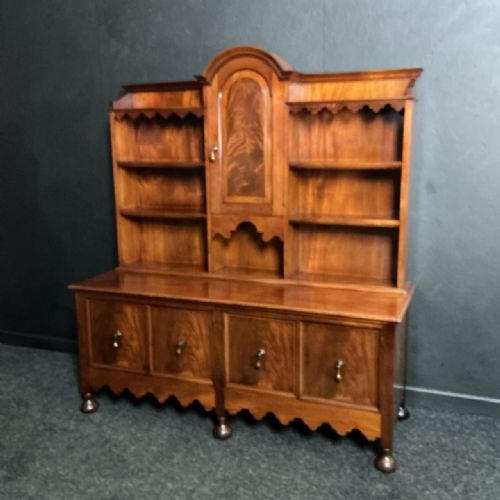
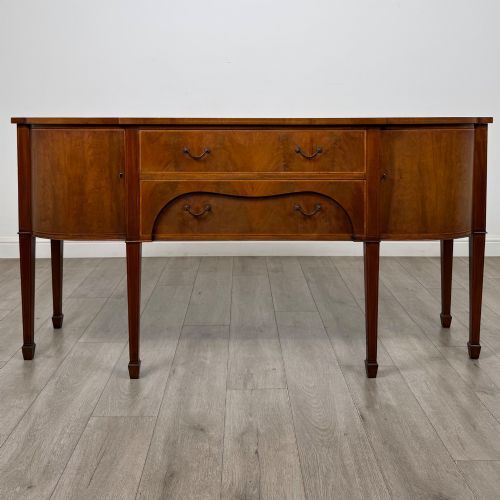
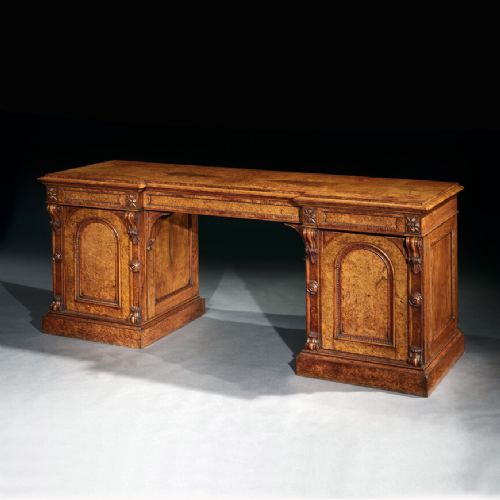
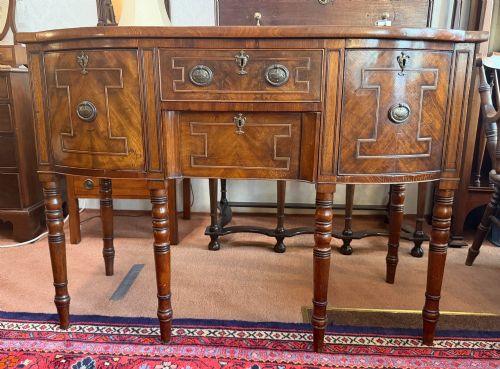
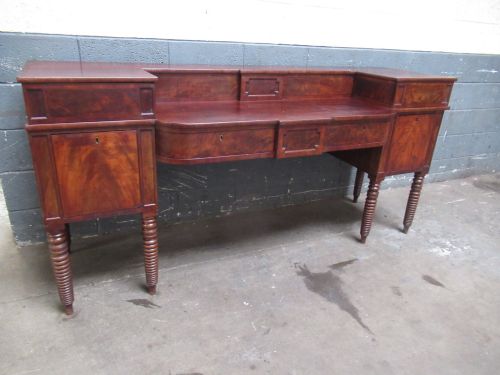
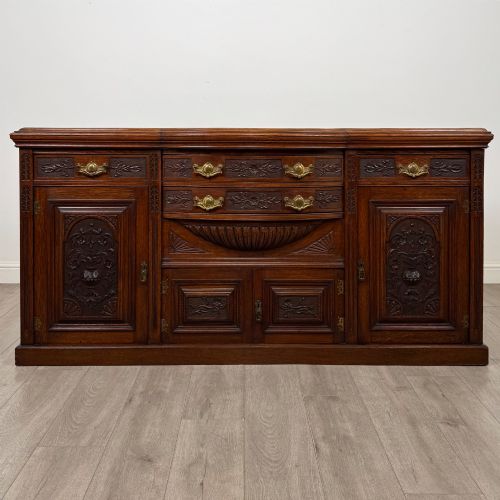
An antique wooden dining buffet encompasses a broad family of dining room storage furniture, appearing frequently as sideboards, serving tables, and chiffoniers. These pieces emerge from periods spanning the eighteenth century through to the nineteen-thirties, reflecting shifting domestic habits in dining and entertaining.
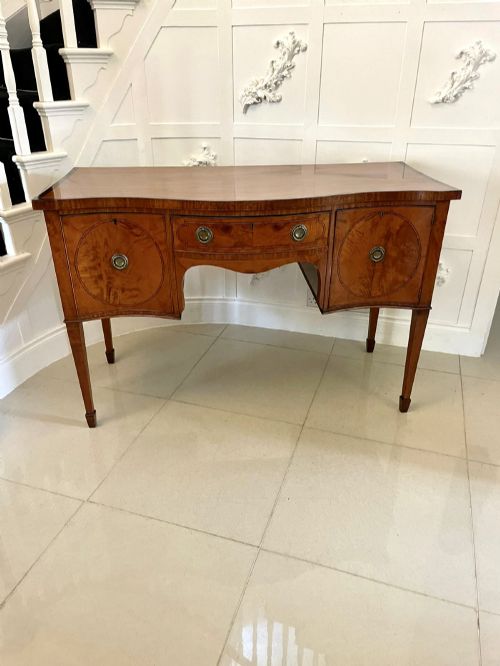
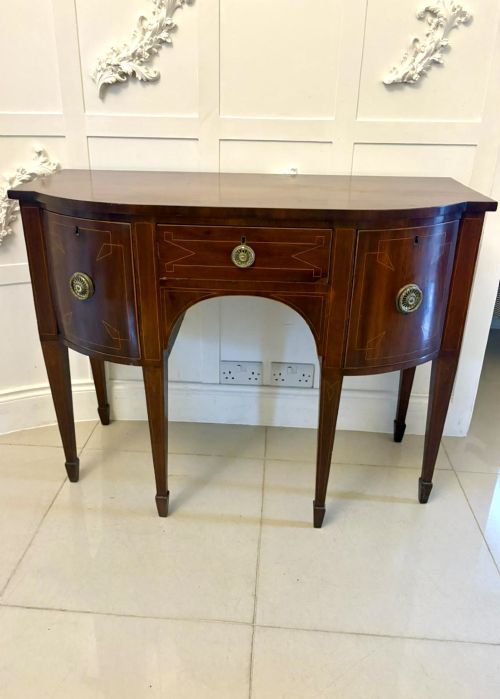
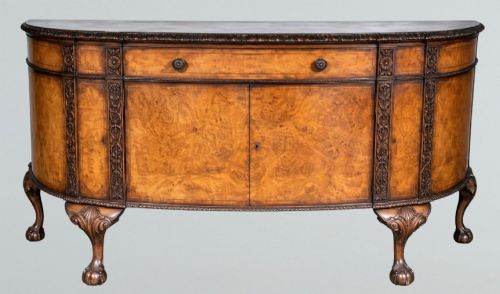
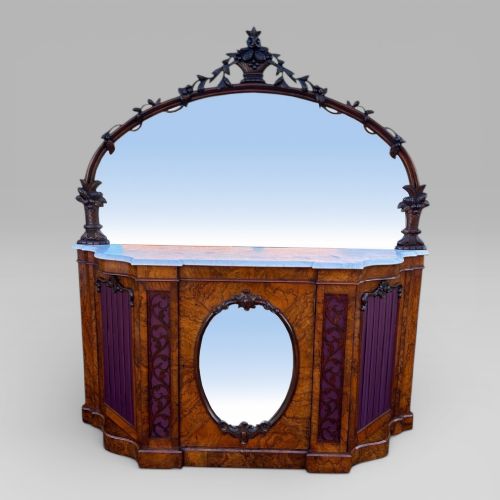
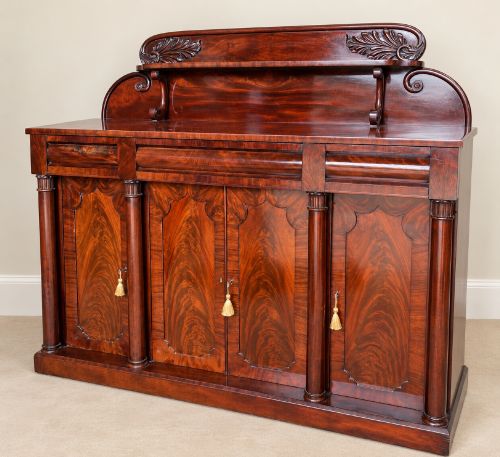
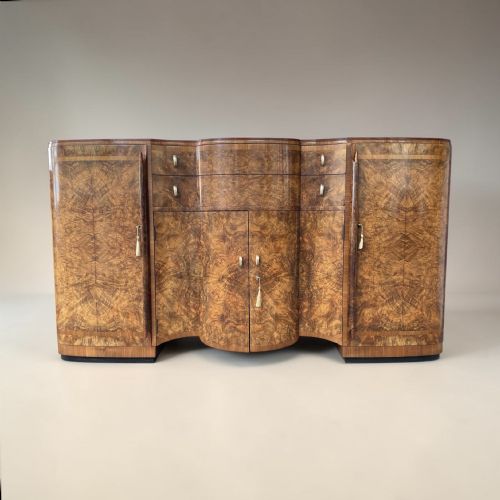
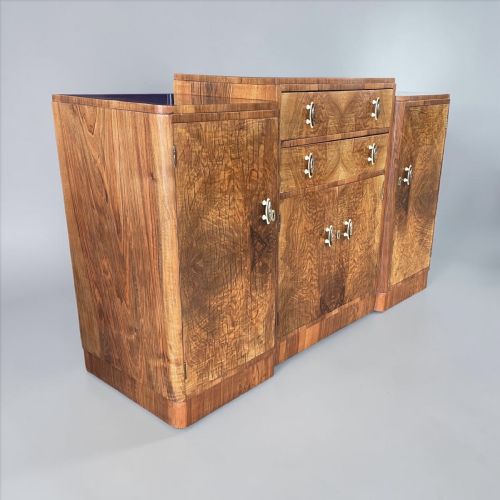
Georgian and Regency examples tend to feature disciplined proportions with bow fronts or breakfronts, while Victorian and Edwardian iterations often introduce heavier carved decoration, mirror backs, and marble tops. Later nineteen-thirties interpretations shift toward streamlined Art Deco profiles or contrasting burr walnut veneers.
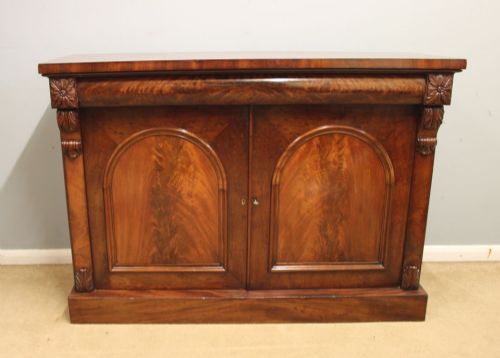
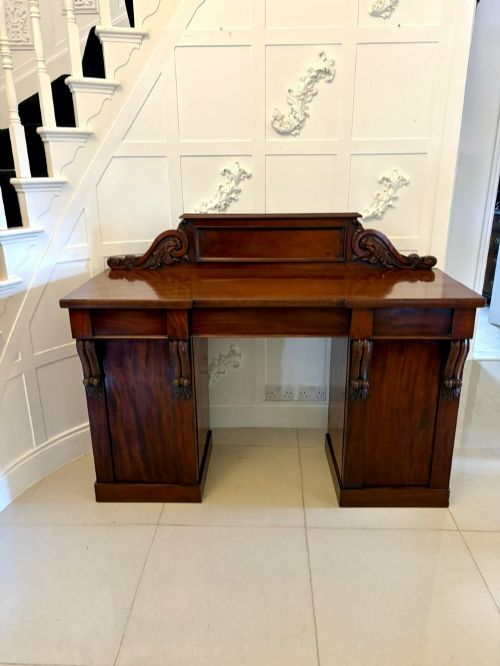
The pieces on this page appear in various timber configurations, with mahogany and oak dominating the selection alongside satinwood, burr walnut, and pollard oak. Buyers encounter formats ranging from compact server cupboards to substantial breakfront credenzas designed for formal dining spaces.
Distinctions in construction and design quality
Quality in an antique wooden dining buffet reveals itself in the selection of timber figures, such as matching flame mahogany veneers across drawer fronts or consistent grain alignment on top boards. Superior examples exhibit precise hand-cut dovetails and well-fitted drawers that operate smoothly within their carcases.
The refinement of carved ornament and the integration of secondary elements like brass gallery rails, original hardware, and finely turned legs separate standard utility pieces from high-status commission work. Proportional balance and the crispness of inlaid stringing further distinguish exceptional cabinetmaking from mass-produced workshop output.
One exceptional Edwardian offering thoughtfully includes a twelve-piece cutlery set inside, ready for your next dinner party.
Maurice Adams
The Antique Wooden Dining Buffet Glossary
- Bow front
- A convex, outwardly curved front facade common on Georgian and Regency sideboards. This curved profile softens the boxy geometry of dining room furniture.
- Chiffonier
- A low cabinet derived from the sideboard, frequently equipped with a raised shelf or mirror back. Victorian iterations often incorporated enclosed cupboards beneath a serving surface.
- Serpentine
- A shaped furniture front featuring a concave centre flanked by convex ends, or the reverse. This undulating profile requires advanced woodworking skill.
- Stringing
- Thin inlay lines of a contrasting wood, such as boxwood, embedded into the surface of a panel or drawer front. It creates delicate geometric borders.
- Breakfront
- A cabinet design where the central section projects forward from the flanking outer wings. This architectural arrangement creates depth and visual rhythm.
Antique Wooden Dining Buffet: Frequently Asked Questions
What is the difference between a buffet and a sideboard?
A buffet generally refers to a piece designed specifically for serving food and storing dining ware in proximity to the dining table. A sideboard covers a broader category that includes servers, credenzas, and larger storage cupboards with similar utility.
While historical definitions varied by region and decade, most examples on this page fulfil the same primary function of dining room organisation and surface presentation.
How do I identify a Georgian buffet from a Victorian one?
Georgian pieces typically display restrained classical proportions, elegant taper legs, and subtle mahogany or satinwood veneers with fine stringing. They prioritise architectural harmony and understated refinement.
Victorian pieces often introduce heavier proportions, darker woods, carved mirror backs, or marble tops. They reflect a nineteenth-century taste for robust construction and ornate surface detail.
Where were these pieces used in the home?
These pieces traditionally stood in the dining room or formal parlour, serving as a staging surface for dishes during meals. They also housed cutlery, linens, and bottled provisions behind closed doors.
Today, buyers utilise them in dining spaces, hallways, and living rooms for contemporary storage while retaining historical character.
Are marble tops original to these pieces?
Marble tops appear frequently on late nineteenth-century and early twentieth-century sideboards, particularly those designated as credenzas or servers. They provided a durable, cool surface for resting hot dishes and decanters.
When fitted with matching rebates and secure beddings, these stone slabs form an authentic part of the piece's functional design.