



Antique Wooden Angels
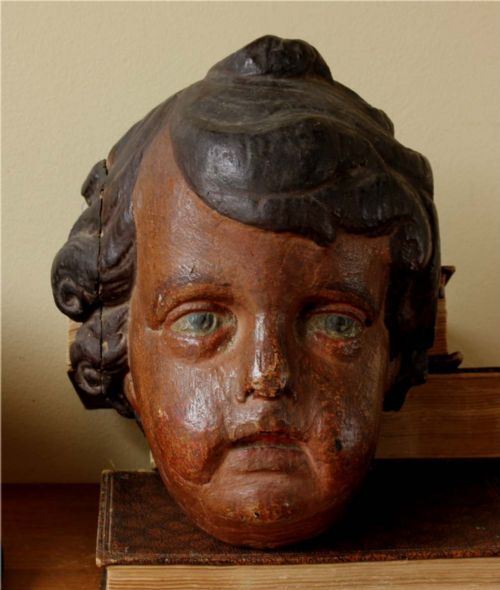
Antique wooden angels bring centuries of hand-carved devotion into your space, ranging from small cherub heads to monumental figures.
Antique Wooden Angels
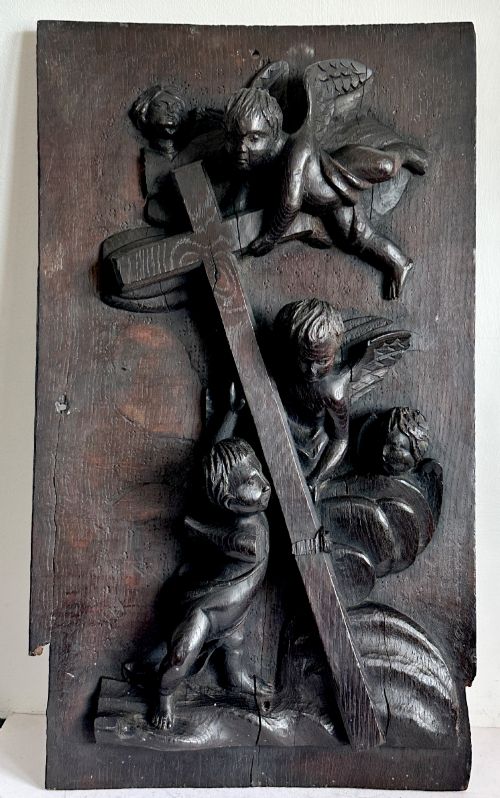
When you search for antique wooden angels, you encounter carved sculptures, wall brackets, reliefs, and architectural fragments representing celestial beings. These pieces originate primarily from the seventeenth, eighteenth, and nineteenth centuries, reflecting European ecclesiastical and domestic traditions.
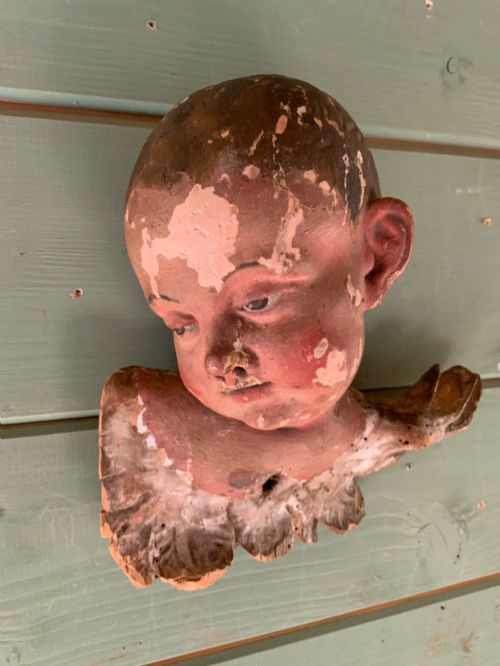
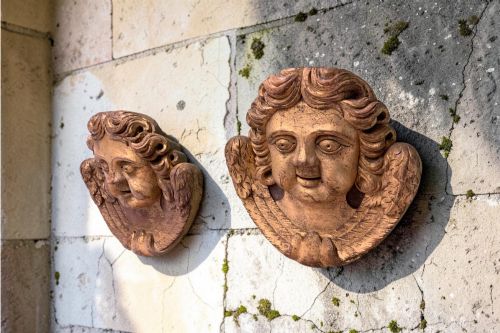
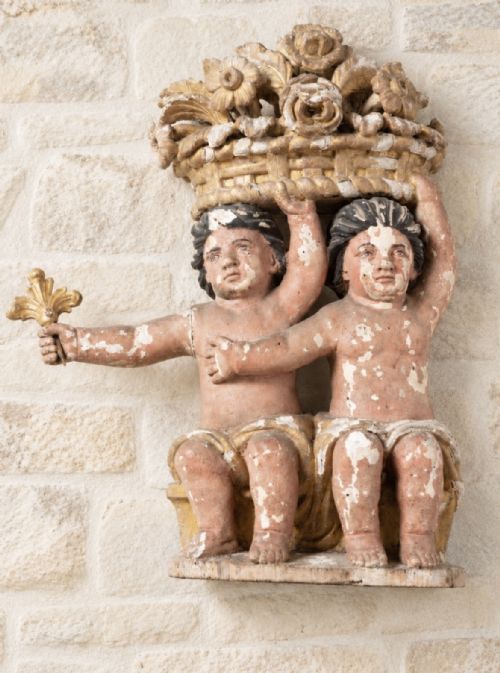
The most common examples on this page are Italian and French Baroque or Renaissance style pieces, including pairs of putti, cherub heads, and single figures mounted on wood panels. You will also find ecclesiastical oak carvings, wall sculptures, and decorative fragments.
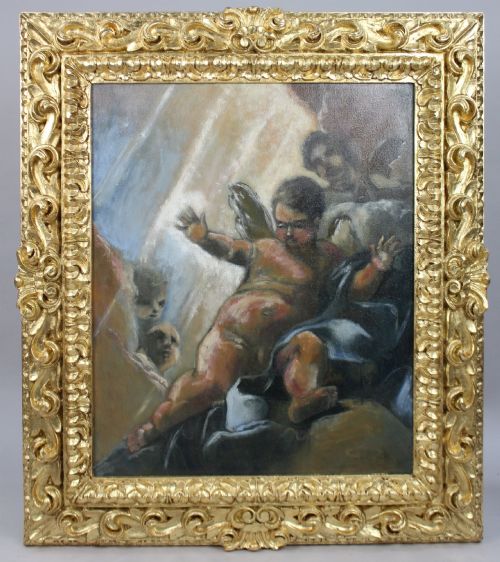
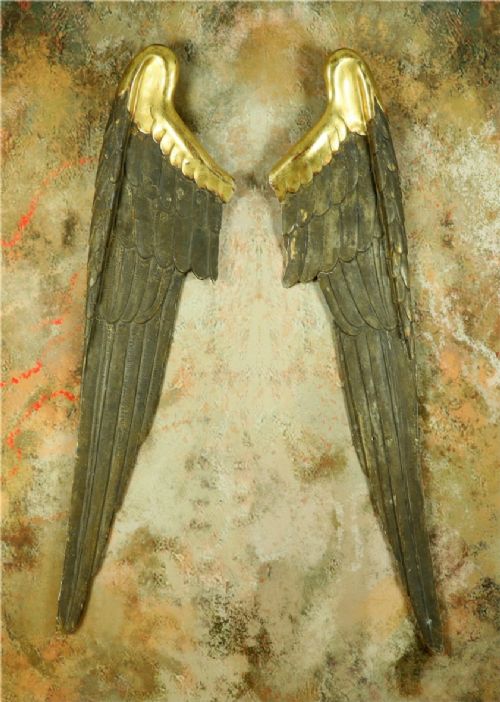
Many of these works served originally as altar ornaments, architectural embellishments, or church furnishings before entering the decorative market. Their forms vary from full-figure statues and kneeling angels to isolated wings and cherubic heads set in giltwood frames.
How they were made
Carvers shaped these figures from woods such as oak, pine, and unspecified timber, employing hand chisels and gouges to realise intricate drapery and anatomical details. Many sculptures incorporate gesso applied directly to the wood to provide a smooth ground for subsequent finishing.
Surfaces were frequently embellished with gold leaf, silver, or polychrome paint, creating rich metallic sheens and painted skin tones or garments. These traditional preparation layers account for the layered textures seen on surviving Baroque and Renaissance style pieces.
Some nineteenth-century Italian carvers clearly enjoyed giving their wooden putti remarkably cheeky expressions.
What varies in quality
The quality of antique wooden angels rests primarily on the depth and confidence of the carving, particularly in the rendering of facial expressions, hair, and wing feathers. Master carvers achieved a fluid, lifelike sense of movement in the drapery and anatomy, whereas lesser pieces appear stiff and formulaic.
The integrity of the original surface finishes, such as polychrome paint and gold leaf, significantly influences the character of each piece. Retaining untouched layers of historic pigment or gilding demonstrates superior preservation compared to heavily restored or stripped surfaces.
The Antique Wooden Angels Glossary
- Putto
- A representation of a chubby male child, often winged, common in Renaissance and Baroque art. These figures frequently appear in pairs on wall brackets and architectural panels.
- Gesso
- A plaster-like mixture applied to wood surfaces as a base for painting or gilding. It provides a smooth foundation that holds fine carved details.
- Polychrome
- Painted in several colours. This finish was widely applied to wooden sculpture to create realistic depictions of skin, hair, and garments.
- Archangel
- A celestial being of high rank in the angelic hierarchy, often depicted with grand wings. Such figures appear in pine and other carved woods from the nineteenth century.
Antique Wooden Angels: Frequently Asked Questions
How do I hang a heavy wooden wall bracket safely?
Wall brackets and heavy carved figures require secure fixings into structural timber or masonry rather than plasterboard alone. Assess the weight and backplate stability before mounting.
Consult a professional restorer or installer if the original mounting points on the antique wood are fragile or worn.
What is the difference between a putto and a cherub?
Putti are classically derived infant figures, often secular or decorative in Renaissance and Baroque contexts. Cherubs originate from biblical traditions and denote celestial guardians.
In antique art terminology, the two terms are frequently used interchangeably by makers and dealers to describe winged child figures.
How should I clean polychrome wooden sculptures?
Dust these delicate surfaces gently with a soft, dry brush to prevent the accumulation of abrasive particles. Avoid using water, damp cloths, or chemical solvents on historic paint and gold leaf.
Aggressive cleaning can strip away fragile gesso and original pigment layers, permanently altering the appearance of the carving.
Can I determine the exact age of an unlabelled carving?
Dating relies on analysing tool marks, wood species, and stylistic traits typical of periods like the seventeenth or eighteenth centuries. Oak usage often points to earlier centuries, while pine and specific revival styles can indicate nineteenth-century work.
Comparing construction methods with dated examples in museum archives helps narrow down the probable decade of creation.
Why do many antique angels show signs of wear and missing parts?
These sculptures spent centuries in churches, chapels, and homes where they endured humidity changes, relocations, and structural alterations. Fragments such as detached wings or separated heads are common because pieces were often removed from larger altarpieces.
Such historic losses and repairs form part of the physical history of objects that survived from the Renaissance and Baroque eras.