












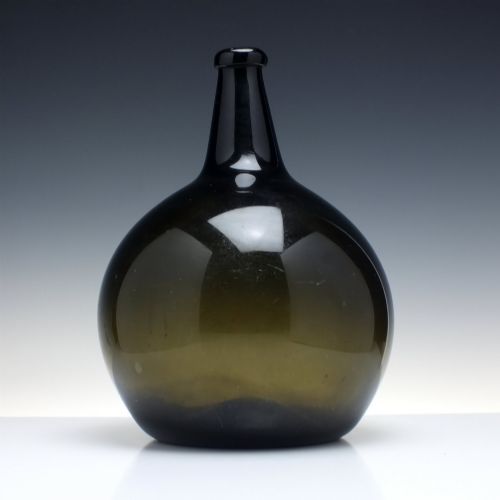
Antique Wine Glassware
These antique wine glassware selections span centuries of glassmaking, offering tactile handles to history through lead glass, cut crystal and colour.
Antique Wine Glassware
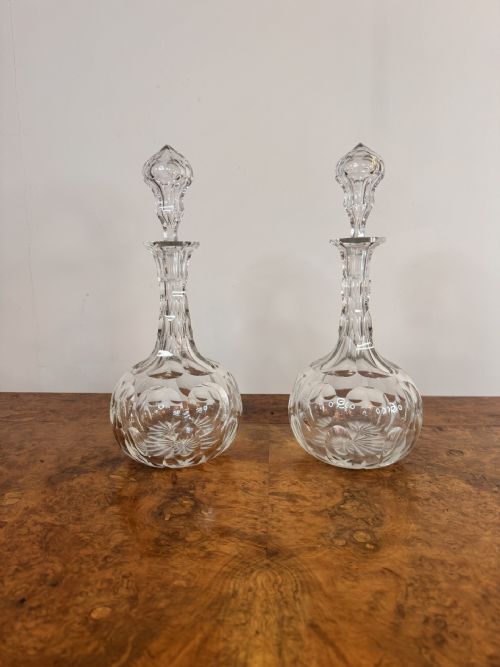
Antique wine glassware encompasses drinking vessels, decanters, ewers and carafes spanning the 18th century, the Georgian era, the Victorian period, and into the 20th century. When searching for antique wine glassware, collectors typically encounter lead glass drinking glasses, baluster stems, twist stems, and colourful serving bottles from English, Scottish, German and Bohemian origins.
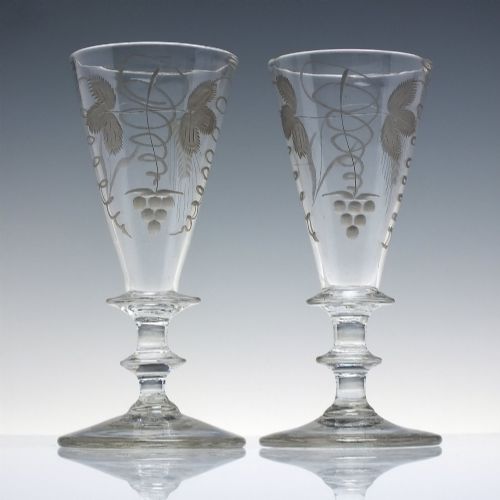
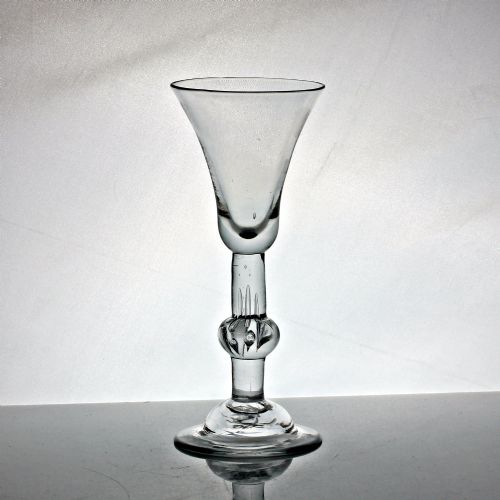
The selection ranges from early lead glass cordial and gin glasses with bell bowls and folded feet to elaborate Victorian champagne flutes, star-etched stemware, and gilt-decorated Bohemian roemers. Forms shift from simple trumpet bowls and heavy balusters to faceted stems, ogee bowls, and wrythen twists.
How they were made
These pieces rely primarily on lead glass, clear glass, and heavy lead crystal, shaped by blowing, moulding, and free-forming. Makers utilised cutting wheels to produce facets, star etchings, and geometric patterns on decanters and rummers.
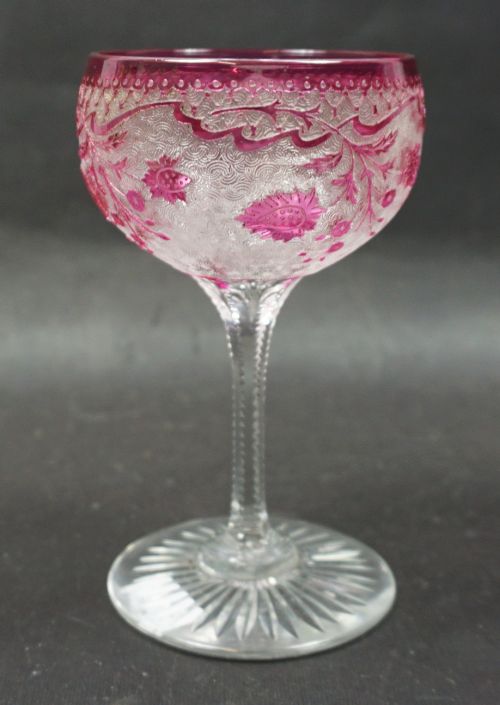
Decoration extended to hand painting, enamel work, and gold leaf gilding, particularly on continental pieces like Moser and Thereisenthal productions. Twist stems were formed inside the molten glass by trapping air bubbles or using opaque white and coloured glass rods within the stem structure.
Antique Wine Glassware Retail Price Guide 2026
Typical asking prices for wine glassware among the pieces listed under this phrase on Sellingantiques today, from the lower quarter to the upper quarter. They describe what is for sale here now, not the wider market.
Listings feature lead crystal, clear glass, and coloured glass in shades including Bristol blue, dark amber, aqua green, and amethyst.
What varies in quality
Quality rests upon the clarity and weight of the metal, the precision of the glassblower's hand, and the crispness of any wheel-cut or engraved decoration. Lead glass clarity, resonance, and the absence of heavy clouding distinguish finer vessels.
The complexity of the stem formation, such as double series opaque twists or intricate baluster knops, marks superior craftsmanship. Furthermore, the finesse of contemporary gilding, enamel detail, and hand-painted motifs elevates certain glasses and decanters above standard utility wares.
Atelier of James Giles·Baccarat Vallee·Moser Bohemian·Thereisenthal
The Antique Wine Glassware Glossary
- Baluster
- A heavy, turned stem style popular in 18th-century English drinking glasses, often featuring prominent knops.
- Opaque twist
- A stem containing white or coloured glass threads twisted internally during manufacture, a hallmark of Georgian drinking vessels.
- Roemer
- A large, typically green or amber continental wine goblet featuring a wide foot and a coiled or studded stem.
- Ratafia glass
- A tall, slender vessel designed for serving sweet aromatic liqueurs in the 18th century.
- Wrythen
- A decorative spiral pattern moulded into the bowl or body of glassware.
Antique Wine Glassware: Frequently Asked Questions
How do I identify Georgian wine glasses?
Georgian wine glasses typically feature heavy lead glass construction with distinct stem formations like balusters, air twists, or opaque twists. Look for polished pontil marks on the underside of folded or plain feet.
Bowl shapes also offer clues, moving from bell and trumpet forms in the early 18th century to ogee and faceted designs later in the period.
What is the difference between lead crystal and regular glass?
Lead crystal contains metallic lead oxide, which increases the weight, refractive index, and acoustic resonance of the material. This composition allows artisans to cut deep facets that scatter light brightly.
Standard glass lacks this density and brilliance, feeling lighter in the hand.
Why do some glasses have pontil marks?
A pontil mark is the rough scar left where the pontil rod was snapped away from the base of the glass after blowing. Its presence confirms that the vessel was shaped by hand rather than machine-moulded.
On finer pieces, this mark is often ground and polished flat.