


Antique Wine Glass Painting
These antique wine glass painting pieces bring vibrant colour and historic craftsmanship to a room, offering both decorative charm and tangible history.
Antique Wine Glass Painting
When you search for antique wine glass painting, you encounter a fascinating intersection of glassware and fine art. The selection spans delicate tablewares and vivid canvas depictions, uniting painted vessels with paintings of glassware itself.
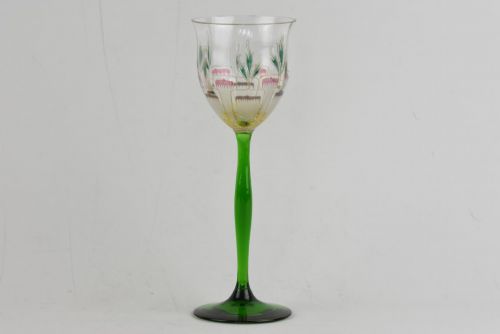
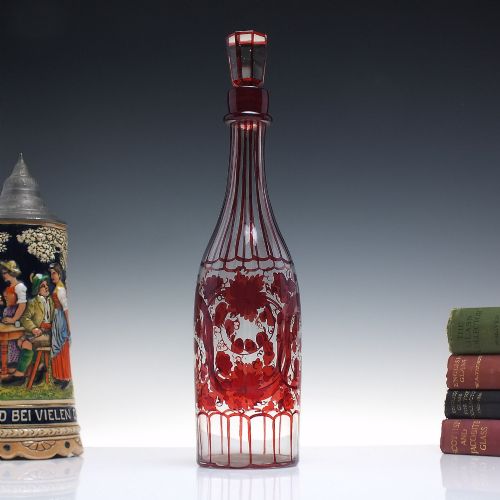
The most common forms on this page include hand-painted glassware such as green wine jugs, armorial goblets, and roemers alongside oil paintings depicting fruit and flowers beside a wine glass. These items originate predominantly from the Victorian era up to the early twentieth century.
Stylistic influences range from Victorian historicism and Art Nouveau to German Historicism and Venetian Revival. Pieces vary from single decanters and ewers to matched sets of crystal hock glasses and roemers.
Materials and methods
The physical objects rely on clear or coloured glass, crystal, and blown glass forms embellished through meticulous application of enamel, polychrome enamel, and gold leaf. Painters applied these vitreous pigments directly onto the glass surface before firing to fuse the colours.
Canvas works employ traditional oil painting techniques, capturing the delicate interplay of light and shadow on fruit, flora, and glassware surfaces. Meanwhile, glass decorators utilised raised enamel and heraldic motifs to achieve rich texture and depth on nineteenth and twentieth-century vessels.
Some nineteenth-century drinkers apparently needed heraldic crests on their roemers to remind them whose wine they were spilling.
Distinctions in quality
Quality rests heavily on the precision and fineness of the brushwork applied to the glass or canvas. Master decorators achieved remarkable detail in heraldic motifs, floral sprays, and figures, whereas lesser pieces show rushed application and simpler, thicker linework.
The purity and weight of the glass body, whether blown glass, crystal, or coloured glass, also dictate the calibre of a piece. Finer items exhibit superior clarity, balanced proportions, and a crisp integration between the glassmaker's form and the painter's hand.
Theresienthal·Lobmeyer·Edward Ladell·Frits Hechert
The Antique Wine Glass Painting Glossary
- Roemer
- A traditional Germanic drinking vessel featuring a wide bowl and a cylindrical stem studded with prunts. These glasses frequently carry elaborate enamelled armorial or floral decoration.
- Hock glass
- A tall stemmed wine glass traditionally used for white wine. They often feature coloured glass bowls decorated with intricate enamel work.
- Armorial
- Bearing a coat of arms or heraldic insignia. Enamelled armorial decoration was popular on nineteenth-century German and Bohemian glassware.
- Vitreous enamel
- Glass powder mixed with pigments and applied to a glass or metal surface, then heated until it fuses. This technique creates durable, vibrant surface patterns.
- Prunt
- A small lump or blob of applied glass used on the stems of historical German drinking vessels to provide a secure grip.
Antique Wine Glass Painting: Frequently Asked Questions
How do I care for enamelled glass?
Wash painted glassware strictly by hand in lukewarm water using a mild detergent. Avoid soaking or abrasive sponges to protect the delicate enamel and gold leaf decorations.
Keep pieces away from direct sunlight and extreme temperature fluctuations to preserve the integrity of both the glass and the painted surface over time.
Can I still use these antique glasses?
While many of these vessels remain physically robust, most collectors prefer to treat them primarily as display pieces. The historical enamel and gold leaf can wear down with frequent use and washing.
If you do choose to use them for special occasions, handle them gently by the stem and avoid pouring very hot liquids into the bowls.
How do I distinguish German Historicism from Victorian styles?
German Historicism often manifests in robust roemers featuring heavy heraldic motifs and dense polychrome enamel. These pieces draw heavily on Renaissance and medieval revival aesthetics.
Victorian pieces on this page lean towards botanical themes, refined green glass bodies, and distinct figural enamel work such as the characteristic Mary Gregory style.
What is the difference between oil paintings and painted glassware?
Oil paintings on this page are two-dimensional canvas or panel artworks capturing still life scenes of fruit, flowers, and glassware. They represent the fine art tradition of composition and brushwork.
Painted glassware consists of three-dimensional functional objects where the maker applied enamel directly onto the body of the decanter, jug, or goblet itself.