






Antique Wine Bucket Stand
An antique wine bucket stand holds bottles at the table, uniting practical service with period craftsmanship.
Antique Wine Bucket Stand
When you search for an antique wine bucket stand, you encounter timber vessels designed to chill bottles or hold plants within formal rooms. The pieces appearing on this page span the Georgian, Victorian, and Edwardian eras, with George III examples appearing frequently alongside later variations.
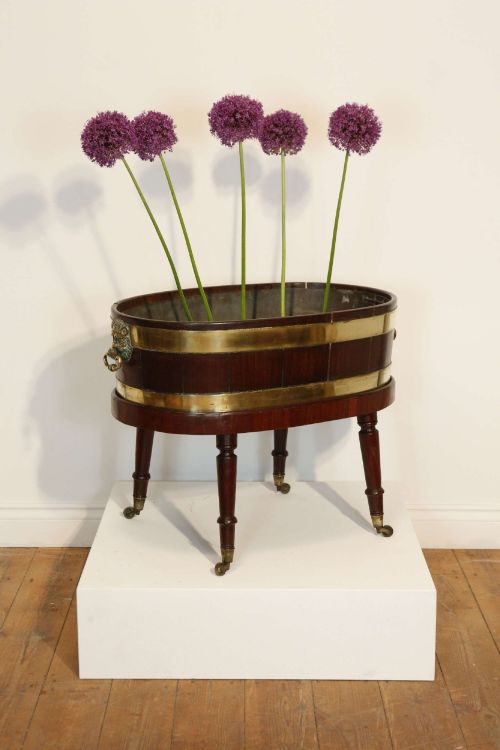
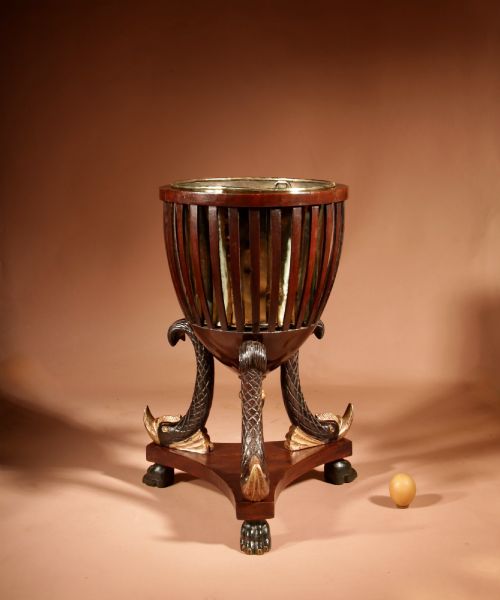
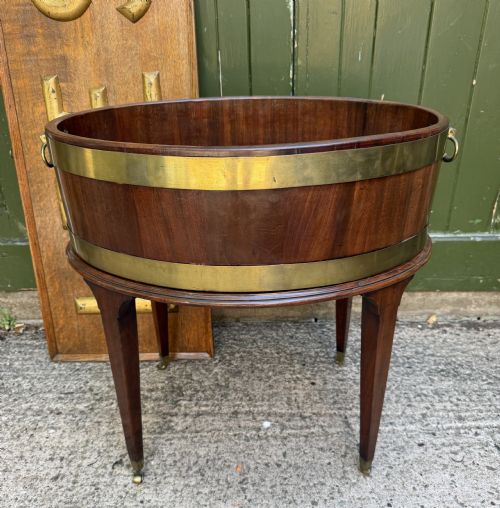
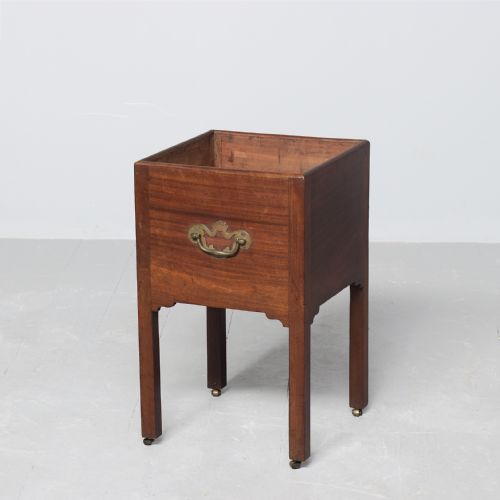
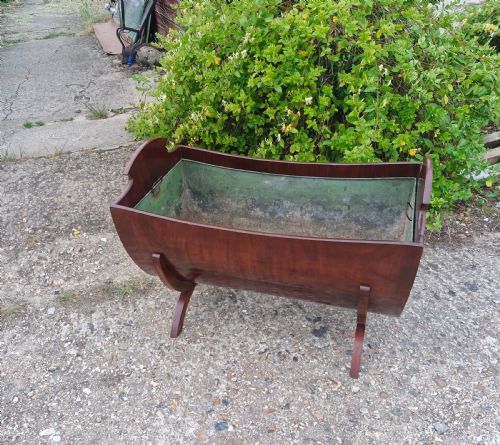
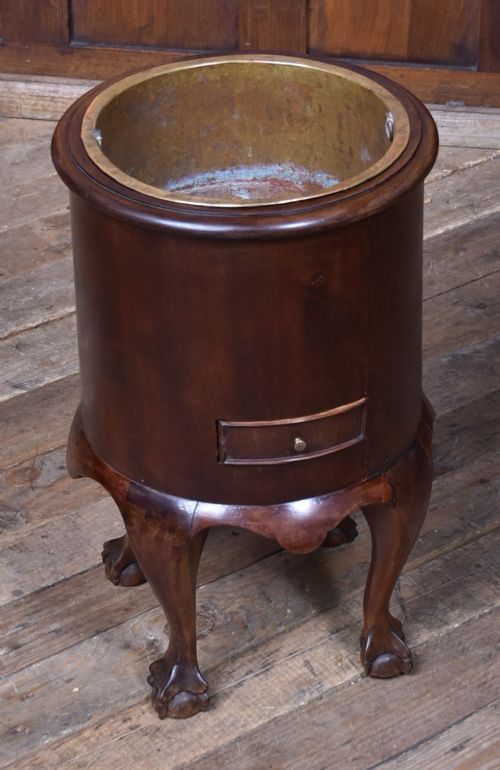
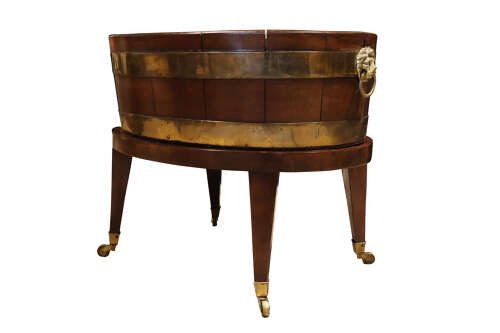
Makers constructed these objects in forms ranging from oval cellarettes on tall legs to coopered barrels and floor-standing metal holders. Many double as jardinières or log baskets, reflecting how owners repurposed these deep vessels over generations.
Mahogany predominates among the timber selections, often paired with oak or walnut, while metal versions utilise brass, copper, and silver plate. The origins stretch from English country houses to Dutch workshops and French studios.
Materials and construction methods
Cabinet makers built timber buckets using traditional coopered construction, shaping individual staves of mahogany, oak, or walnut and securing them with tight metal bands. Brass and copper components received hand-beating and riveting, while silver-plated items relied on applied plating over base metals.
Details such as brass lion-mask drop handles, inlaid stringing, and fitted stands demonstrate the joinery standards of the eighteenth and nineteenth centuries. Zinc liners occasionally survived inside the timber bodies to contain melting ice and moisture.
Antique Wine Bucket Stand Retail Price Guide 2026
Typical asking prices for wine bucket stand among the pieces listed under this phrase on Sellingantiques today, from the lower quarter to the upper quarter. They describe what is for sale here now, not the wider market.
Several examples started life as French grape-picking carriers before finding new roles in English country house dining rooms.
Evaluating period quality and finish
The distinction between ordinary utility items and superior pieces rests on timber selection, such as richly figured flame mahogany or patinated walnut. Original matching stands elevate a piece significantly above those lacking their original supports or fitted with later replacements.
Crispness in the brass binding, dovetail joinery, and the retention of internal linings or original hardware mark the upper tiers of surviving examples. Surface patination achieved through decades of wax polishing separates untouched items from over-restored pieces.
Christofle·Walker and Hall·Lister and Co
The Antique Wine Bucket Stand Glossary
- Coopered
- Constructed from curved wooden staves bound together by metal hoops, much like a barrel. This technique provided the strength needed to hold wet contents without splitting.
- Cellarette
- A lockable container used to store wine bottles near the dining table before formal service. These often sat on integral stands or floor frames.
- Jardinière
- An ornamental pot or stand designed to hold indoor plants and flowers. Many wine bucket stands served this secondary function in domestic interiors.
- Patina
- The deep surface sheen and colour developed by timber and metal over long periods of handling and waxing. It serves as an indicator of age and genuine wear.
Antique Wine Bucket Stand: Frequently Asked Questions
How were these stands used originally?
Dining rooms required portable cooling vessels because refrigeration did not exist. Servants filled the wooden buckets with ice and water to chill wine and champagne before serving.
Over time, many of these deep wooden vessels lost their original function and transitioned into planters, jardinières, or fireside log baskets.
How do I date a mahogany wine bucket?
Dating relies on timber characteristics, construction methods, and hardware styles. Georgian examples often feature slender inlaid stands and hand-beaten brass hoops.
Later Victorian and Edwardian pieces show heavier timber gauges, machine-cut screws, and alternative linings such as zinc or heavy silver plating.
Can I use an antique stand for plants?
Many of these pieces already functioned as jardinières or plant holders during the nineteenth century. Their coopered timber construction and metal liners accommodate soil and moisture well.
Using a protective inner pot prevents water damage to the historic timber staves and preserves the internal surface patination.