


Antique Wine Bottle Coasters
These antique wine bottle coasters protect polished dining tables while serving decanters and bottles with traditional elegance.
Antique Wine Bottle Coasters
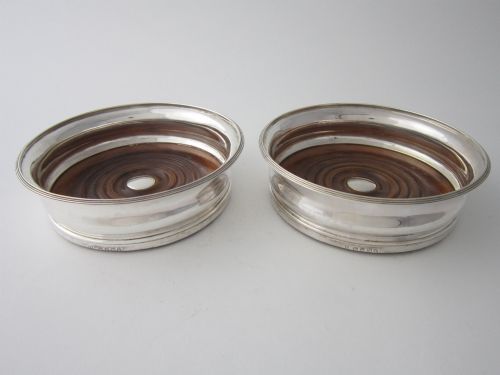
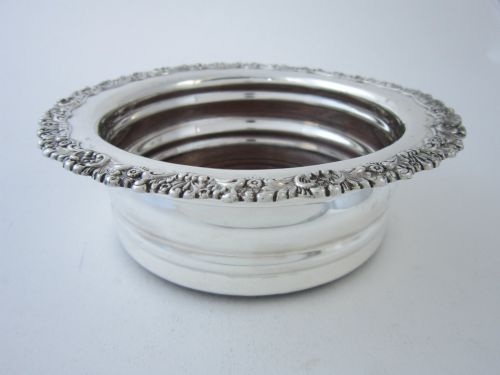
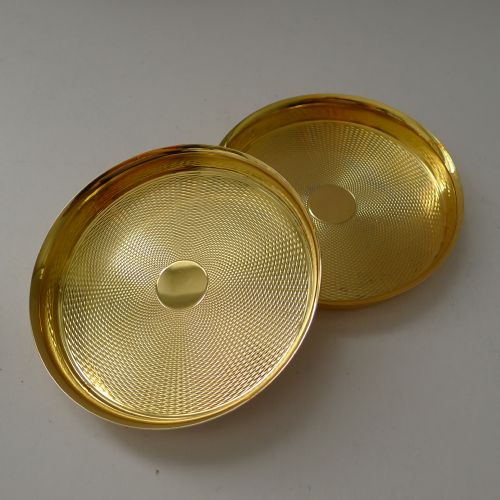
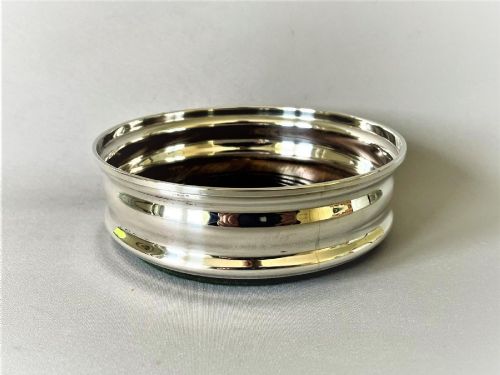
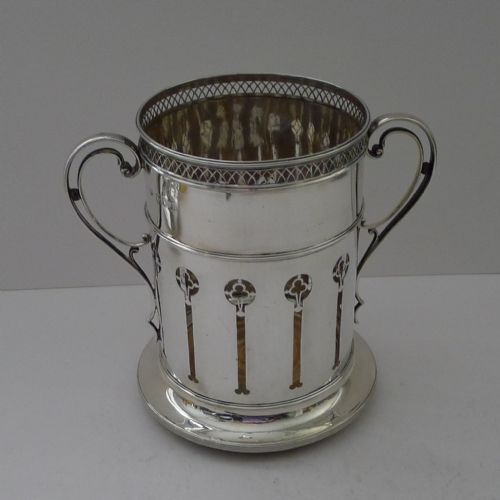
When you search for antique wine bottle coasters, you encounter circular stands designed to hold decanters or wine bottles upright on the dining table. The pieces listed here originate primarily from the Georgian, Regency, Victorian, and Edwardian periods, stretching into the early twentieth century.
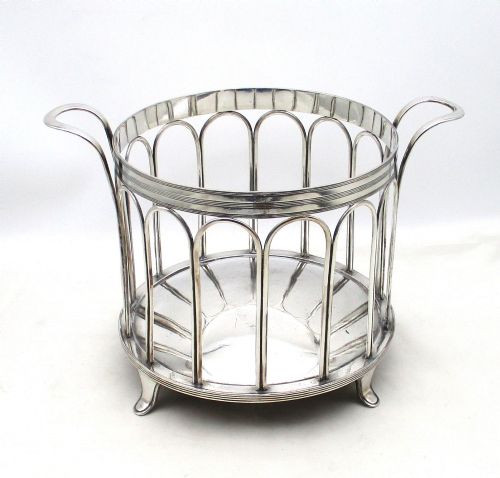
You meet various forms, including single stands, matched pairs, and larger multi-bottle holders designed for carriage or sideboard use. They function to safeguard wooden dining surfaces from moisture rings and condensation.
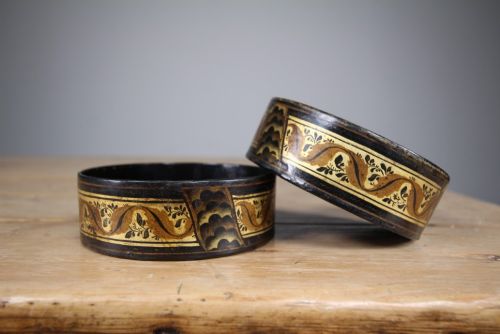
The material palette spans solid sterling silver, Old Sheffield plate, silver plate, and various timbers such as mahogany and rosewood. Papier-mâché, brass, and copper also appear among the selections for these table accessories.
How they were made
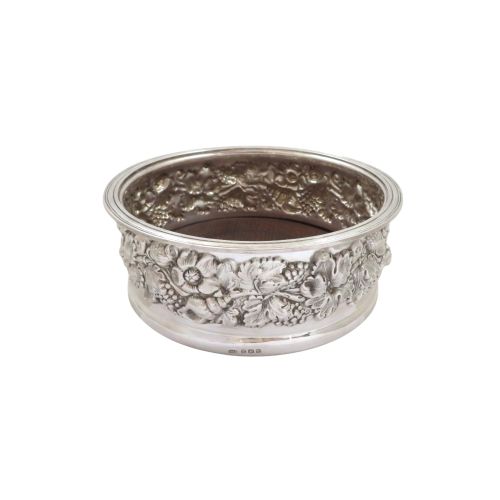
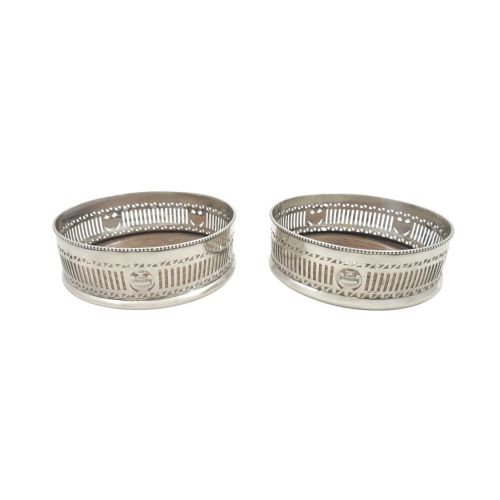
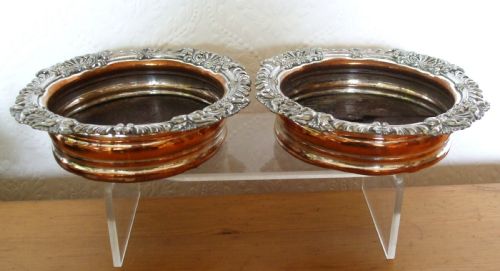
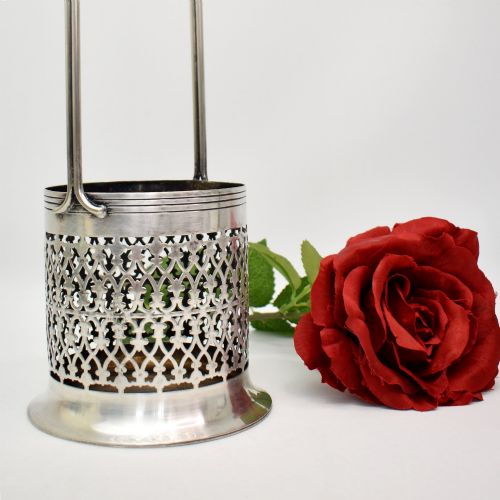
Silversmiths constructed solid sterling silver and silver-plated examples using techniques like piercing, chasing, and embossing to create decorative rims with floral or geometric motifs. Old Sheffield plate combined a thin layer of silver fused to a copper base, visible along the cut edges and undersides.
Cabinetmakers turned timber forms from dense hardwoods like mahogany and rosewood, often fitting them with central silver buttons or shields. Papier-mâché pieces relied on layered paper pulp pressed into moulds and finished with heavy lacquer.
Turned wooden bases frequently featured green baize or felt linings underneath to prevent scratching the mahogany dining table when slid between guests.
Materials range from silver and Old Sheffield plate to mahogany, rosewood, brass, copper, and papier-mâché.
What varies in quality
Quality rests heavily on the crispness of the chased decoration, the weight of the metal, and the joinery of the wooden turned bases. Pieces bearing clear hallmarks or recognisable maker marks command greater attention from collectors.
The thickness of the silver layer on Old Sheffield plate distinguishes superior items from thinner later electroplated alternatives. Well-preserved turned timber and intact baize linings indicate careful historical stewardship.
Brook and Son·Christofle·Matthew Boulton·John and Thomas Settle·James Mein of Kelso·Rupert Favell and Co·Mappin and Webb·William Allen·Hermes Paris
The Antique Wine Bottle Coasters Glossary
- Old Sheffield plate
- A composite material formed by fusing a thin sheet of silver onto a copper ingot before rolling them together into sheets.
- Decanter stand
- An alternative term for a coaster, often built with slightly wider dimensions to accommodate heavy-bottomed decanters.
- Baize
- A coarse woollen material glued to the underside of wooden or metal coasters to protect polished dining tables.
- Silver gilt
- Silver that has been coated with a thin layer of gold on its surface, also known as vermeil.
- Pierced work
- A decorative technique involving cutting patterns through the metal wall of the coaster to create openwork designs.
Antique Wine Bottle Coasters: Frequently Asked Questions
What were wine coasters used for?
They were passed around the dining table after the servants withdrew, allowing guests to pour wine without leaving bottle rings on the polish.
Their raised sides kept the bottles stable while moving across mahogany surfaces during post-dinner conversation.
How do I tell Old Sheffield plate from silver plate?
Old Sheffield plate reveals a thin line of reddish copper showing through where the silver layer has worn thin, particularly on raised edges.
Nineteenth-century electroplate typically displays a uniform silver layer over a white metal base like nickel brass.
Can I use antique coasters for modern bottles?
Most historic coasters easily accommodate standard wine bottles and traditional decanters without issue.
Some Georgian and Regency examples have narrower internal diameters that may not fit oversized modern champagne bottles.
How should I clean wooden coasters?
Wooden and treen examples benefit from occasional treatment with appropriate furniture wax to nourish the grain.
Moisture should be kept away from the timber and the baize lining to prevent warping or staining.