
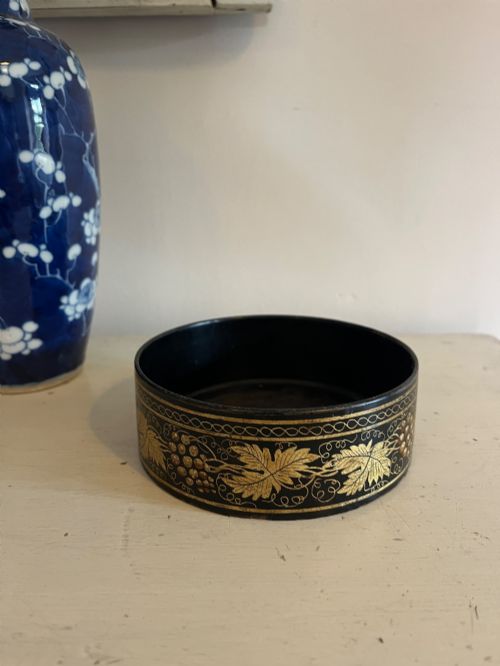


19th Century Bottle Coasters
These 19th century bottle coasters protect your dining table from rings and condensation while keeping wine close at hand.
19th Century Bottle Coasters
When searching for 19th century bottle coasters, buyers encounter table accessories designed to hold wine bottles and decanters securely during meals. These pieces originate across the Regency and Victorian periods, taking forms such as wine coasters, decanter carriages, and bottle holders.
The versions most commonly met on this page include pairs of turned wood vessels and metallic stands designed for standard bottles. Many examples reflect Georgian and George IV design traditions, spanning the wider nineteenth century from roughly eighteen hundred onwards.
How they were made
Craftsmen utilised materials such as mahogany, oak, papier-mâché, and lacquer to shape the bodies of these vessels. Wood was frequently turned on a lathe, while papier-mâché components received applied layers of black lacquer and decorative gilding.
Metal elements relied on silver plating over base metals like copper, often produced using Old Sheffield plate techniques. Details such as bone roundrels and brass fixtures completed the construction of these table stands.
Listings on this site feature pieces fashioned from mahogany, oak, papier-mâché, lacquer, and silver plate.
What varies in quality
The standard of materials and the crispness of applied ornament divide simpler pieces from more ambitious examples. Pieces featuring substantial turned timber or detailed metalwork demonstrate greater investment by the maker.
Preservation of original surfaces, including the integrity of silver plating and the condition of delicate lacquer or gold leaf, dictates the standing of an individual coaster within its type.
Rupert Favell & Co.·James Mein of Kelso·John & Thomas Settle·Mappin & Webb
The 19th Century Bottle Coasters Glossary
- Papier-mâché
- A composite material made from paper pulp or layers of paper reinforced with glue, moulded and dried to form rigid objects. It provided a smooth base for lacquer and gilded decoration.
- Old Sheffield plate
- An early form of plated metal produced by fusing a sheet of silver to a thicker copper base before rolling and shaping. This technique creates a distinctive warm metallic appearance.
- Decanter carriage
- A specialised wheel-mounted coaster designed to roll easily along the dining table between guests. These carriers often feature silver-plated frames and wooden bases.
- Bone roundrel
- A small circular insert of animal bone set into the wooden base of a coaster. These decorative elements frequently appear as subtle contrasting centres in turned timber vessels.
19th Century Bottle Coasters: Frequently Asked Questions
What were bottle coasters used for?
These vessels served to hold wine bottles and decanters on the dining table, protecting polished wood surfaces from moisture rings and spills.
They allowed bottles to circulate smoothly among guests after servants cleared the formal dinner courses.
How do I care for antique coasters?
Keep wooden and papier-mâché surfaces away from direct sunlight and excessive moisture to prevent warping or cracking of the lacquer and gilding.
Polish silver-plated elements gently with appropriate materials, avoiding harsh abrasives that wear down the metallic layer over time.
How do I date a coaster?
Examine the construction methods, such as turned timber grains or applied silver plating techniques, alongside stylistic clues from the Regency and Victorian eras.
Maker marks and specific manufacturing methods, such as Old Sheffield plate, provide further chronological markers for individual pieces.
Can I use them on my dining table?
These historical pieces function well for holding modern wine bottles and decanters during dinner parties and family meals.
Their original purpose translates directly to contemporary dining, combining practical table protection with antique character.