



Antique Wine Bottle Slides
Antique wine bottle slides protect the dining table in style, bringing circular elegance and gleaming metal to the port or claret.
Antique Wine Bottle Slides
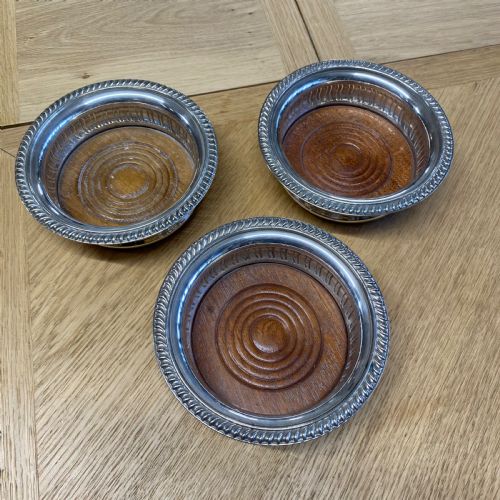
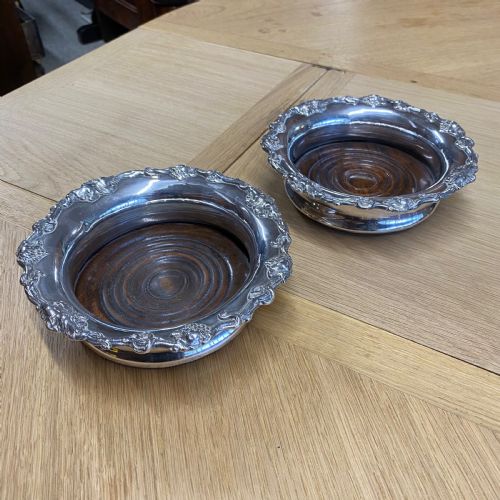
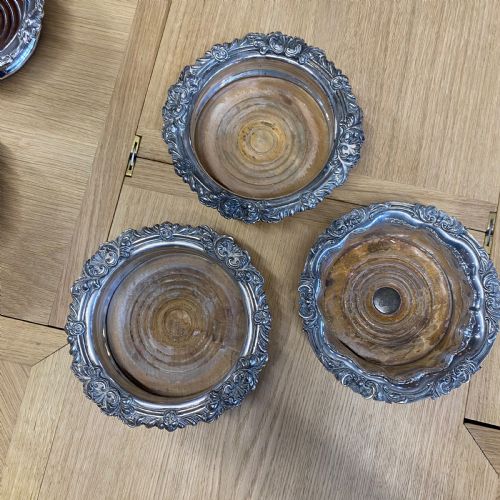
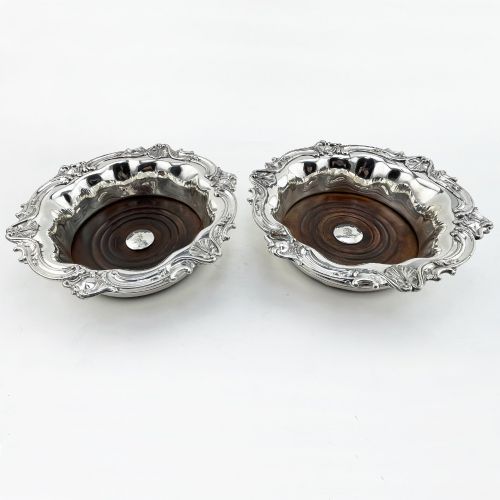
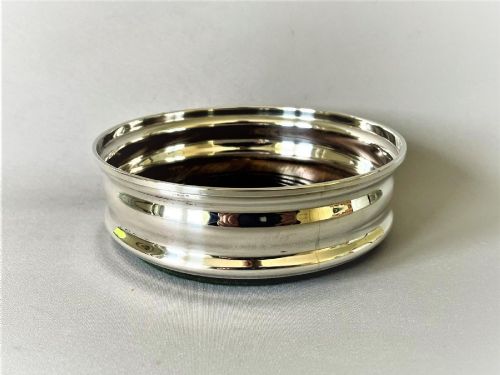
Antique wine bottle slides are low circular vessels designed to hold decanters and wine bottles, allowing them to glide smoothly across the polished mahogany of a dining table. The pieces on this page span the Georgian, Regency, Victorian, and Edwardian periods, stretching from the early nineteenth century into the mid-twentieth century. Forms vary from single bottle holders to larger magnum sizes and multiple bottle carriers.
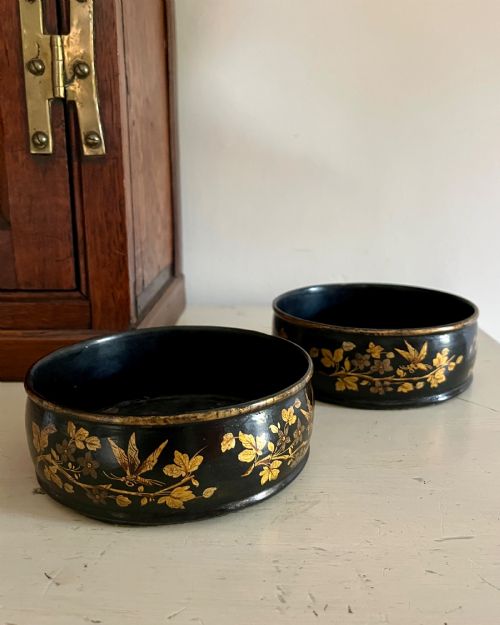
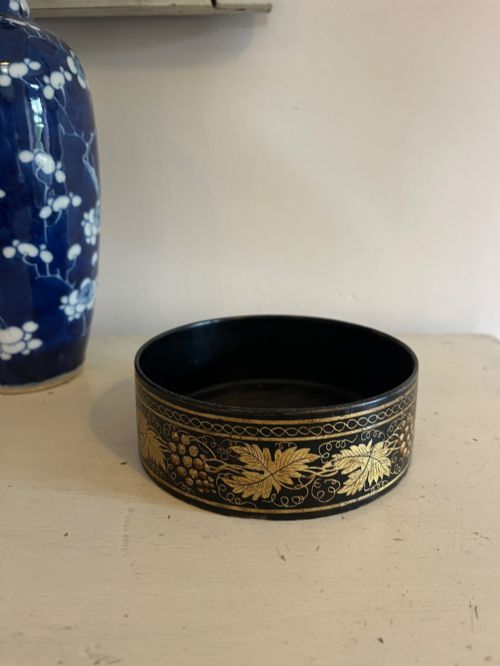
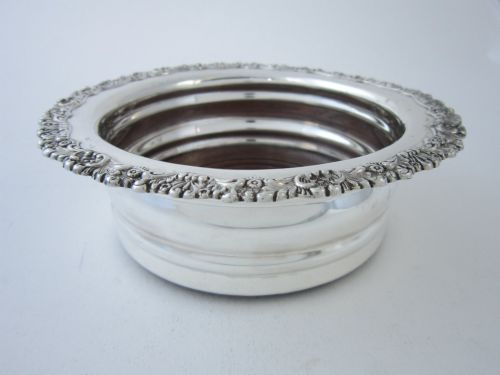
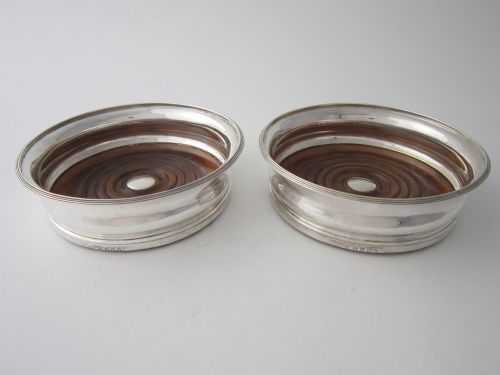
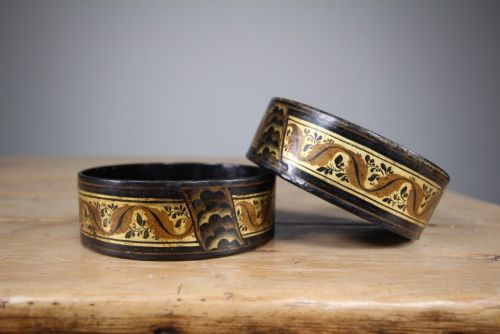
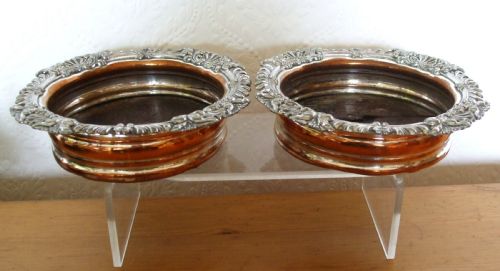
The most common version to meet here is the silver-plated or Old Sheffield Plate coaster, often found as a matching pair. Alongside metal work, wooden examples in mahogany, oak, and rosewood appear frequently, sometimes mounted with silver rims. Papier-mâché and lacquer pieces represent lighter, alternative materials from the nineteenth century.
How they were made
Silversmiths and manufacturers shaped sterling silver, silver plate, and copper using traditional hammering, piercing, and casting methods. Old Sheffield Plate fuses a thin layer of silver onto a heavier copper base, leaving a characteristic edge or seam upon close inspection.
Woodworkers turned dense timbers such as mahogany and rosewood on lathes to form the circular bodies, frequently incorporating turned wooden bases or green baize underneath to cushion the table. Papier-mâché items relied on layered paper pulp pressed into moulds and finished with smooth lacquer.
Antique Wine Bottle Slides Retail Price Guide 2026
Typical asking prices for wine bottle slides among the pieces listed under this phrase on Sellingantiques today, from the lower quarter to the upper quarter. They describe what is for sale here now, not the wider market.
The selection includes single wine coasters, matched pairs, multi-bottle holders, and a Regency champagne magnum presentation box.
What varies in quality
The standard of silver plating and the crispness of chased or pierced decoration dictate much of the visual distinction between pieces. Heavier gauge metal yields a more substantial weight in the hand, while finer Old Sheffield Plate shows minimal copper bleed-through where the underlying metal meets the surface.
For wooden slides, the selection of timber grain and the precision of the turned mouldings set finer examples apart. The integration of the central button or escutcheon, along with the original baize lining on the base, contributes to the overall integrity of the piece.
James Mein of Kelso
The Antique Wine Bottle Slides Glossary
- Old Sheffield Plate
- An early form of plated metal produced by fusing silver to a copper core before rolling it into sheets. This technique predates modern electroplating and leaves distinct visual clues on nineteenth-century pieces.
- Papier-mâché
- A composite material made from paper pulp or layers of paper mixed with glue and resin, then pressed and dried. It takes a smooth lacquer finish well, as seen on nineteenth-century examples.
- Coaster
- A small tray or stand designed to hold a bottle or decanter on the dining table. They prevent rings of moisture and staining from reaching the polished wood.
- Sterling silver
- An alloy consisting of silver and other metals, usually copper, to increase durability. Items made to this standard often carry official hallmarks indicating purity and origin.
- Baize
- A coarse woollen material resembling felt, traditionally glued to the underside of coasters. It protects the dining table surface from scratches as the slide moves.
Antique Wine Bottle Slides: Frequently Asked Questions
How were they used?
Hosts used these slides to pass bottles around the dinner table after the servants had left the room. The smooth base allowed the vessel to glide easily from guest to guest.
They served wine, port, and sherry during formal dining, keeping the bottle upright and steady on uneven dining surfaces.
How do I care for silver plated slides?
Silver and silver-plated slides require gentle cleaning with a soft cloth and proprietary silver polish to maintain their lustre. Avoid abrasive pads that can wear through thin plating.
Keep the baize lining on the bottom dry to prevent deterioration of the fabric and the wood or metal underneath.
How do I tell Old Sheffield Plate apart?
Old Sheffield Plate involves fusing silver to copper, which often reveals a thin reddish copper line along exposed edges or worn spots. Modern electroplating creates a uniform coating without this underlying layer.
Pieces made with Old Sheffield Plate generally date from the late eighteenth century to the mid-nineteenth century.