



Antique Whisky Tantalus
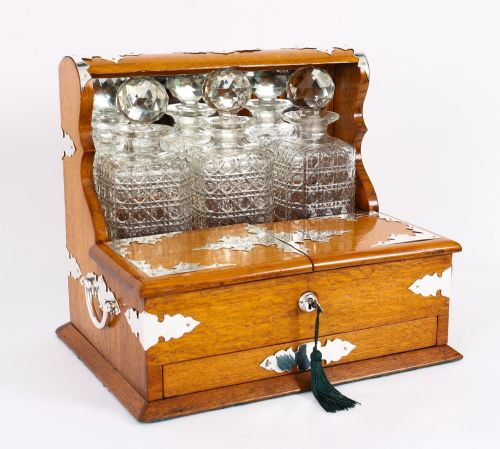
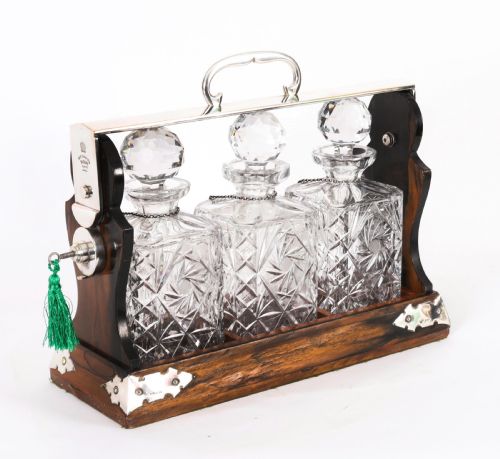
An antique whisky tantalus is a locking spirit cabinet designed to secure fine liquor from unauthorized access while displaying cut crystal decanters.
Antique Whisky Tantalus
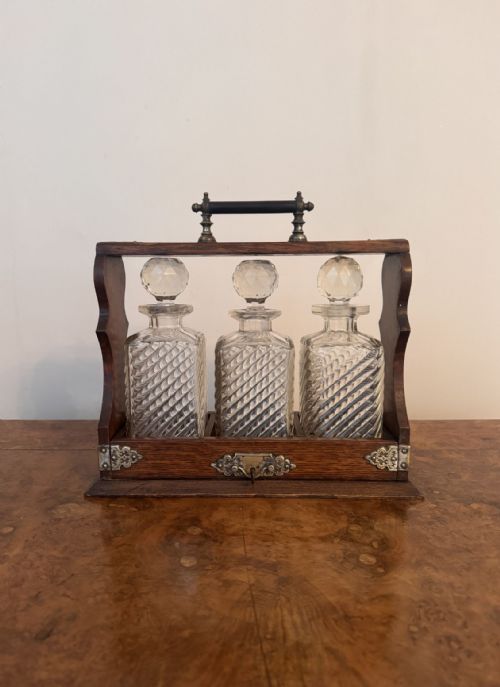
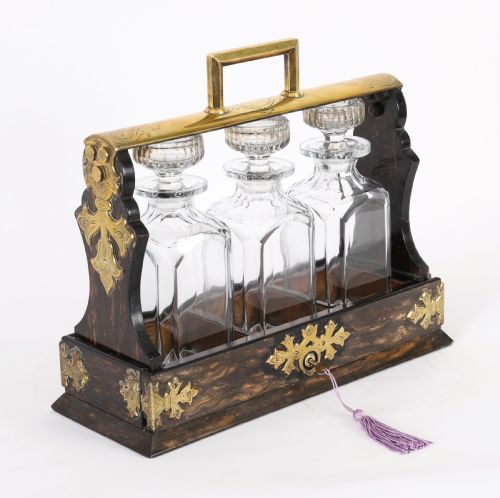
An antique whisky tantalus holds one, two, or three decanters securely within a wooden frame fitted with a metal locking mechanism that prevents the removal of the bottles without a key.
The versions most commonly met on this page date from the Victorian and Edwardian periods, appearing in durable timbers such as oak, walnut, and coromandel.
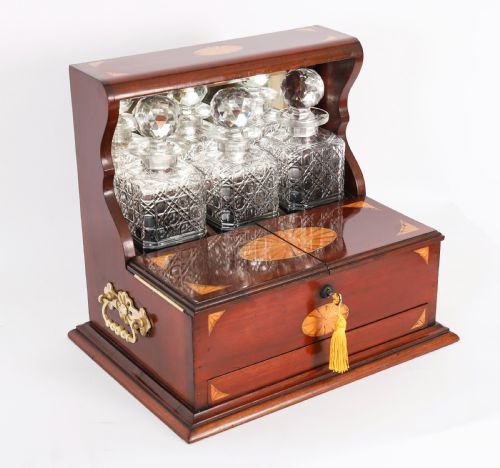
Many examples incorporate integrated games compendiums or dry bar compartments beneath or beside the decanters, reflecting late nineteenth and early twentieth-century entertaining habits.
Materials and Construction
Frames are constructed from solid or veneered hardwoods including oak, mahogany, walnut, and exotic coromandel, frequently inlaid with satinwood or mounted with brass handles and lockplates.
The internal bottle security relies on substantial brass or silver-plated metal arms that engage with collars or stoppers on the decanters, locking them firmly in place.
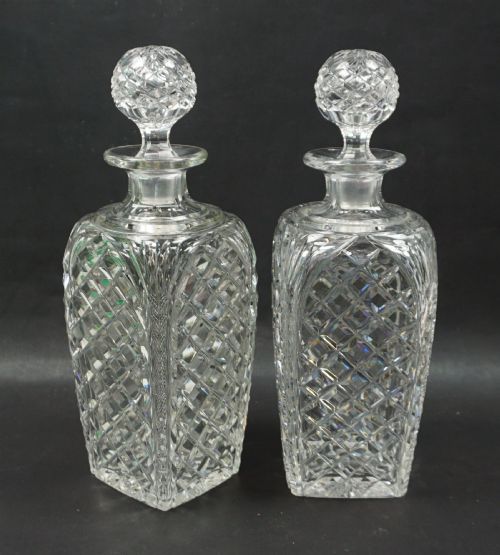
Decanters supplied with these sets are fashioned from heavy cut glass or cut crystal, often featuring square sections, tapered profiles, and matching stoppers.
Victorian hosts locked their whiskey to stop the butler sneaking a dram.
Judging Quality
Quality rests upon the weight and integration of the metalwork, where heavy cast brass mechanisms and functioning locks signed by notable makers surpass simple plated iron fittings.
The choice of cabinet timber significantly alters the standing of a piece, with figured coromandel, elaborate marquetry, and solid golden oak representing higher manufacturing standards than plain softwood carcasses.
The completeness and matching nature of the cut crystal decanters dictate the integrity of the set, as original matching bottles bear greater proportion to the overall design.
Betjemann Brothers·Hukin and Heath·Elkington
The Antique Whisky Tantalus Glossary
- Tantalus
- A locking drinks stand that keeps decanters visible yet inaccessible. The frame secures the bottle necks behind a metal bar until the lock is released with a key.
- Compendium
- A multi-purpose box containing games alongside a drinks service. These incorporate folding boards and compartments for cards and counters beneath the decanters.
- Coromandel
- A dense, heavily figured exotic timber from Asia. It displays dark brown streaks and was favored for luxury Victorian boxes and tantalus frames.
- Silver Plate
- A thin layer of silver fused to a base metal ground such as copper or brass. It provides the bright appearance of solid silver on structural locking bars and handles.
- Cut Crystal
- High-clarity glass containing lead oxide, faceted with deep geometric patterns. This material refracts light strongly and forms the standard decanter type for these cabinets.
Antique Whisky Tantalus: Frequently Asked Questions
How does a tantalus lock work?
A vertical metal bar engages with the stoppers or necks of the decanters when the frame is closed. Turning a key in the integrated lock moves this bar into a retaining channel, preventing the bottles from being lifted out.
Most mechanisms require the cabinet lid to be unlocked first before the retaining handle can be folded down or slid sideways to release the glassware.
Were these cabinets used in offices?
These locking frames were primarily designed for domestic use in Victorian and Edwardian dining rooms, smoking rooms, and libraries. The lock kept the spirits safe from household staff.
Hosts controlled the distribution of alcohol after dinner, ensuring that servants or guests could not access the contents without permission.
How do I date an oak tantalus?
Victorian examples tend to feature heavy brass mounts, Gothic revival styling, or dark fumed oak finishes. Edwardian pieces often display lighter golden oak tones and simpler, cleaner joinery.
Patent stamps, maker signatures on the lock plates, and the style of the cut crystal decanters provide further clues to the exact manufacturing decade.
Can missing decanters be replaced?
Finding exact replacement decanters to fit the precise spacing and locking collars of an antique frame requires careful measurement of the aperture heights and neck diameters.
Many period frames were made to standard sizes, but hand-cut crystal bottles vary enough that loose fits will prevent the locking bar from closing correctly.