




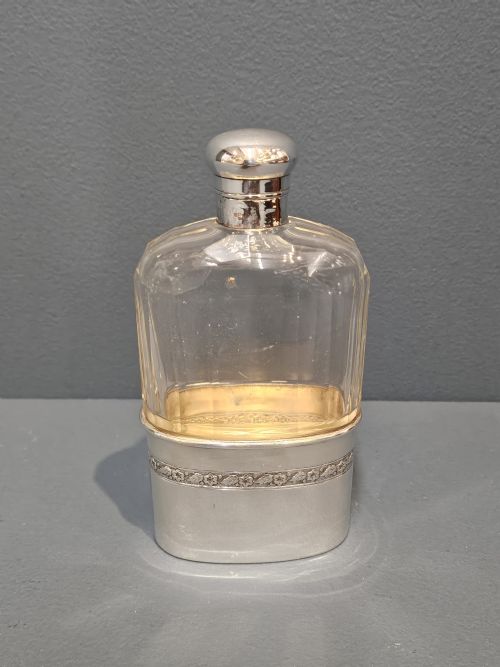


Antique Whisky Pocket Flask
An antique whisky pocket flask is a sturdy companion for a dram on the move, combining precious metal, glass and leather.
Antique Whisky Pocket Flask
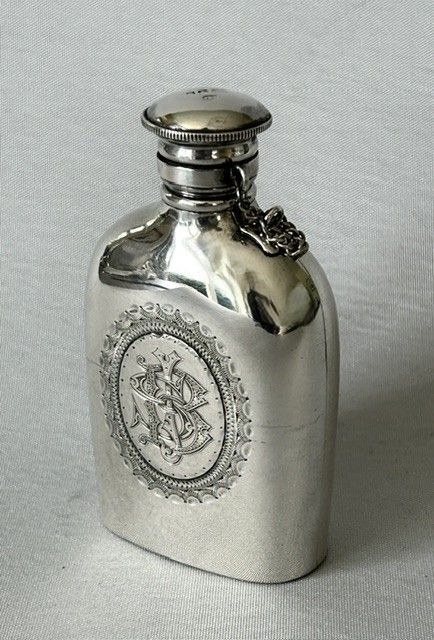
An antique whisky pocket flask is designed to fit snugly against the body, offering a portable vessel for spirits during outdoor pursuits. The selection on this page spans from the late Victorian period through the Edwardian era and into the Art Deco years of the twentieth century.
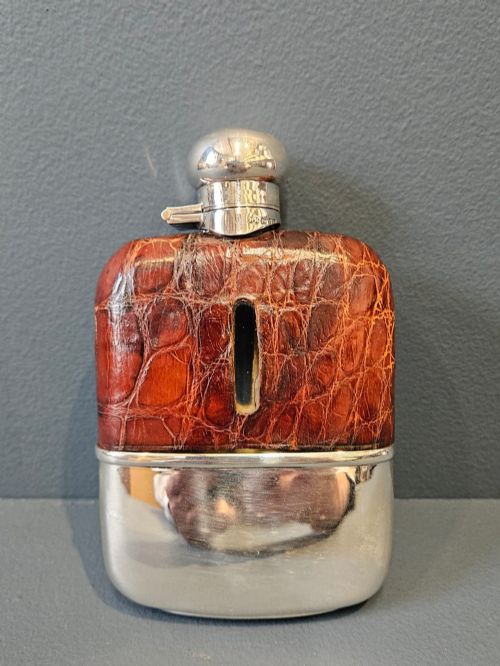
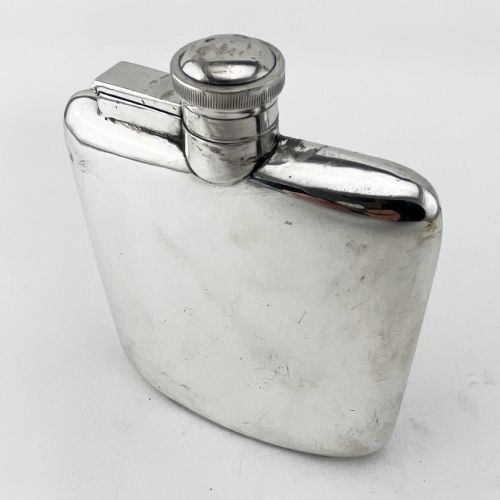
Buyers will most frequently encounter sterling silver and silver plate versions, often paired with cut glass bodies or wrapped in crocodile leather and skin. Forms range from plain polished designs to heavy hammered finishes and floral patterns.
Many examples incorporate practical elements such as removable lower cups, hinged flip tops, or locking mechanisms for secure transport. Capacities vary from standard pocket sizes up to large spirit flasks holding over a pint.
How they were made
Silversmiths shaped sterling silver and silver plate into curved bodies using hammering and soldering techniques to achieve the ergonomic contour needed for a pocket. Glass bodies were blown and cut with geometric patterns, then mounted with silver collars and caps.
Organic materials such as crocodile leather and skin were meticulously stitched and fitted around metal or glass cores to provide a secure grip. Internal silver gilt finishes were sometimes applied to protect the metal from the corrosive nature of the spirit.
A sturdy companion designed to slip unnoticed into a shooting coat pocket.
What varies in quality
The distinction between standard utility items and exceptional pieces lies in the weight of the silver and the precision of the mechanics. Heavier gauge metal resists denting, while tightly fitted hinged caps and removable cups show superior manufacturing standards.
The integration of materials also dictates standing, where perfectly matched leather wraps or deeply faceted cut glass reflect higher craftsmanship. Maker marks from established silversmiths further elevate the standing of a piece within the range.
Hukin And Heath·J Dixon·Asprey London·William Neale·JB Chatterley And Sons·James Dixon And Sons·Mappin And Webb
The Antique Whisky Pocket Flask Glossary
- Sterling silver
- A silver alloy containing 92.5 percent pure silver by mass, providing durability and a bright lustre for pocket vessels.
- Silver plate
- A layer of silver fused to a base metal core, offering the appearance of solid silver at a different cost.
- Silver gilt
- Sterling silver that has been coated with a thin layer of gold on the interior, protecting the metal from alcohol.
- Cut glass
- Glass that has been decoratively shaped and faceted by grinding and polishing, frequently paired with silver mounts.
- Removable cup
- A secondary drinking vessel fitted to the base of the flask that slides off for use.
Antique Whisky Pocket Flask: Frequently Asked Questions
How do I date a silver flask?
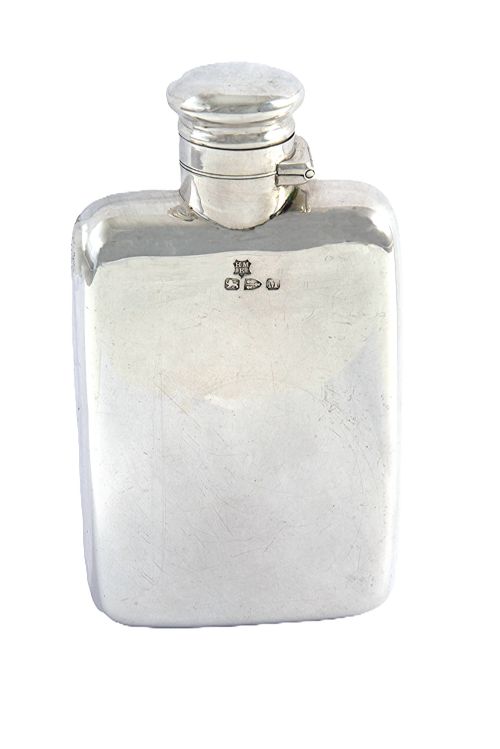
British pieces typically feature hallmarks stamped directly onto the metal, including assay office symbols, date letters, and maker marks. These stamped codes allow precise identification of the year and location of manufacture.
Stylistic cues such as geometric Art Deco lines or heavy Victorian ornamentation also point to specific decades of production.
What is the purpose of the bottom cup?
The lower section slips off to double as a small drinking cup for sharing a dram in the field. This clever dual-purpose design is secured by friction or a locking collar during transit.
Such detachable elements are commonly found on Victorian and Edwardian spirit flasks.
Why use crocodile skin on a flask?
Crocodile leather and skin provided a textured, non-slip grip for wet or gloved hands during hunting and outdoor pursuits. It also added a layer of tactile luxury to an everyday utility item.
This robust material ages with a distinct patina over decades of handling.