


Antique Whippet Statue
An antique whippet statue captures the sleek lines and gentle grace of the breed in bronze, earthenware, or porcelain.
Antique Whippet Statue
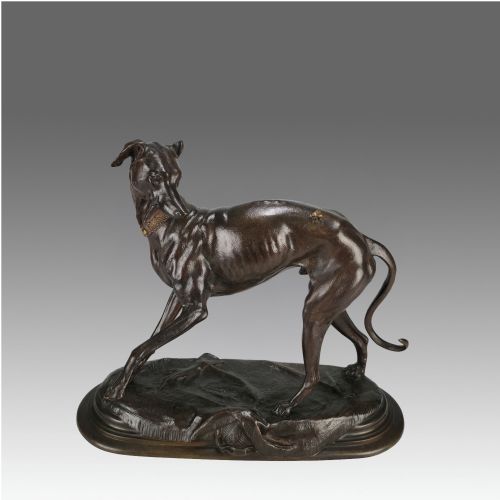
When you search for an antique whippet statue, you encounter figures and sculptures depicting sighthounds, often listed alongside greyhounds and hounds. The pieces on this page divide cleanly into two distinct traditions: British pottery and continental metalwork.
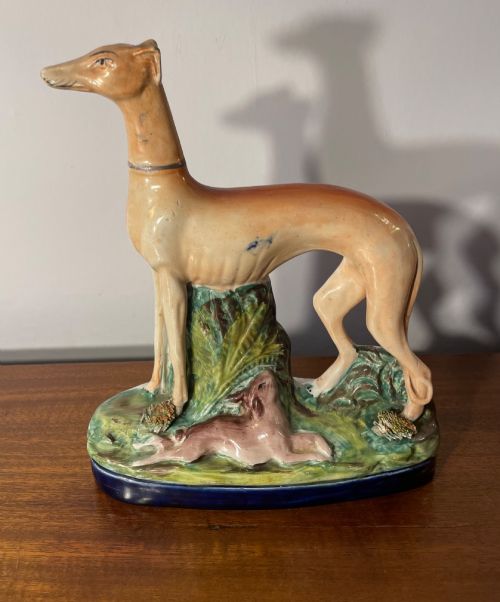
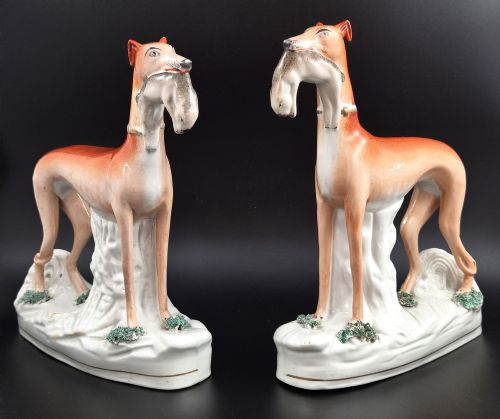
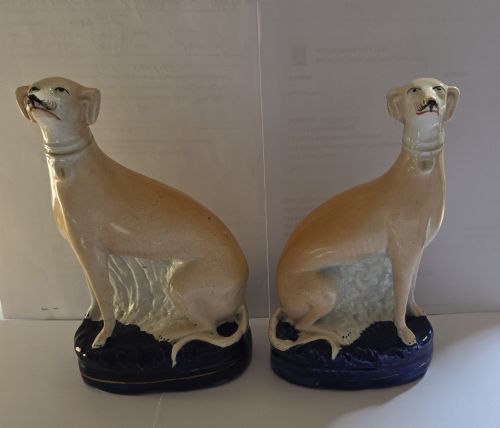
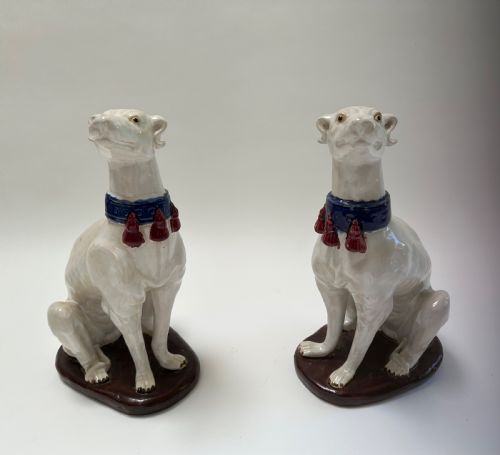
The most common pottery examples are Victorian Staffordshire figures, often modelled as seated pairs accompanied by hares or functioning as quill holders. These earthenware pieces present hand-painted details and lead glazes typical of the nineteenth century.
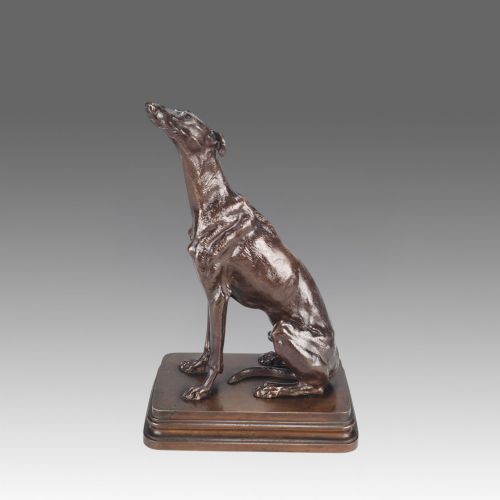
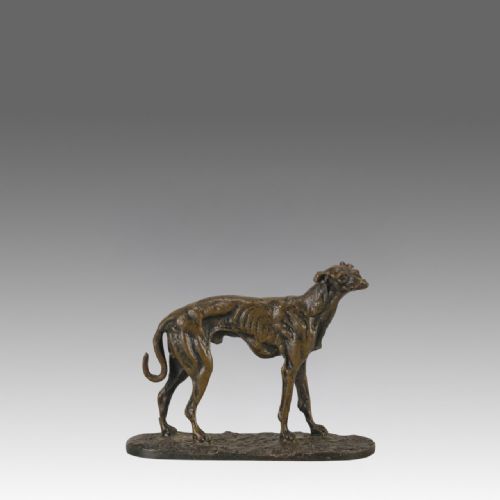
Alternatively, bronze sculptures from the French animalier school capture the musculature and posture of the hound with striking realism. These metal castings span the nineteenth and early twentieth centuries, sometimes appearing as paperweights or decorative ornaments.
How they were made
Staffordshire pottery figures are shaped from earthenware and finished with glazes and enamel paint to render the markings of the dogs. Potters used moulds to cast the dogs and their prey, applying colour by hand before firing.
Bronze sculptures rely on the lost-wax casting technique, allowing sculptors to capture fine textures in the fur and musculature of the hounds. Artisans then applied patinas or silvered finishes to the metal surfaces.
Materials span nineteenth-century bronze, earthenware with lead glazes, and twentieth-century porcelain and silvered bronze.
What varies in quality
In bronze sculptures, the fidelity of the casting and the depth of the patina define the character of the piece. Works bearing signatures from established animalier sculptors display superior anatomical precision and surface detail.
Alfred Dubucand·Alfred Barye·P J Mêne·Joseph Francois Victor Chemin·Christophe Fratin·Karl Hagenauer·Rosenthal
The Antique Whippet Statue Glossary
- Animalier
- A nineteenth-century artistic movement focused on the realistic depiction of animals. Sculptors in this tradition studied live subjects to capture accurate movement and anatomy.
- Staffordshire
- Earthenware pottery produced in the industrial region of Stoke-on-Trent. These figures were widely produced in the nineteenth century for domestic mantelpieces.
- Patina
- The surface coloration and sheen developed on bronze over time or applied by the caster. A good patina enhances the perceived depth of the metalwork.
- Quill holder
- A domestic pottery desk accessory featuring a modelled figure alongside a trough or rest for writing implements. These often took the form of seated hounds.
- Lead glaze
- A glossy coating containing lead oxide applied to earthenware before firing. This technique gives early pottery surfaces their characteristic shine.
Antique Whippet Statue: Frequently Asked Questions
What is an animalier bronze?
Animalier bronzes are nineteenth-century sculptures focusing specifically on animal subjects, modelled with close attention to natural anatomy and posture. These pieces frequently bear the signature of the sculptor on the bronze base.
French founders produced many of the notable greyhound and sighthound sculptures found in this tradition.
Are these statues usually found in pairs?
Many nineteenth-century Staffordshire greyhound and whippet figures were produced and sold as matched pairs to flank a fireplace or mantelpiece. Bronze sculptures, however, more commonly appear as single pieces.
Finding a surviving matched pair of pottery dogs in good condition is a traditional hallmark of this collecting category.
How should I display my antique dog statue?
Antique ceramic and bronze statues suit stable mantelpieces, bookshelves, or side tables away from direct heat sources and strong sunlight. Pottery figures benefit from gentle dusting with a dry cloth to protect the enamel paint.
Bronze sculptures require minimal maintenance, occasionally needing a soft brush to clear dust from recessed details.