
Antique Welsh Cabinet
These pieces include utilitarian dressers, food cupboards, and display cabinets shaped by centuries of regional vernacular woodworking.

Antique Welsh Cabinet
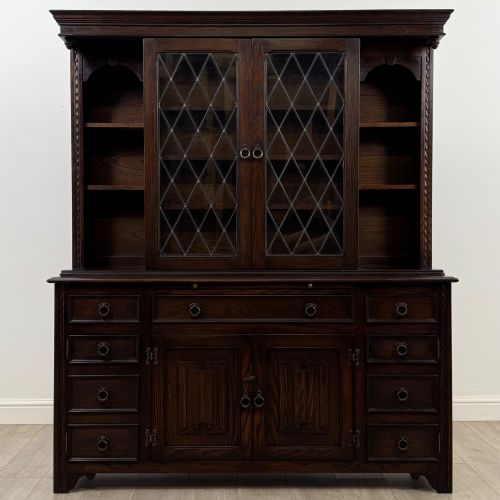
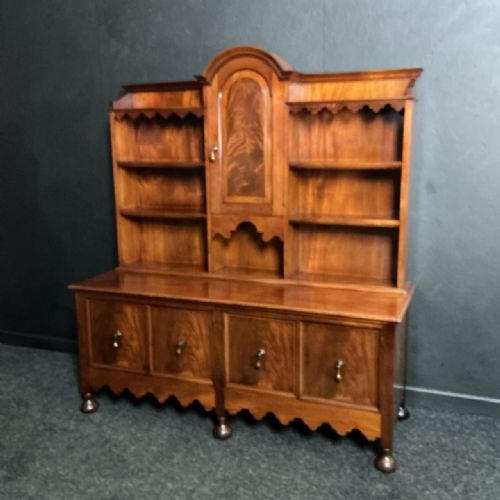
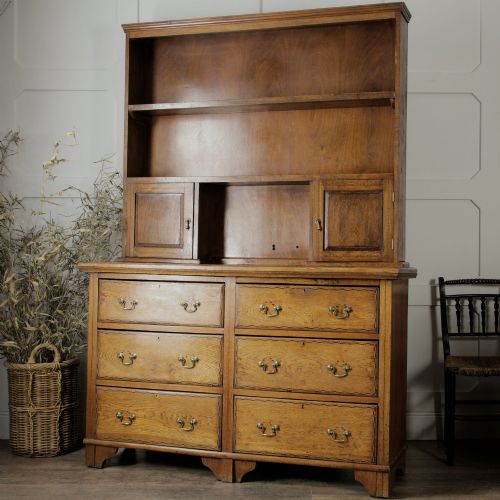
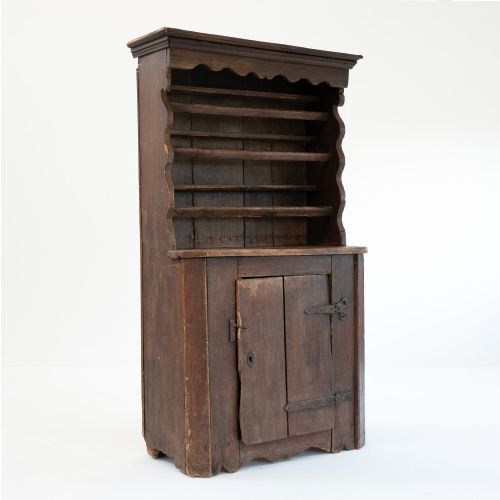
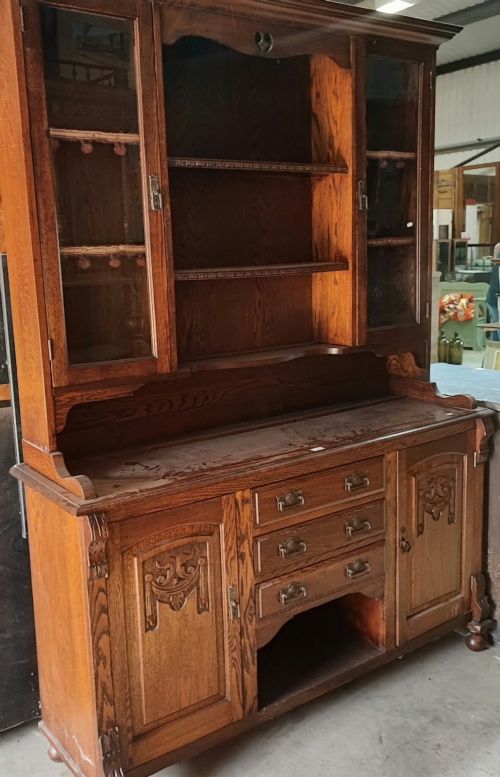
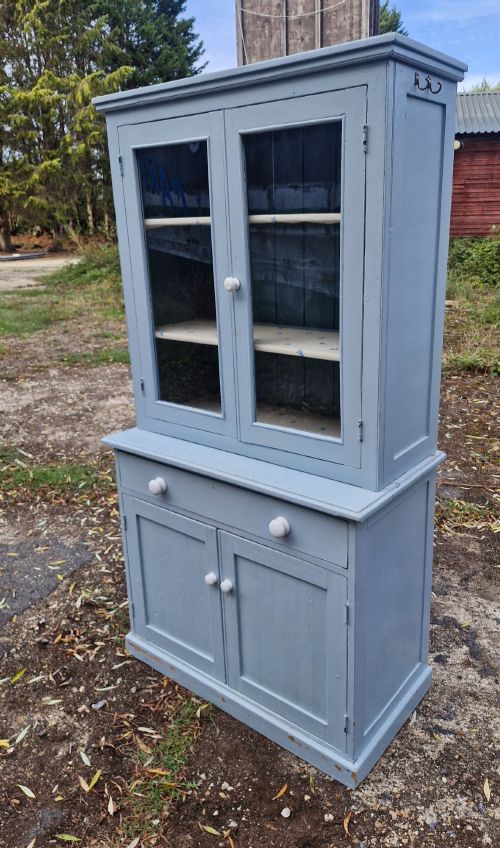
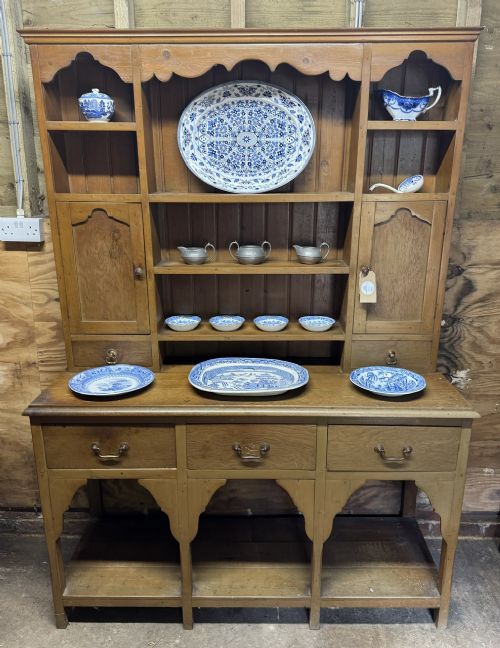
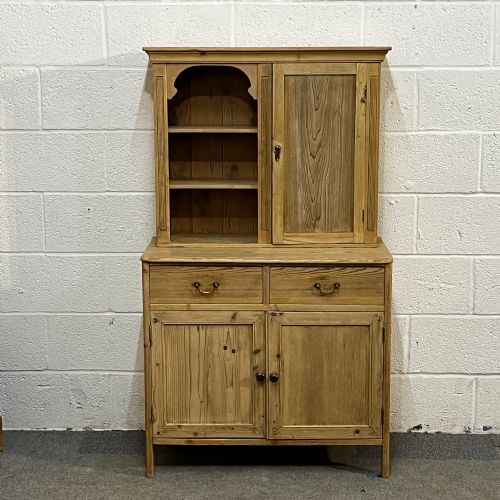
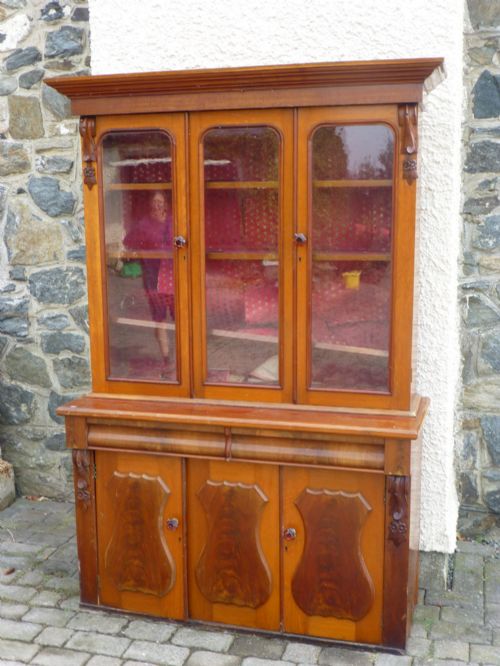
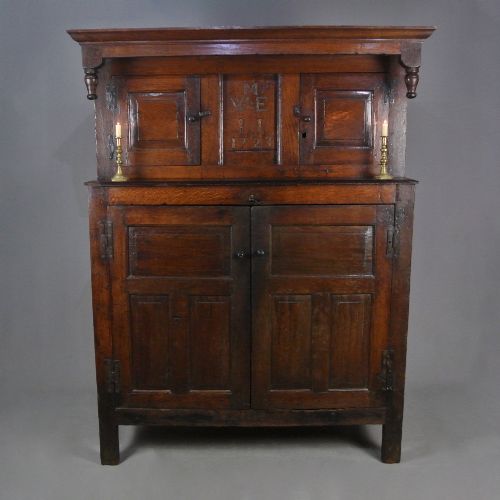
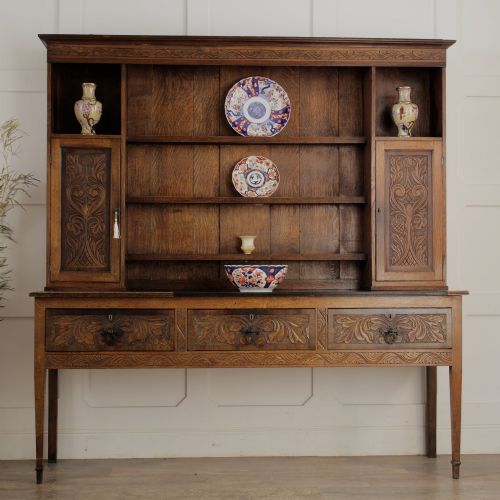
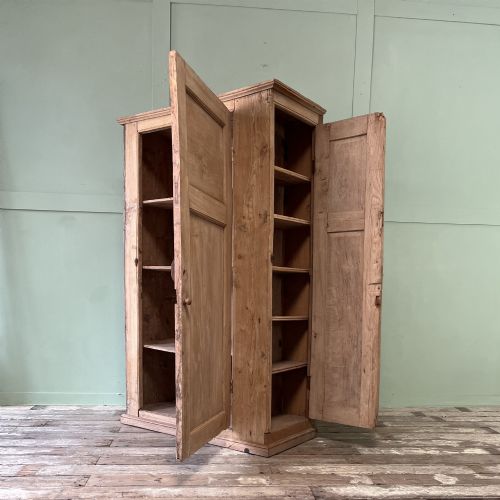
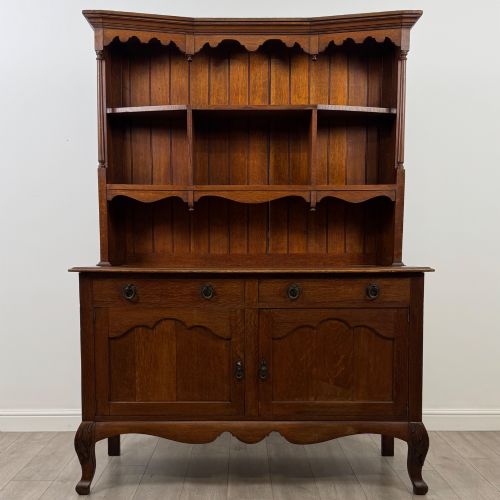
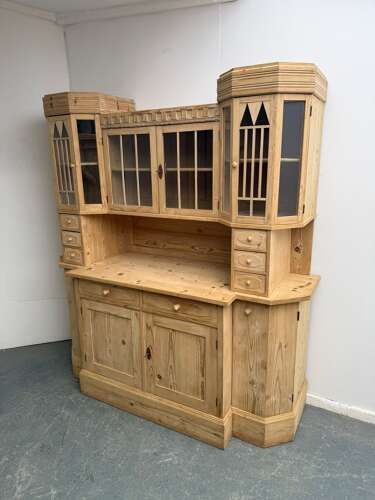
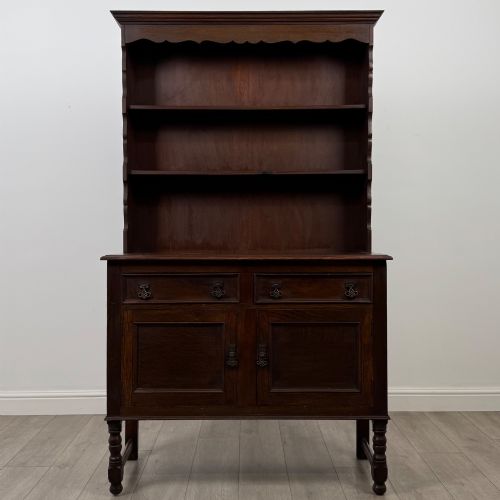
An antique welsh cabinet encompasses a diverse range of country furniture, most frequently represented by kitchen dressers, food cupboards, and dresser bases in oak, pine, and elm. These domestic storage pieces combine lower cupboards or drawer units with upper plate racks or display shelving, originating from rural workshops during the 18th, 19th, and early 20th centuries.
The selection on this page relies heavily on regional forms such as the tridarn, deuddarn, and cwpwrdd gwydr alongside standard Victorian and Edwardian iterations. Buyers encounter both provincial oak examples featuring potboards and later pine country kitchen dressers preserved in original wax or paint.
How they were made
Makers utilised solid native timbers, predominantly oak and pine alongside elm and mahogany, constructing carcasses with traditional pegged joinery and hand-cut dovetails for drawers. Surfaces often retained their original patination, wax finishes, or early layers of paint applied during active domestic use.
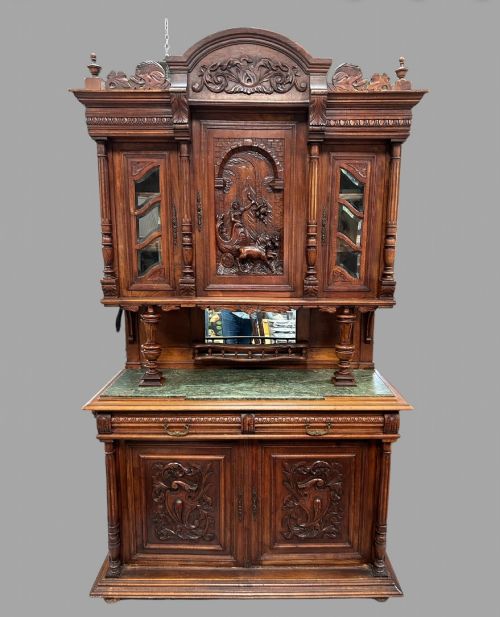
Detailing on these regional pieces ranges from simple planked construction and turned wooden knobs to inlaid decoration, applied mouldings, and carved accents such as green man motifs on later Victorian variants.
Bread and cheese cupboards included integrated ventilation slats to keep perishables fresh before refrigeration existed.
What varies in quality
The integrity of timber selection and the degree of original constructional survival dictate the standing of individual pieces, separating untouched country examples from heavily altered items. Superior pieces retain their original hardware, uncompromised potboards or backboards, and authentic patination accumulated over generations of use.
Proportional harmony and the subtlety of regional vernacular detailing - such as crisp moulding profiles and well-proportioned drawer arrangements - distinguish finer cabinetmaking from more utilitarian workshop production.
William Yale·Bryn Mawr
The Antique Welsh Cabinet Glossary
- Potboard
- An open lower shelf beneath a dresser base traditionally utilised for storing heavy kitchen pots and earthenware. This structural platform distinguishes many country oak dressers.
- Tridarn
- A traditional three-tiered Welsh cupboard consisting of an enclosed upper section, a middle stage with turned balusters, and a lower base unit. These monumental pieces date primarily to the 18th century.
- Deuddarn
- A two-tiered Welsh press cupboard featuring enclosed upper and lower storage compartments. It represents a precursor to the open-backed kitchen dresser.
- Cwpwrdd Gwydr
- A Welsh term for a glazed display cupboard or cabinet. These pieces incorporate glass panels to showcase china and domestic wares.
- Patina
- The deep surface sheen and colour developed by wood over centuries through handling, waxing, and exposure to light. Untouched patination is valued by collectors of vernacular furniture.
Antique Welsh Cabinet: Frequently Asked Questions
What is a Welsh dresser?
A Welsh dresser is a traditional piece of kitchen furniture combining a lower storage base of drawers and cupboards with an upper open rack for displaying plates and pottery.
These functional items served as the central storage and display unit in country homes, evolving from enclosed cupboards into the open-backed formats seen in later centuries.
How do I date an oak cabinet?
Dating relies on observing construction methods, timber choice, and hardware styles. Hand-cut dovetails, pegged joinery, and board thickness provide clues to whether a piece originates from the 18th century or the Victorian period.
Regional vernacular styles changed slowly, meaning construction details often offer more reliable chronological evidence than overall form.
Where were these cabinets made?
These cabinets were made by rural joiners and provincial cabinetmakers working across Wales and English border regions. Local workshops utilised accessible native timbers such as oak, elm, and pine.
The regional variations in cupboard design and vernacular terminology reflect the specific local traditions of these makers.
How do I care for waxed pine?
Care involves applying traditional beeswax periodically to nourish the wood and maintain its protective finish. Avoid placing antique pine pieces in direct sunlight or near heat sources to prevent timber splitting.
Gentle dusting with a dry cloth preserves the original surface patination without stripping historical finishes.