
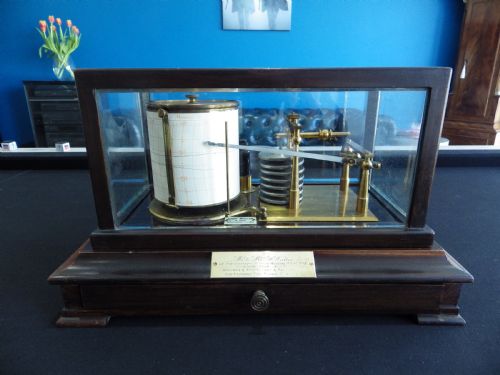


Antique Weather Recorder
An antique weather recorder tracks atmospheric pressure and rainfall over time, giving your study the quiet precision of a Victorian observatory.
Antique Weather Recorder
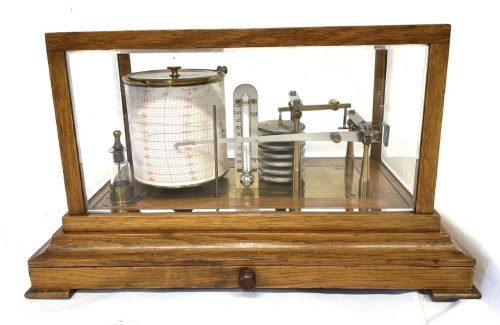
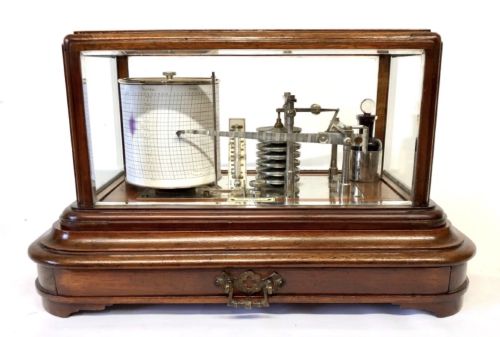
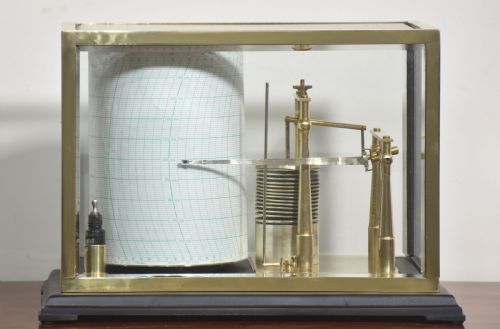
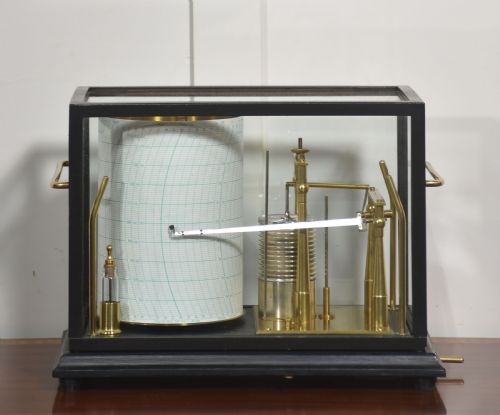
When you search for an antique weather recorder, you encounter scientific instruments designed to log meteorological changes automatically. The most common forms on this page are barographs housed in wooden cases with glass covers, alongside recording rain gauges and sunshine recorders.
These pieces date from the late nineteenth century through to the interwar period, spanning Victorian, Edwardian, and later styles. Makers often integrated thermometers, barometer dials, and chart drawers into the mahogany, oak, or walnut cabinetry.
Scientific instrument makers built these devices for domestic observation, railway monitoring, and institutional use. You find English and continental workshop origins, reflecting the industrial reach of the period.
Materials and Construction
Cases combine timbers such as mahogany, oak, and walnut, frequently fitted with bevelled glass panels to display the internal mechanics. Brass and steel form the levers, drums, and barometer linkages that respond to atmospheric shifts.
Makers utilised paper charts mounted on rotating clockwork drums to record continuous data via ink pens. Metal dials and engraved nameplates identify the workshop, while fitted drawers store spare recording paper.
Some Victorian railway offices kept barographs running continuously so clerks could correlate falling air pressure with passenger umbrella sales.
Assessing Craftsmanship
Quality rests in the precision of the brass mechanisms and the cabinet-maker's joinery on the timber cases. Finer examples feature substantial bevelled glass panels, robust clockwork movements, and fitted drawers with original brass hardware.
Signed instruments by established makers display finer engraving on scales and nameplates compared to utilitarian unsigned equivalents. The weight of the cast metal and the clarity of the paper charts reflect the original intended market.
Short And Mason·Negretti And Zambra·Jules Richard·Gaupp And Co·Depree And Young Ltd
The Antique Weather Recorder Glossary
- Barograph
- A self-recording barometer that traces atmospheric pressure onto a revolving paper chart. It uses an aneroid metal chamber linked to an inked nib.
- Aneroid
- Containing no liquid, operating instead on a sealed flexible metal capsule that expands or contracts with air pressure changes.
- Bevelled glass
- Glass panes with polished, angled edges fitted into the cabinet corners to afford clear views of the working movement.
- Sunshine recorder
- An apparatus utilising a glass sphere to focus sunlight and burn a trace onto a graduated card to measure daily sunshine duration.
- Tipping bucket rain gauge
- A meteorological device that records rainfall by balancing water into alternating buckets that pivot as they fill.
Antique Weather Recorder: Frequently Asked Questions
How do I operate an antique barograph?
You wind the clockwork drum and place a fresh paper chart onto the cylinder beneath the inked arm. The mechanism then records atmospheric pressure fluctuations over the course of a week.
Ensure the instrument rests on a level surface away from direct heat sources to maintain accurate readings. Handle the delicate arm and nib with care during paper changes.
What is the difference between a barometer and a barograph?
A standard barometer indicates only the current atmospheric pressure via a pointing needle on a dial face. A barograph adds a clockwork recording drum to map that pressure continuously on paper.
This continuous trace allows observers to study pressure trends and approaching weather patterns over days rather than noting a single isolated reading.
Where should I display an antique weather recorder?
Place the instrument on a sturdy desk, sideboard, or table where visitors can observe the brass mechanics and rotating drum through the glass panels. Stable indoor environments away from excessive moisture preserve the wooden cabinetry and paper charts.
Keep the piece out of direct sunlight to prevent timber fading and to protect any antique paper materials stored inside the chart drawer.
How do I date an oak or mahogany weather recorder?
Examine the cabinet style, wood selection, and any engraved maker signatures on the brass bedplate or paper scale. Victorian examples often feature heavy mahogany or walnut cases, while Edwardian and interwar pieces frequently utilise oak.
Patent dates and retailer signatures inscribed on the dials or chart drawers provide further chronological clues regarding the year of manufacture.