


Antique Watercolour Village Painting
When you search for an antique watercolour village painting, you meet paper works recording rural streets, cottages and coastal settlements from the nineteenth and early twentieth centuries.
Antique Watercolour Village Painting
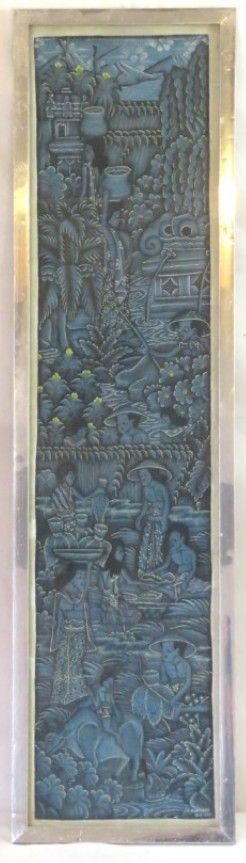
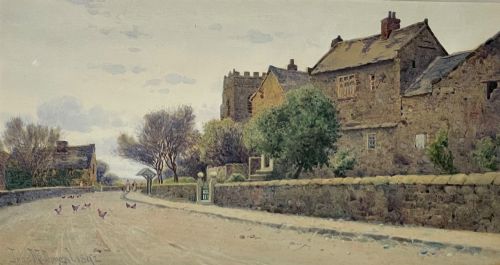
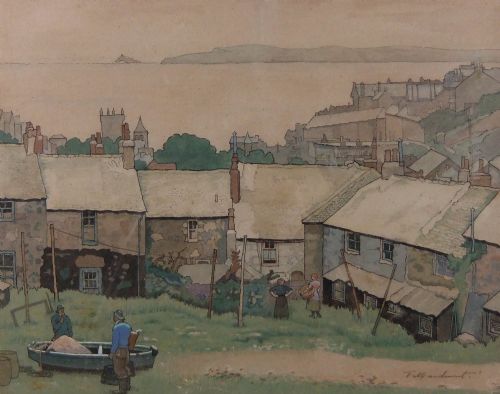
An antique watercolour village painting records rural life, village streets, and coastal settlements across Britain and Europe. The works on this page span from the nineteenth century through to the nineteen-forties, capturing changing architectural styles and local customs.
You encounter both finished gallery watercolours and smaller plein-air sketches executed on location. Subjects range from West Country thatched cottages and Yorkshire dales to French provincial squares and Scottish fishing ports.
The most frequent examples on this page date from the Victorian era up to the nineteen-thirties. These pieces often feature named locations, allowing collectors to trace the exact topography of a rural lane or village pond as it appeared over a century ago.
How They Were Made
Artists painted on various paper supports using water-soluble pigments combined with gum arabic for transparency and depth. Many works incorporate bodycolour or gouache to add opaque highlights to stone walls, figures, and foaming water.
Framed beneath glass within wooden mouldings, these works relied on pure watercolour techniques where the white of the paper provided the brightest light. Washes were layered to build shadows in landscapes, coastal scenes, and domestic village views.
Several watercolours record unnamed donkeys patiently waiting by muddy watersides in nineteenth-century Wales.
What Varies in Quality
Control of pigment and wash defines the hierarchy of these works, separating hasty sketches from masterly compositions. Strong tonal balance and confident brushwork bring atmosphere to a street scene or coastal harbour.
Paper stability and pigment preservation dictate condition, as prolonged exposure to light fades vulnerable hues. Works retaining their original depth of blue and red pigments demonstrate superior initial materials and careful subsequent preservation.
John McDougal·Thomas Maidment·Fred Lawson·Arthur Tucker·James Watson·Frederick G. Coulridge·John Smith Atherton·John Edward Bale·Robert Hollands Walker·Joseph W. Milliken·Frank Wood·Frederick Mayor·Percy Brooke·David Woodlock·Frank Dadd·Henry Sykes·William Lee Hankey·J.V.R. Parsons·Walter Henry Sweet·Maurice Asselin·Carleton Grant·Alfred Rimmer·David Heward·Joseph Hughes Clayton·John Baragwanath King
The Antique Watercolour Village Painting Glossary
- Gouache
- An opaque watercolour paint mixed with a white pigment, producing a heavier, matte finish. Artists used it to create solid highlights on buildings and figures.
- Bodycolour
- Another term for gouache or watercolour containing white pigment, used to give opacity to selected areas of a painting. It allows for dense highlights against transparent washes.
- Plein-air
- Painting outdoors in direct contact with the subject rather than in a studio. This method captures natural light and immediate weather conditions in rural landscapes.
- Wash
- A fluid application of thinned watercolour pigment across paper to create skies, water, or broad background fields. Skilled application avoids hard edges and uneven pooling.
- Support
- The physical base material upon which the artist paints, most commonly paper or occasionally linen in the archive. The weight and grain of the paper influence how washes settle.
Antique Watercolour Village Painting: Frequently Asked Questions
What is an antique watercolour village painting?
These works are original paintings on paper depicting rural settlements, country lanes, and coastal villages. They serve as historical records of architecture and country life from past centuries.
Created by artists travelling through Britain and Europe, the paintings capture topography and daily routines before modern development altered the rural landscape.
How should I frame and display paper watercolours?
Watercolours require framing behind glass with acid-free mounts to prevent the paper from touching the glazing. This protects the delicate pigments from moisture and physical damage.
Display the pieces away from direct sunlight to prevent the watercolour pigments from fading over time, preserving the original tones of the village scene.
What subjects appear in these paintings?
Common subjects include thatched cottages, village ponds, country inns, and bustling market squares. Coastal fishing villages and agricultural fields also feature frequently across the collection.
Artists focused on the picturesque qualities of rural life, recording local inhabitants, farm animals, and vernacular architecture in various weather conditions.