

Antique Wardrobe Cabinet
When you search for an antique wardrobe cabinet, you are looking for substantial storage furniture shaped by centuries of changing domestic routines.

Antique Wardrobe Cabinet
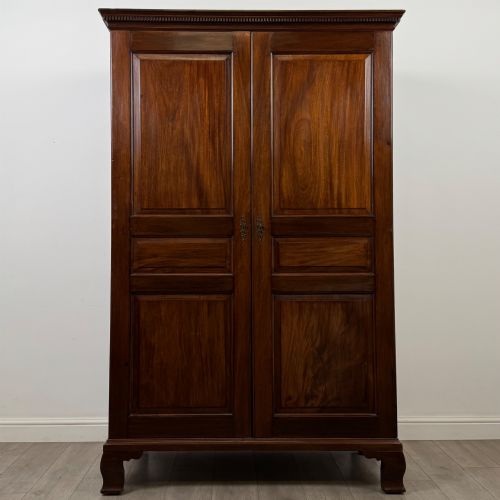
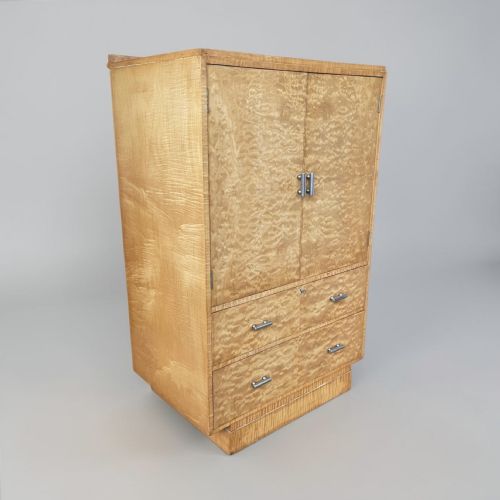
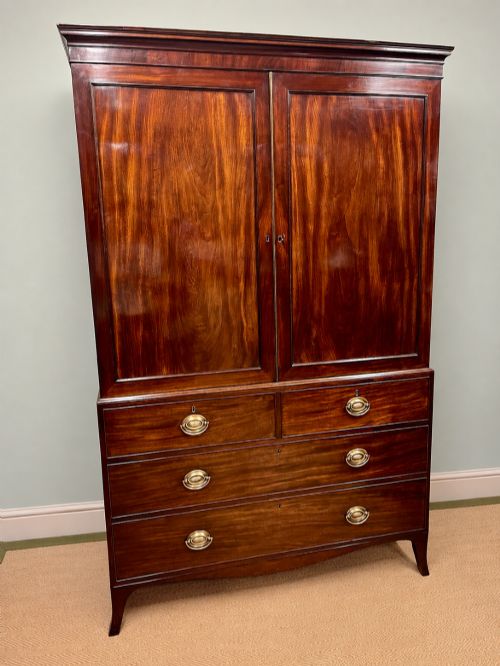
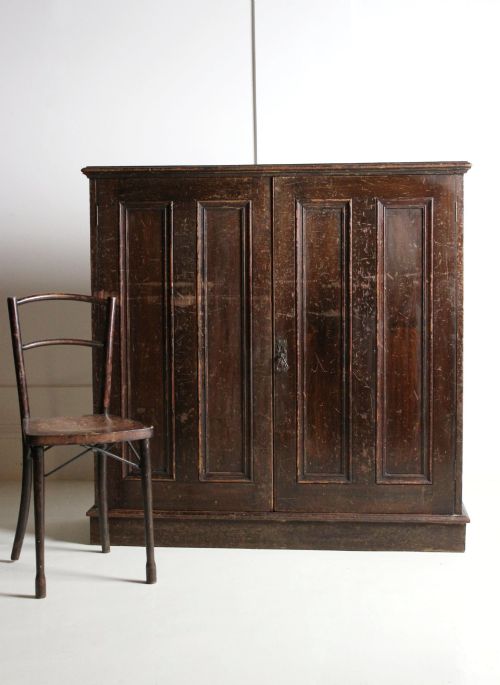
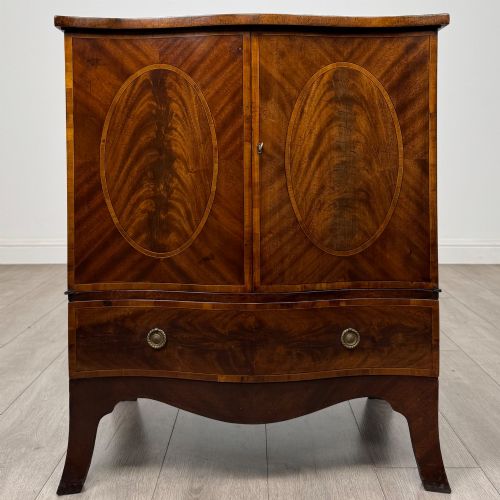
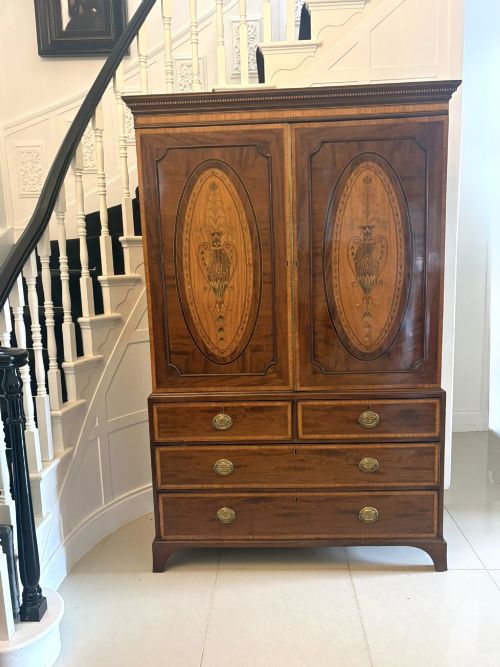
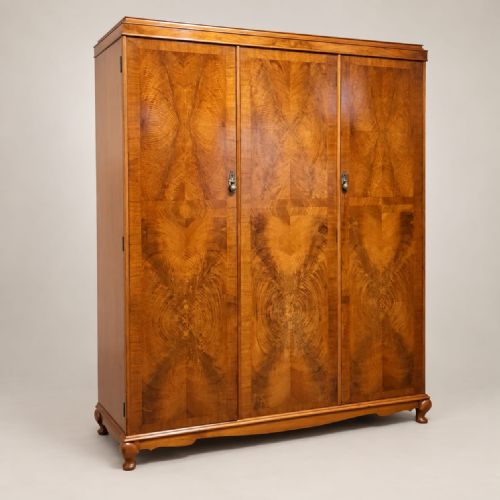
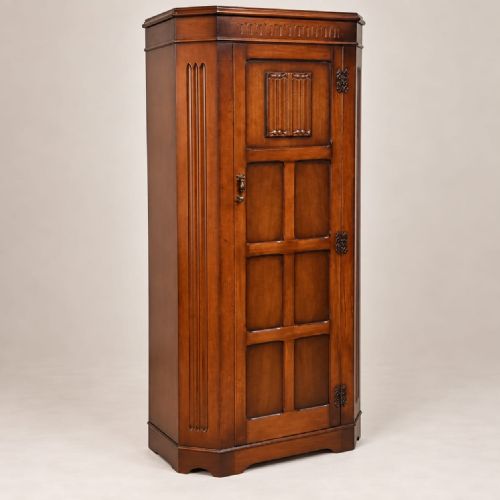
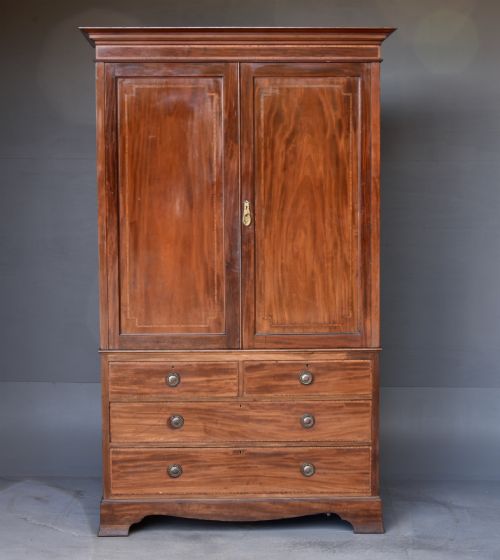
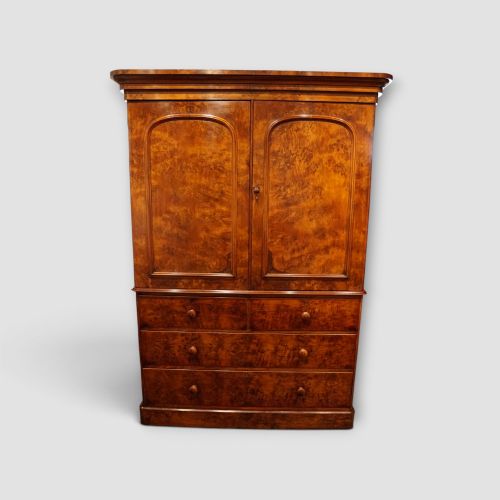
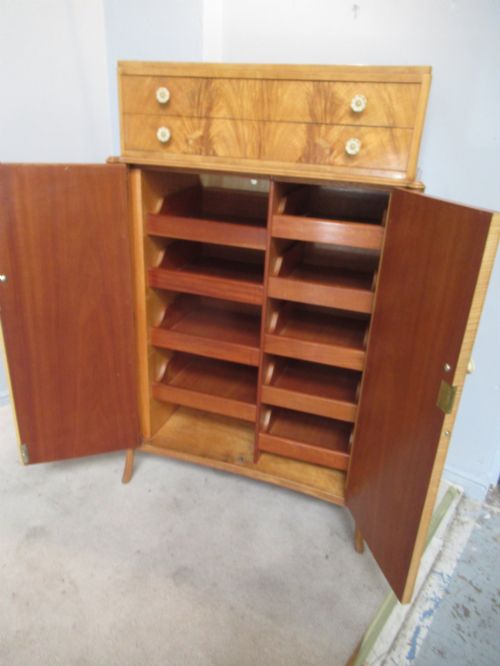
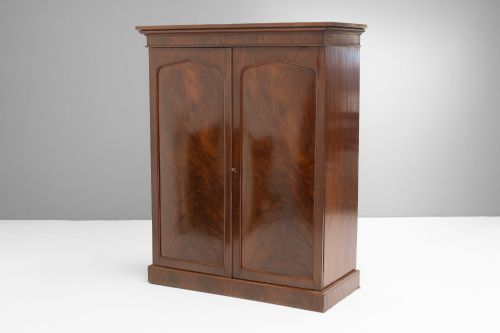
An antique wardrobe cabinet encompasses a wide range of large storage furniture, from Georgian mahogany linen presses and Victorian compactums to French armoires and 1920s burr walnut tallboys. These pieces served to store garments, linens, and household provisions before fitted bedroom furniture became standard.
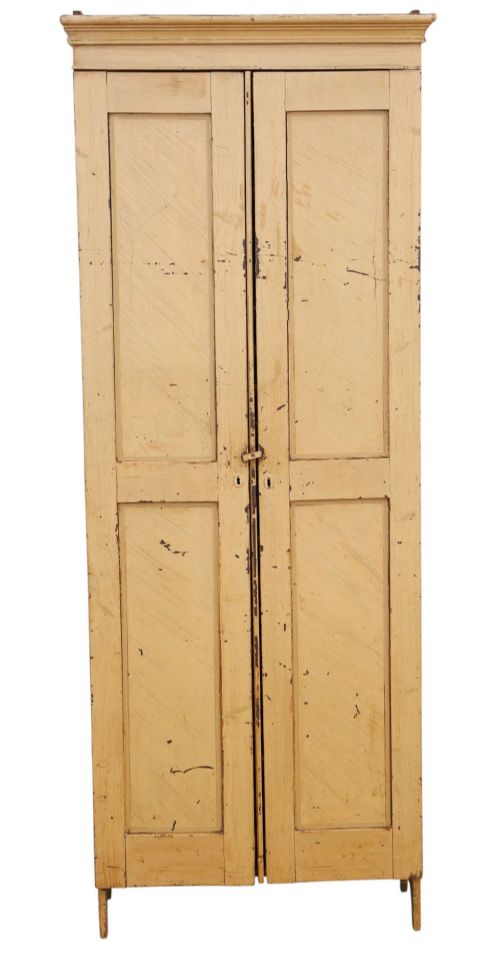
The options here lean heavily towards nineteenth-century pine, Edwardian mahogany, and walnut pieces, reflecting how domestic architecture evolved to demand dedicated hanging and folding space. Buyers encounter regional variations too, including Dutch marquetry cabinets and country pine housekeepers' cupboards.
Materials and Construction
Cabinet makers relied on structural timbers like oak, pine, and mahogany, often applying veneers of burr walnut, satinwood, or rosewood to display rich grain patterns on the primary surfaces. Solid construction methods involved dovetail joints for drawers and panelled framing to accommodate the seasonal movement of timber.
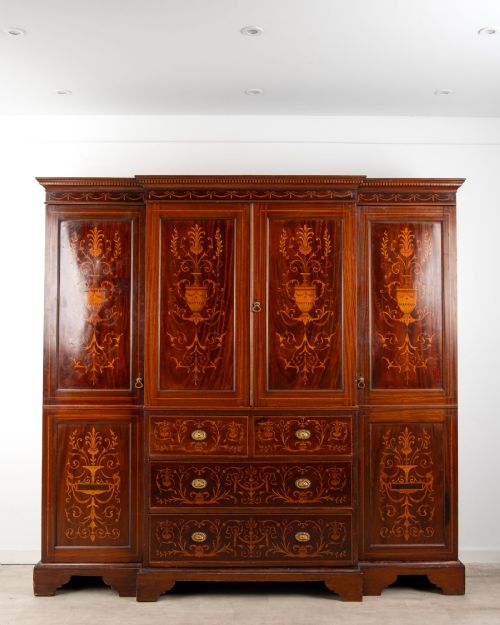
Decorative details included hand-carving, brass hardware, marquetry inlay, and painted finishes such as red lacquer or cream lead-based paint. Larger French and English armoires utilised knockdown construction with peg-and-slot joints so that massive timber frames could be moved between rooms.
Listings feature eighteenth-century Dutch marquetry cabinets alongside 1920s burr walnut tallboys and nineteenth-century pine housekeepers' cupboards.
Assessing the Craftsmanship
Quality rests upon the selection of timber and the precision of the joinery, particularly how secondary woods are used inside drawers and back panels. Superior examples feature book-matched veneers, crisp hand-carved mouldings, and original brass fittings that operate smoothly within heavy frames.
Proportion and internal configuration define the higher tiers of these cabinets, distinguishing workshop-made items from simpler regional pieces. Pieces bearing maker stamps or specific architectural details demonstrate the care taken during construction.
maples & co·Edwards and Roberts·Waring and Gillow
The Antique Wardrobe Cabinet Glossary
- Compactum
- A large multi-compartment wardrobe combining hanging space, shelving, and internal drawers within a single carcass.
- Linen Press
- A tall storage piece featuring upper sliding trays or shelves for folded textiles above a chest of drawers.
- Armoire
- A large freestanding cupboard of continental European origin, typically fitted with doors enclosing shelves or hanging space.
- Tallboy
- A tall chest of drawers standing on a lower chest base or support frame, sometimes topped with a cornice cupboard.
- Marquetry
- The art of applying pieces of veneer to a structure to form decorative patterns and pictorial designs.
Antique Wardrobe Cabinet: Frequently Asked Questions
How do I assemble a knockdown wardrobe?
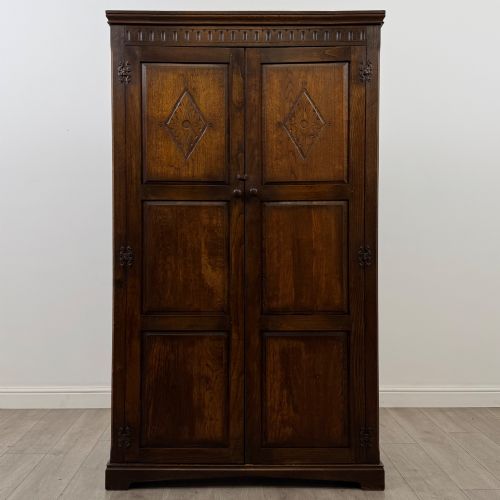
Knockdown wardrobes utilise wooden pegs, metal bolts, or slot-in joints designed to hold large panels securely without permanent glue. Many nineteenth-century pine and oak armoires were built this way to allow transport up narrow staircases.
When reassembling, align the numbered or matched joints carefully and tighten internal fixings evenly to ensure the frame stays square and the doors hang straight.
What is the difference between a press and a wardrobe?
A traditional press contains shallow sliding trays or shelves behind its upper doors, originally designed for storing flat linens. A wardrobe focuses primarily on vertical space with hanging rails for coats and garments.
Many antique pieces combine both functions or were converted later in their lifespan to accommodate modern clothes hangers.
How do I fit one into a modern bedroom?
Measure your ceiling height and floor space carefully, remembering that antique cornices and projecting feet often extend beyond the main body dimensions. Consider whether you need a knockdown version if access to your room is restricted by tight turns.
Internal depth matters too; older cabinets can be shallower than modern wardrobes, requiring specialist shorter clothes hangers.
How do I tell Edwardian pieces from Victorian ones?
Victorian wardrobes often display heavier proportions, dark mahogany or burr walnut veneers, and deep, elaborate mouldings. Edwardian examples tend to feature lighter satinwood inlay, cleaner lines, and brighter mahogany or oak surfaces.
Makers working around 1900 also embraced transitional styles that blended earlier revival motifs with simpler Edwardian joinery.