
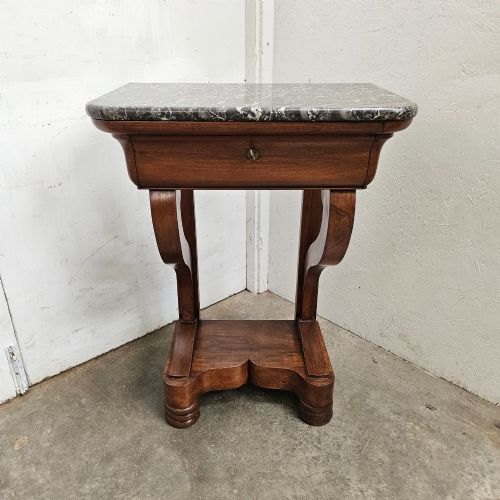


Antique Walnut Washstand
An antique walnut washstand brings heavy marble tops and figured timber together for daily bedroom use.
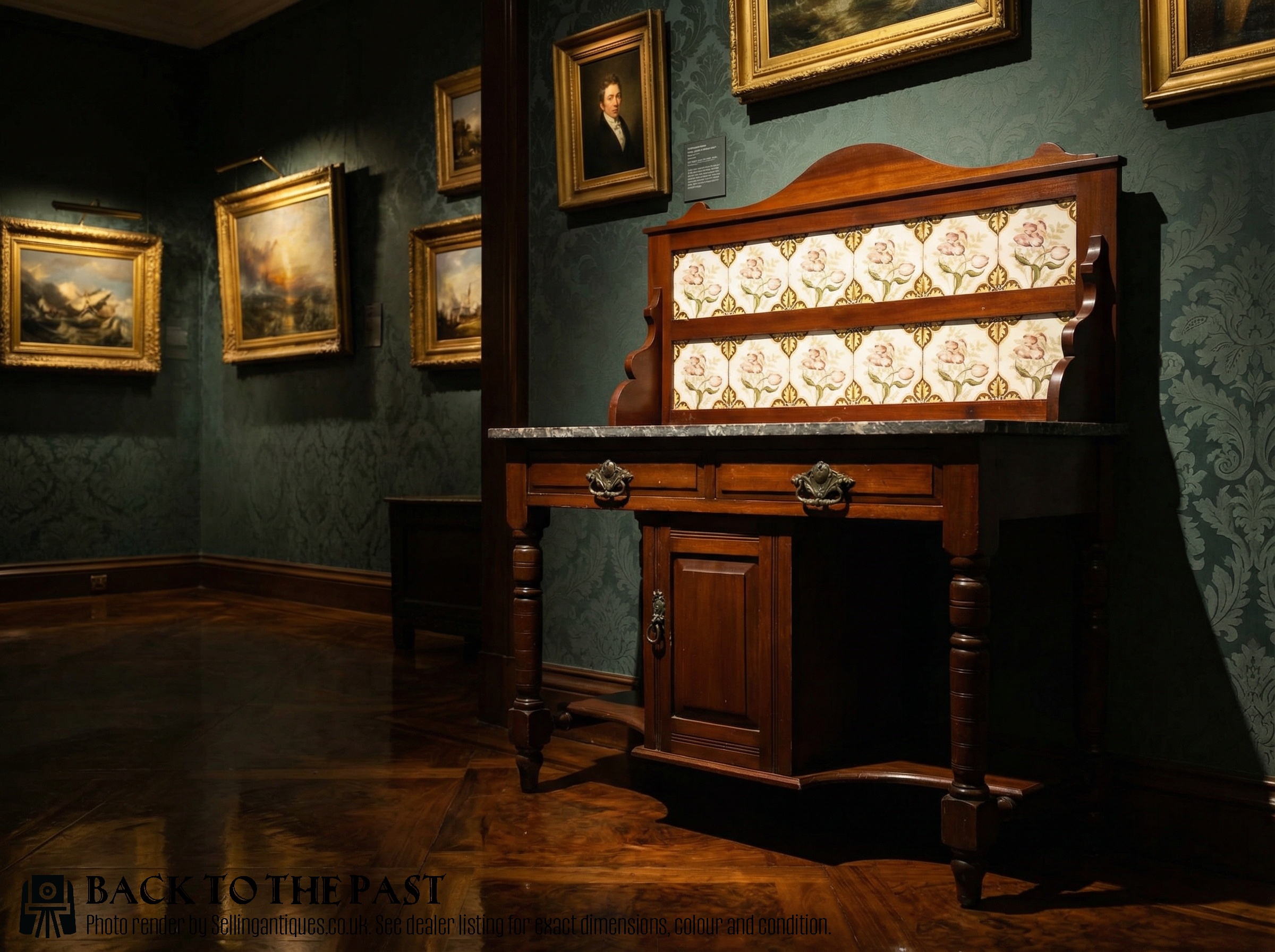
Antique Walnut Washstand
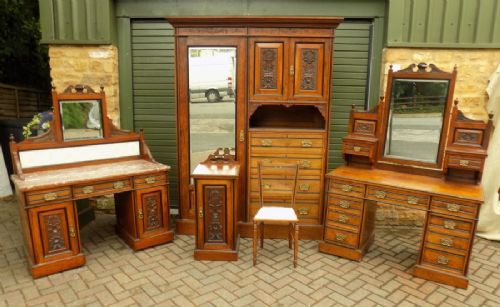
An antique walnut washstand is a functional bedroom piece designed to hold a basin and jug for morning ablutions. The pieces appearing on this page mostly date from the Victorian and Edwardian periods, stretching from the middle of the nineteenth century into the early twentieth century. Walnut and marble dominate the selection, often accompanied by ceramic inserts, mirror glass, and brass fittings.
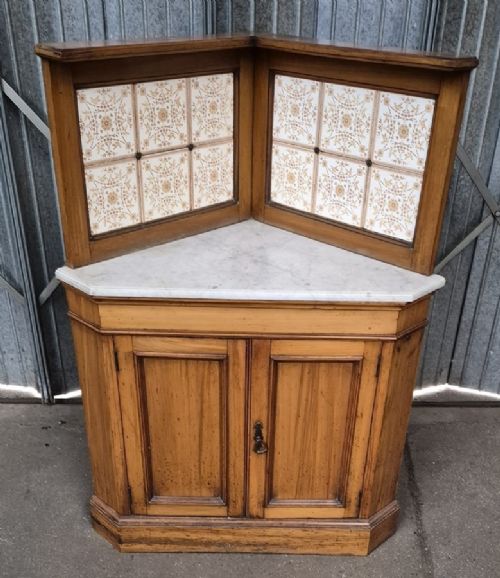
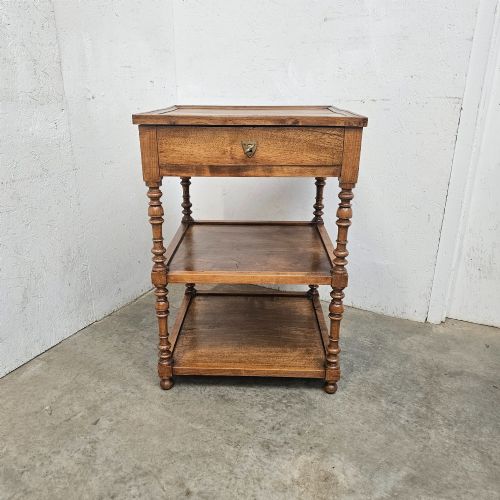
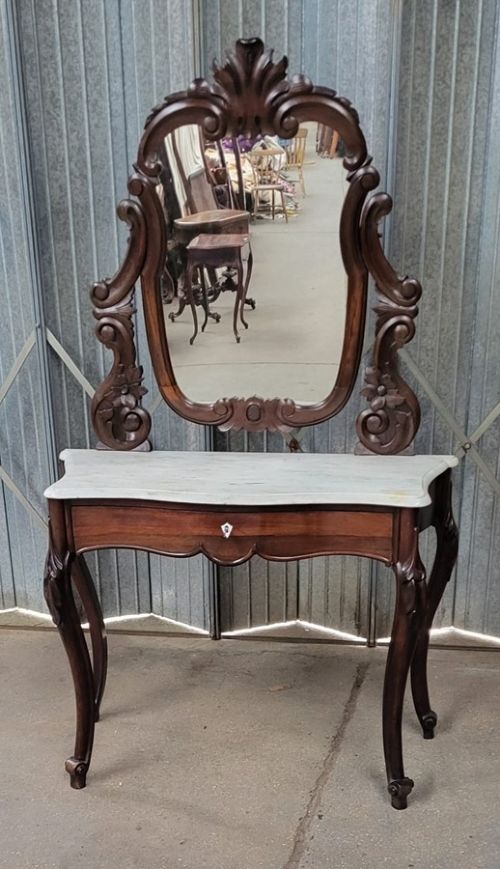
Buyers will encounter various forms, from corner washstands and tiled back splashboards to commode-style cabinets. Alongside standard washstands, related items such as side tables, console tables, and etageres appear within the evidence. Many pieces reflect regional tastes, including French provincial and aesthetic movement designs.
The construction relies heavily on native and figured walnut, sometimes enriched with burr veneers and marquetry inlay. While some examples are straightforward timber tables, others incorporate marble slabs designed to resist water splashes during washing.
Materials and construction
Cabinetmakers built these washstands using solid walnut and decorative veneers like burr walnut over secondary structural timbers. Figured panels and marquetry inlay appeared on finer examples, while structural integrity required sturdy joints and turned or carved legs.
Marble tops formed an essential practical surface, resistant to water and staining during personal hygiene routines. These stone slabs sat atop the wooden framework, often paired with matching marble or tiled backsplashes to protect the wall behind.
Towel rails were expected to stand ready for damp linens while the washstand marble quietly absorbed every splash of morning routine.
Judging quality
The distinction between standard and superior pieces rests on the choice of timber and the complexity of the cabinetwork. Heavily figured burr walnut, intricate floral marquetry inlay, and thick, well-veined marble tops indicate higher workshop standards.
Execution of carved details and the preservation of original brass mounts or ceramic elements separate ordinary utility items from finer bedroom furniture. The integration of functional compartments and fitted cupboards also marks out superior examples.
Walker & Sons
The Antique Walnut Washstand Glossary
- Burr walnut
- A veneer taken from the warted growths of a walnut tree, showing swirling, highly decorative grain patterns. Cabinetmakers utilised it on principal facade surfaces to create striking visual depth.
- Marquetry
- The art of applying small pieces of veneer to a structure to form decorative patterns or pictures. Floral motifs frequently appear in this technique on nineteenth-century cabinet furniture.
- Washstand
- A piece of bedroom furniture designed to hold washing basins, ewers, and toiletries before plumbed bathrooms became standard. They commonly featured stone tops and splashbacks.
- Etagere
- A piece of furniture consisting of a set of open shelves for displaying small objects. These lightweight stands often complemented larger bedroom suites.
- Aesthetic Movement
- A late nineteenth-century design style emphasising visual beauty over narrative or moral themes. Furniture from this movement often shows clean lines and artistic detailing.
Antique Walnut Washstand: Frequently Asked Questions
What is an antique walnut washstand used for?
These pieces served as bedroom wash stations before modern indoor plumbing placed basins in dedicated bathrooms.
Today they function effectively as decorative console tables, hallway furniture, or bathroom sink surrounds in period homes.
How do I date an antique washstand?
Dating relies on observing structural styles, timber choices, and hardware types recorded across the Victorian and Edwardian eras. Earlier Victorian pieces often display heavier proportions and aesthetic styling, while Edwardian examples introduce lighter frames and tiled splashbacks.
Makers' marks, construction methods, and the presence of specific design revivals like Gothic or French Rococo help narrow the decade.
Can I use a washstand in a modern bathroom?
Many buyers adapt these marble-topped pieces to hold modern vessel sinks and plumbing fixtures. The stone surface naturally resists water, making it practical for contemporary bathroom settings.
Professional plumbing modification allows the wooden cabinetry to conceal modern pipes while retaining its antique exterior.
How do I care for walnut and marble?
Walnut benefits from occasional polishing with suitable wax to nourish the grain and protect the timber finish from drying out. Avoid placing wet items directly on unsealed wood surfaces.
Marble tops require gentle cleaning with mild, non-acidic soap and water to prevent staining or etching of the polished stone surface.