


Antique Walnut Trunk
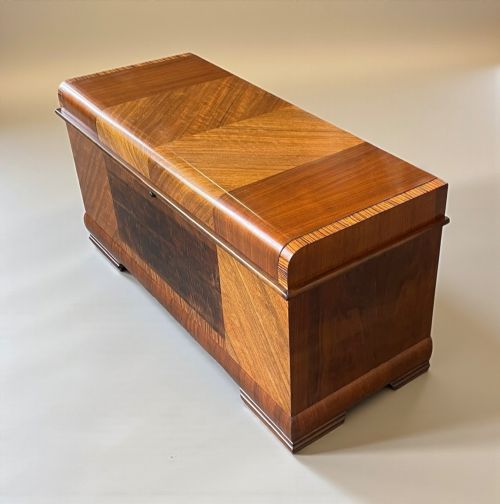
An antique walnut trunk brings rich timber figures and substantial storage into a room, spanning periods from the sixteenth century to the Victorian era.
Antique Walnut Trunk
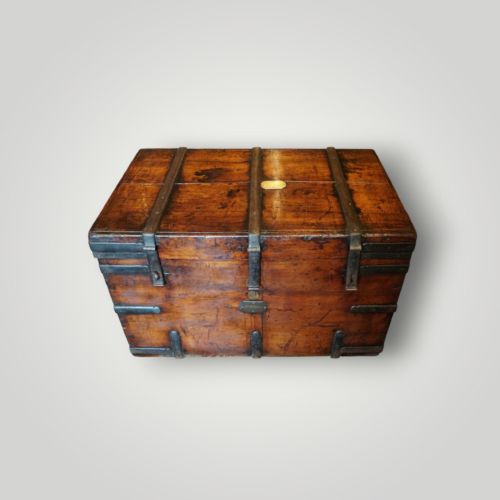
The search for an antique walnut trunk leads to heavy timber storage pieces, including coffers, blanket chests, and iron bound trunks. These items serve practical storage needs while displaying the deep grain and warm tones characteristic of walnut.
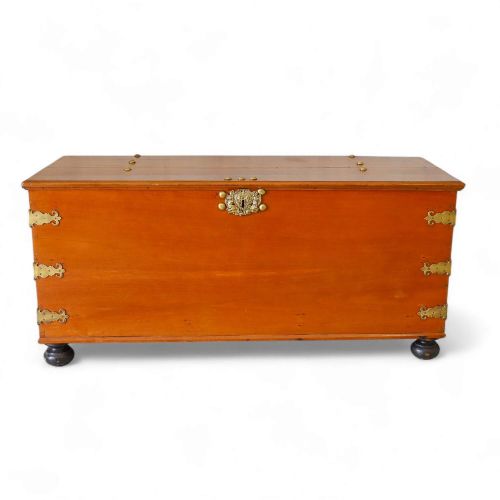
The selection ranges from early Italian Renaissance cassoni and Spanish boxes to later Dutch blanket chests and Victorian military campaign pieces. Continental examples feature prominently alongside English and colonial forms.
Makers utilised walnut across various centuries, combining the primary timber with brass, iron, and oak to create robust containers designed for travel, household storage, and domestic organisation.
Materials and construction
Woodworkers constructed these storage pieces using solid walnut planks, frequently incorporating secondary timbers like oak for internal frames and drawer linings. Joinery methods relied on sturdy tongue and groove joints, dovetails, and pegged panels to ensure durability.
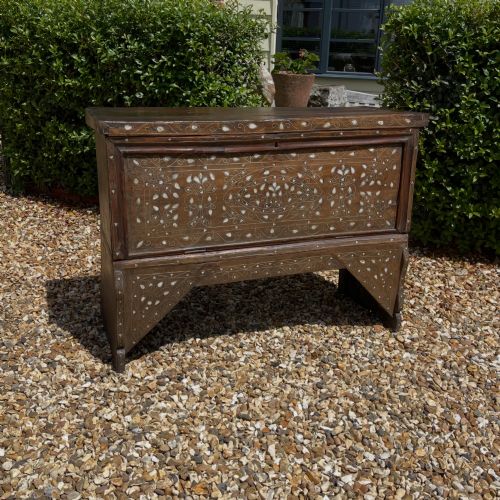
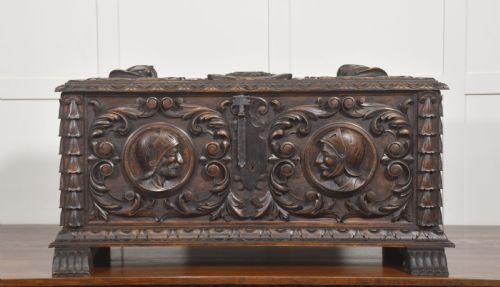
Metal hardware played a structural role, with blacksmiths providing wrought iron reinforcement, brass drop handles, and key-operated locks. Surface decoration included carved figural medallions, geometric inlay, and gilt details on Italian and continental pieces.
Materials recorded across the inventory include solid walnut, brass, wrought iron, oak, glass, enamel, and mother-of-pearl.
Assessing quality in walnut trunks
Quality rests in the choice of timber and the complexity of its grain, where highly figured walnut veneers or dense solid planks elevate a piece. The crispness of carved details, such as figural medallions or geometric mouldings, distinguishes workshop standards.
Original hardware, including working locks, period hinges, and heavy brass drop handles or iron straps, contributes significantly to the integrity of the piece. The survival of untouched interior compartments, original keys, and secondary linings marks the better examples.
Richard Corless of Stockport·Edward East
The Antique Walnut Trunk Glossary
- Cassone
- An Italian chest or coffer, typically large and decorated with carving, gilding, or inlay. These pieces often functioned as marriage chests for wealthy households.
- Coffer
- A sturdy wooden box or chest used for storing valuables, linens, or documents. They frequently feature hinged lids and iron or brass reinforcement.
- Dovetail
- A joint formed by interlocking wedge-shaped fingers of wood, providing exceptional tensile strength. This method connects the corners of drawers and box frames.
- Campaign chest
- A modular chest of drawers or trunk built in sections with recessed brass handles and corner brackets. Officers utilised these pieces during military travel.
- Inlay
- A decorative technique where contrasting materials like mother-of-pearl or lighter woods are inserted into recesses in the walnut surface. This creates intricate geometric or pictorial patterns.
Antique Walnut Trunk: Frequently Asked Questions
What is an antique walnut trunk used for?
These trunks serve as functional storage furniture in modern homes, holding blankets, linens, and household items. Their flat tops also allow them to function as coffee tables or window seats.
Historically, they secured valuable belongings, clothing, and documents against dust, dampness, and theft during transport or domestic life.
How do I date an antique walnut trunk?
Dating relies on examining the construction methods, such as hand-cut dovetails, iron strapwork, and the style of the hinges and feet. Earlier pieces from the sixteenth and seventeenth centuries often feature heavy plank construction and carved panels.
Later Victorian and colonial examples introduce machine-sawn elements, secondary pine or oak linings, and different locking mechanisms that correspond to nineteenth-century manufacturing.
What is the difference between a coffer and a chest?
A coffer typically refers to a heavy wooden box with a hinged lid, often associated with more decorative carving, iron binding, or formal storage use. Many historical Italian and Spanish examples are classified as coffers or cassoni.
A chest generally covers a broader category of storage furniture, which can include blanket chests, travelling chests, and drawer configurations found in military campaign pieces.
How do I care for antique walnut furniture?
Walnut requires protection from direct sunlight and sudden temperature changes, which can dry out the timber and cause splits in the panels. Keeping the pieces away from direct heat sources preserves the natural moisture in the wood.
Applying a traditional beeswax polish occasionally helps maintain the lustre of the timber without building up synthetic residues on the antique surface.